


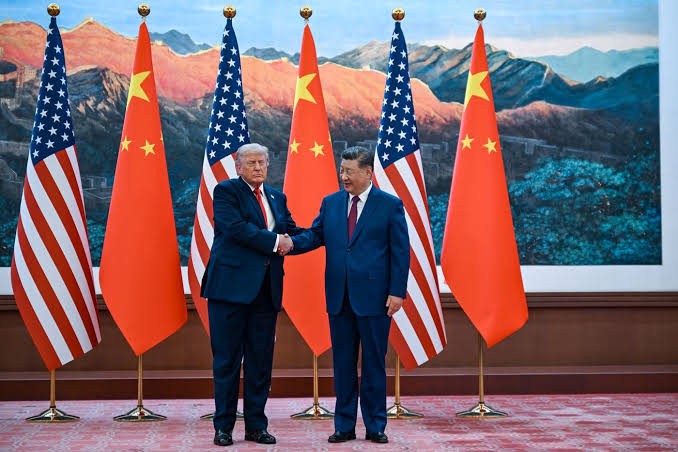
BEIJING, November 10, 2026 — China’s 24 percent tariff suspension on imports from the United States will continue for another two months, carrying a fragile trade truce into January while leaving a separate 10% tariff in place. The extension took effect at 1:01 p.m. Beijing time on Tuesday and forms part of a wider continuation of pauses covering critical-mineral export controls, restrictions on US companies and measures affecting maritime trade.
The decision delays the return of a higher tariff burden at a time when Washington and Beijing are trying to keep negotiations moving ahead of an expected meeting between US President Donald Trump and Chinese President Xi Jinping at the Asia-Pacific Economic Cooperation leaders’ summit later this month. It does not amount to a comprehensive trade agreement, remove all existing duties or resolve the disputes that have repeatedly disrupted supply chains between the world’s two largest economies.
China’s State Council Customs Tariff Commission said the additional 24% tariff on US imports would remain suspended for two months from November 10. The 10% tariff that continues to apply was not removed. The distinction is important for importers: the extension prevents the additional rate from returning immediately, but it does not restore the tariff treatment that existed before the trade conflict or make US goods duty-free in China.
The decision was announced as the previous suspension was due to expire on Tuesday. China said the extension was intended to implement the understandings reached at the Washington meeting between the two countries’ leaders. The commission also said Beijing would monitor subsequent US measures and could adjust its tariff countermeasures if developments required it.
The tariff pause is only one part of the package. China’s Ministry of Commerce said certain export-control waivers covering critical minerals and related technologies would continue until January 10, 2027. Measures affecting 11 US companies placed on China’s unreliable-entities list and 16 companies on its export-control list will also remain suspended through that date, according to the ministry’s notices.
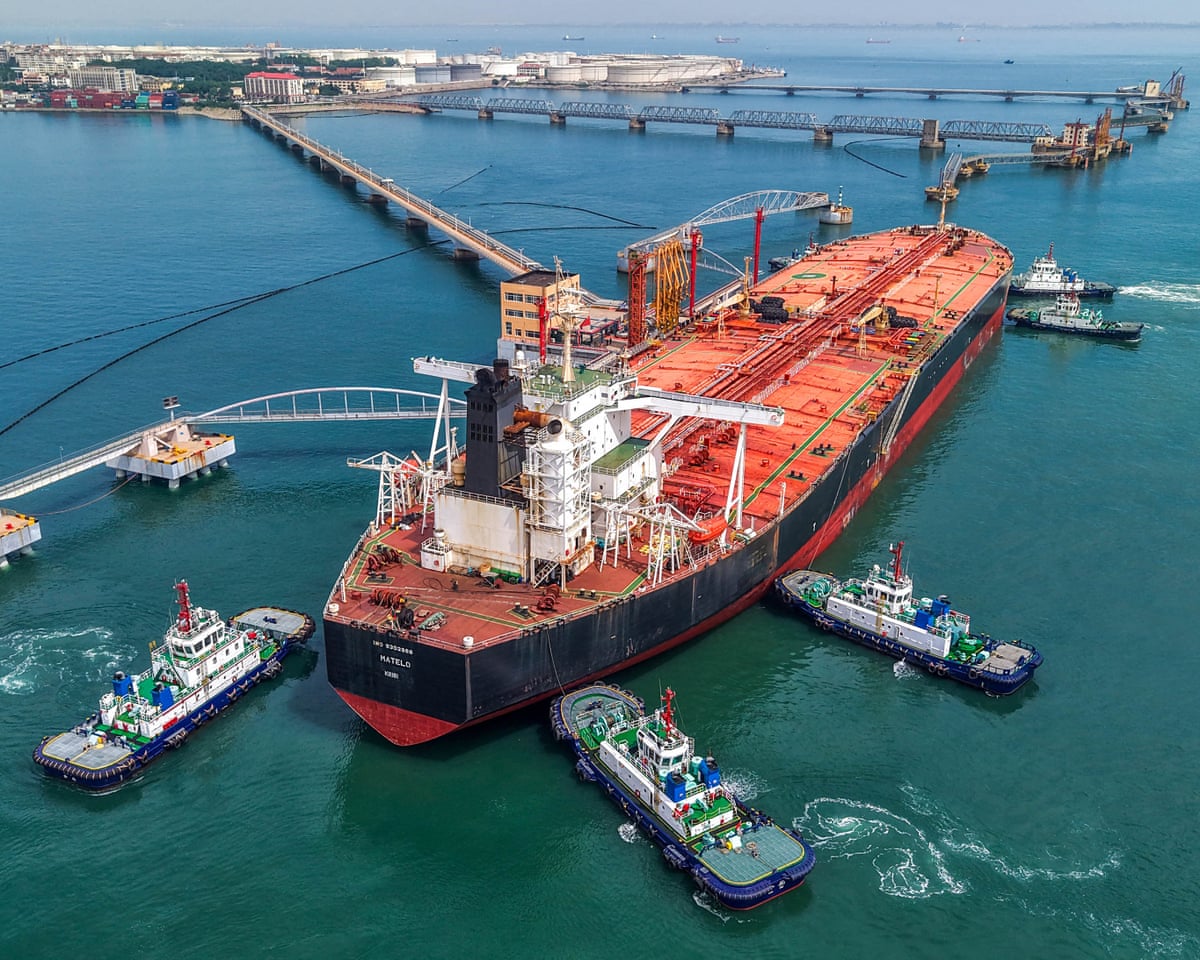
China’s Ministry of Transport extended the suspension of special port fees on US-linked vessels until January 10. The ministry also said its investigation into the security of shipping and shipbuilding supply chains would remain suspended. Separately, the Ministry of Commerce issued an order continuing for two months the suspension of countermeasures against five US-related subsidiaries of South Korean shipbuilder Hanwha Ocean. The order, dated November 9, took effect on November 10.
Taken together, the measures preserve a wider pause in commercial and regulatory pressure than the headline tariff figure alone suggests. They affect import duties, critical-material licensing, selected companies, shipping costs and the shipbuilding sector. But each suspension has its own legal basis and timetable. The two-month extension for the additional tariff and the Hanwha Ocean measures should not be confused with the January 10 deadline attached to several of the other pauses.
The current arrangement follows a year of repeated tariff escalation and negotiated pauses. The earlier truce was due to expire on November 10, after the leaders agreed to suspend selected measures while their governments worked on a broader economic understanding. The September 2026 meeting in Washington produced another set of commitments and a proposed package of reciprocal tariff reductions, but the product details and implementation arrangements have not been finalised.
Reuters reported that the proposed package would cover about $60 billion in reciprocal tariff cuts. Roughly $17 billion of that amount relates to US agricultural goods that China imported in 2024. The package remains a proposal rather than a completed agreement, so exporters cannot assume that every product in those categories will receive a lower rate or that the changes have already been implemented.
US Treasury Secretary Scott Bessent said in September that a two-month extension would give the countries more time to explore economic cooperation. That objective is now being tested against the practical work of implementing the commitments. The two governments still disagree over market access, industrial policy, technology restrictions, supply-chain security and the use of tariffs as leverage.
The US Treasury’s November 6 readout of a call between Bessent, US Trade Representative Jamieson Greer and Chinese Vice Premier He Lifeng showed that Washington continues to assess whether Beijing is meeting its commitments. Bessent emphasised the need for China to implement the Busan arrangement and raised concerns about recent Chinese actions. The statement described continued direct communication, but it did not present the relationship as settled or free of disputes.
China’s tariff commission also referred to US statements about replacing tariffs imposed under the International Emergency Economic Powers Act with Section 301 duties after court rulings invalidated the IEEPA measures. Beijing said it would watch subsequent US actions and adjust its response where necessary. That warning shows why the extension remains conditional in political terms: a pause can continue while both sides believe the other is implementing the understanding, but it can also be altered if either government believes the balance has shifted.
The continuation of export-control waivers is important because critical minerals and related technologies sit inside supply chains for electric vehicles, batteries, renewable-energy equipment, electronics and defence systems. China has a dominant position in several stages of rare-earth processing and in the production of specialised materials. A change in licensing rules can therefore affect manufacturers well beyond the United States and China, including companies that buy components through third countries.
The latest extension does not mean that all Chinese export controls have been removed. It preserves the suspension of specified measures for a limited period. Companies still need to check which materials, technologies and transactions are covered by the relevant notices, and they cannot treat the pause as a guarantee that licensing conditions will remain unchanged after January 10.
The maritime provisions are also significant. Special port fees on US-linked vessels and the investigation into shipping and shipbuilding supply chains had become part of the wider dispute over industrial capacity and maritime competition. Keeping those measures suspended reduces one source of cost and uncertainty for shipping companies, port operators and businesses moving goods between the two markets. It does not resolve the underlying disagreements about shipbuilding capacity, logistics networks or the role of state support in strategic industries.
The extension involving five US-linked subsidiaries of Hanwha Ocean adds a South Korean company to the picture. The Ministry of Commerce said the suspension of countermeasures would continue for two months under its November 9 order. The decision reflects the way US-China disputes can affect companies based in third countries when their operations or subsidiaries are connected to US policy. For shipbuilders and suppliers, the immediate benefit is continuity; the longer-term question is whether the pause becomes part of a stable settlement or another short interval before measures are reconsidered.
For US importers, the additional 24% tariff pause reduces the risk of a sudden increase in landed costs for affected goods. For Chinese exporters, it helps preserve access to a major market while negotiations continue. The benefit is limited by the 10% rate that remains in place and by other duties or restrictions that may apply to particular products. Businesses still need to price contracts with the possibility of a further policy change in mind.
India is not a party to the US-China tariff negotiations, but the relationship between the two economies influences demand, shipping, technology access and investment across Asia. A sudden return of higher tariffs could prompt companies to alter sourcing plans, reroute production or delay investment. A short extension gives businesses more time to plan, but the January deadline means it does not provide long-term certainty.
Indian manufacturers may see opportunities when companies diversify production away from a concentrated supply base. Electronics, machinery, renewable-energy equipment and battery supply chains are among the sectors where sourcing decisions can shift across several Asian economies. Those opportunities depend on India’s own infrastructure, supplier capacity, logistics costs and regulatory environment; they do not follow automatically from a US-China pause.
The critical-minerals element remains relevant to India’s energy transition and industrial strategy. A temporary continuation of selected export-control waivers may ease immediate procurement pressure for some manufacturers, but it does not remove the underlying concentration of processing capacity. The policy question for India remains how quickly domestic processing, recycling and alternative sourcing can become commercially reliable.
For agricultural exporters, the proposed reciprocal tariff package could eventually create opportunities if China increases purchases of selected US goods or changes tariff treatment. But the $60 billion framework has not been finalised, and the figures cited in reporting are not a guarantee of future purchase volumes. Exporters in the United States, China and competing suppliers will need to wait for product lists and implementation notices before changing their expectations.
The extension also matters for financial markets because it reduces the immediate probability of a new tariff shock while leaving the larger strategic rivalry intact. Investors may welcome the extra negotiating time, but the short duration means that the risk of another deadline-driven announcement remains. The most useful signal for companies will be whether the two governments begin publishing detailed product schedules and clear licensing instructions rather than relying only on broad statements about cooperation.
The next major diplomatic marker is the APEC leaders’ summit in Shenzhen, scheduled for November 18 and 19. Trump and Xi are expected to meet during the gathering. The meeting could provide an opportunity to discuss the reciprocal tariff package, agricultural purchases, critical minerals and the wider trade relationship, although no final agreement has been announced.
Businesses will be watching for more than a photograph or a general statement of goodwill. They will need clear information about which tariffs remain suspended, what happens to the 10% rate, whether export-control waivers will be extended again and how each government will respond if the other changes its trade measures. The January 10 deadline gives both sides a limited window to show whether the latest pause can lead to more durable rules.
For now, China’s decision prevents one additional tariff increase from returning on November 10 and keeps several related measures suspended. It gives importers, exporters and shipping companies more time, but it does not remove the costs and risks that have built up during the trade conflict. The test will be whether Washington and Beijing use the extension to turn a temporary truce into an arrangement that companies can plan around beyond the next deadline.
Also read: US-China Unveil $30 Billion Reciprocal Tariff Framework
Also read: China Extends Suspension of Expanded Rare-Earth Export Controls Until January 10


Comments (0)
Be the first to comment. Comments are published after moderation.