


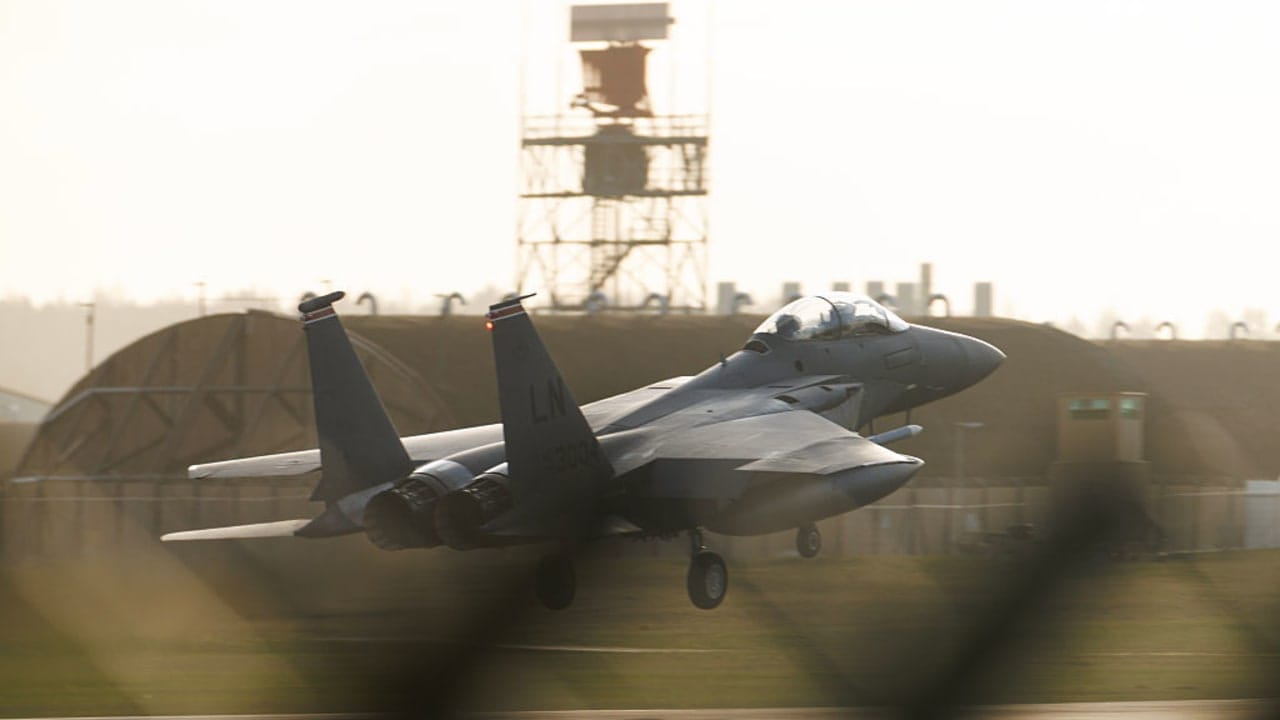
LONDON, November 10, 2026 — The United States moved refuelling aircraft from RAF Mildenhall in eastern England to Germany on Monday after a reported threat linked to Iran, according to a Wall Street Journal report cited by Reuters. Two tankers that had been using the base were diverted earlier in the day, while several other tankers were moved to Germany and additional locations later. The precise nature of the threat remains under discussion among US officials. No public evidence identifying its source, timing or intended target has been released.
Reports says on Tuesday, November 10, that the aircraft movements took place on Monday, November 9. The Wall Street Journal, citing people familiar with the matter, said two US refuelling tankers that had been operating from RAF Mildenhall diverted to Germany earlier in the day. Other tankers at the base were moved to Germany and other locations as the day progressed. The report did not identify the aircraft by tail number or state how many were moved in total.
The RAF Mildenhall aircraft move should be distinguished from a permanent withdrawal. The distinction between a temporary relocation and a wider evacuation is important. The reports describe aircraft being moved away from the base, but they do not establish that the United States has suspended operations at Mildenhall, withdrawn personnel or decided to close the installation. Nor do they establish whether the aircraft were moved for a short period, dispersed as a precaution or reassigned to support another operation. Those questions remain open until the US military provides a fuller account.
The Wall Street Journal said US officials were still discussing whether the threat was general or more specific. That leaves a substantial gap between the reported security concern and any conclusion about an imminent attack. Reuters said the Pentagon and US European Command had not immediately responded to requests for comment sent outside regular business hours. The British Ministry of Defence did not confirm the movements. A spokesperson said the department does not routinely comment on the activities of other nations and that aircraft and other assets move regularly for operational reasons.
The Times of Israel, in a live update on Tuesday morning, also reported that the US Air Force had offered no detailed public explanation beyond noting that aircraft are moved between locations for multiple reasons. That response is consistent with the possibility of routine repositioning, but it does not resolve the specific threat described by the Journal. The aircraft movement and the reported threat should therefore be treated as separate facts: the relocation was reported by multiple outlets, while the nature and credibility of the threat have not been publicly established.
RAF Mildenhall is a Royal Air Force station in Suffolk that hosts a substantial United States Air Force presence. Its main refuelling formation, the 100th Air Refueling Wing, is the only permanently assigned US air-refuelling wing in the European theatre, according to the wing’s official fact sheet. It operates KC-135 Stratotanker aircraft and supports US and NATO missions across Europe and Africa. Its tankers provide an aerial refuelling bridge that allows combat, transport, surveillance and support aircraft to remain airborne longer or reach operating areas beyond their normal range.
The base is not simply a parking area for aircraft. The 100th wing’s mission includes planning, intelligence support, maintenance, aircrew training, mission scheduling and contingency operations. Its official description says it supports forces across Europe and Africa and provides air-refuelling capacity for US and allied aircraft. A change in the location of tankers can therefore affect how missions are staged, how crews are protected and where aircraft receive maintenance, even if the move is temporary and does not interrupt the wider operation.
Moving aircraft to Germany does not necessarily mean the United States has lost the ability to conduct refuelling missions. Germany hosts several major US military installations and can provide alternative operating locations. Tankers can also be repositioned to reduce exposure to a suspected threat while preserving the ability to support operations elsewhere. The practical effect depends on how many aircraft moved, whether crews and maintenance teams moved with them, how long the relocation lasts and whether the aircraft remain available for their original tasking.
The Mildenhall report follows a separate security investigation at RAF Fairford in Gloucestershire. Five men were arrested outside the base in September after an incident that British authorities treated as a serious security matter. Two more people were later arrested on suspicion of assisting Iranian intelligence, according to Reuters. The circumstances of the Fairford incident have not been fully explained publicly, and the arrests do not by themselves establish that a state-directed operation was carried out.
US B-1 bombers were removed from RAF Fairford on security grounds after the incident. The base had been used by American bombers involved in strikes on Iran. British Prime Minister Andy Burnham said last month that activity around Fairford was likely to have been coordinated in Iran. Tehran’s ambassador to Britain denied that allegation. The competing claims remain important context, but they relate to the Fairford investigation and should not be treated as proof that Iran was responsible for the separate threat reported at Mildenhall.
The two bases serve different functions, although both are used by US forces operating from Britain. Fairford is associated with bomber deployments, while Mildenhall is a major hub for refuelling and special-operations support. The reported movement from Mildenhall therefore broadens the security picture beyond the earlier bomber withdrawal. It also raises questions about how the United States and Britain assess threats to facilities that support operations connected to the conflict with Iran.
There has been no public report of an attack on RAF Mildenhall in connection with the latest warning. The available reporting does not identify a device, a plot, a suspect or a specific method of attack. It also does not disclose whether the concern came from intelligence reporting, surveillance, an intercepted communication or another source. Without those details, it would be premature to describe the event as a foiled attack or to assign responsibility to the Iranian government.
Security decisions at military bases can be precautionary. Commanders may disperse aircraft when intelligence is incomplete, when a facility’s threat level changes or when they want to reduce the number of high-value assets in one location. Such a move can be sensible even if no attack follows. It can also be part of ordinary operational planning. The central question in this case is whether the reported Iran-linked warning prompted a specific force-protection measure or coincided with a routine rotation that the Journal’s sources connected to a broader threat assessment.
The British government’s limited response leaves the public with little information about the level of concern. Its spokesperson did not confirm that a threat had been received, but did not dispute that aircraft move regularly. The US Air Force’s reported description of aircraft movements as routine rotations is also not a detailed denial of the Journal’s account. The Pentagon and US European Command had not provided a public explanation in the Reuters report. Those gaps should remain visible in any account of the episode.
The United States relies on British bases for access to the North Atlantic, Europe, the Middle East and other theatres. The arrangement is underpinned by long-standing defence agreements and close intelligence cooperation. A threat to an installation on British soil is therefore not only a force-protection issue for American personnel; it also engages Britain’s responsibility for security around a base that remains under British sovereignty while hosting US units and equipment.
Any sustained reduction in tanker availability at Mildenhall could complicate the movement of aircraft between Europe, the Middle East and Africa. Refuelling aircraft are force multipliers: they allow other platforms to travel farther, remain on station longer and operate from bases outside the immediate theatre. But the reports do not show that the United States has lost that capability. They describe a movement of aircraft, not a shutdown of the wing or a decision to abandon the base.
The episode also illustrates how the conflict with Iran can create security pressure beyond the immediate battlefield. Military installations, logistics hubs and transport routes in allied countries can become part of the wider risk assessment when operations are launched from them. That does not mean every security incident is directed by Tehran or that every aircraft movement signals an escalation. It means governments may choose to reduce exposure while they assess threats that are not yet ready for public disclosure.
For now, the most consequential unanswered questions concern the duration and scope of the relocation. The United States could return the aircraft once the assessment changes, keep some tankers dispersed or shift a portion of the refuelling mission to other bases. A public statement from the Pentagon, US European Command or the 100th Air Refueling Wing would help clarify whether the move was a temporary precaution or a broader adjustment to the posture of American forces in Britain.




Comments (0)
Be the first to comment. Comments are published after moderation.