


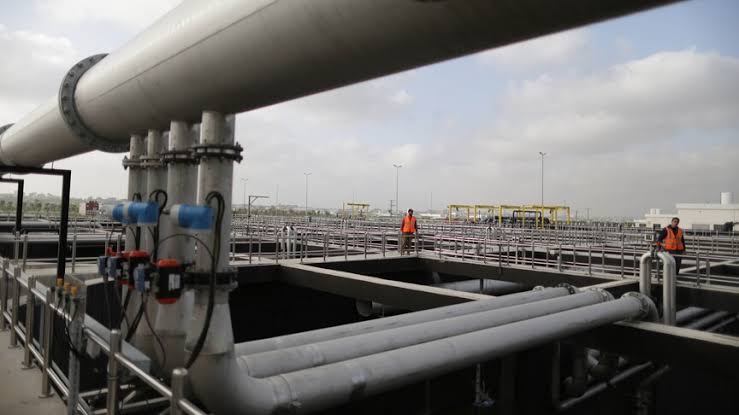
RIYADH, November 10, 2026: Saudi Arabia said a section of its East-West oil pipeline was targeted in the Medina region on Monday, triggering a limited fire that emergency crews contained without reported casualties or disruption to operations. The Energy Ministry did not identify the weapon used or say who was responsible, leaving key questions about the incident unanswered.
The location matters because the pipeline is the kingdom’s main overland route for moving crude from its eastern oil fields to the Red Sea port of Yanbu. With shipping through the Strait of Hormuz severely disrupted by the regional conflict, Saudi Arabia has been relying more heavily on the line to move oil to export terminals outside the Gulf. Reuters has reported that roughly four million barrels a day were being routed through it, equivalent to about 4 per cent of global oil supply.
Saudi officials said specialised technical teams and emergency responders dealt with the fire and that the incident had not affected pipeline operations. That is an important distinction: the report points to a security incident at critical energy infrastructure, but it does not establish that crude flows were interrupted, that pumping capacity was damaged or that the attack caused a loss of exports.
The East-West pipeline, also known as Petroline, runs for about 1,200 kilometres from the Abqaiq area in eastern Saudi Arabia towards Yanbu on the Red Sea coast. It was developed to give the kingdom an alternative to shipping all of its crude through the narrow Strait of Hormuz, a route that has long been exposed to regional conflict, naval confrontation and threats to commercial vessels.
That alternative has become more important as the conflict has disrupted normal Gulf shipping. The Strait of Hormuz connects the Persian Gulf with the Gulf of Oman and the Arabian Sea. It is a vital passage for crude oil, petroleum products and liquefied natural gas from Saudi Arabia, Iraq, Kuwait, Qatar, Bahrain and the United Arab Emirates. When traffic through the strait is delayed or restricted, exporters with access to pipelines and Red Sea terminals have more options than producers whose exports depend almost entirely on Gulf ports.
Saudi Arabia has used the East-West line to redirect crude towards Yanbu, where tankers can load on the Red Sea side without passing through Hormuz. The pipeline does not replace the strait’s full capacity, and the amount that can be moved depends on pumping, storage, terminal capacity and the availability of tankers. But it provides a critical outlet at a time when the normal export route is exposed to military risk.
The roughly four million barrels a day reported to be moving through the line illustrates why even a contained fire attracts attention from energy traders and security officials. A prolonged outage could affect export schedules, force the kingdom to adjust production or storage, and increase pressure on other routes. Saudi officials have not reported any such disruption from Monday’s incident.
The ministry’s statement, carried by the Saudi Press Agency, described the event as a targeted incident and said the fire was limited. It did not publish a detailed account of the point of impact, the type of device involved, the extent of physical damage or the identity of any suspected attacker. Those gaps mean it would be premature to attribute the incident to a particular armed group or state.
The attack comes after other threats to Saudi energy infrastructure during the current regional crisis. In September, the East-West pipeline was temporarily shut for several days following attacks that Saudi Arabia blamed on Iraqi militias. That episode showed how quickly a route designed to bypass one maritime chokepoint can itself become a target when conflict spreads across the region.
Saudi Arabia’s oil infrastructure is geographically dispersed, but the East-West pipeline concentrates a large volume of export capacity along a long corridor. Pumping stations, valves, storage facilities, power supplies and terminal connections are all essential to keeping the system operating. An incident at one location does not automatically stop the entire line, but repeated attacks could force additional security measures, inspections or temporary restrictions.
The distinction between a strike on a facility and a confirmed loss of supply is important for markets. Traders watch for evidence of damage to pumping equipment, a change in nominations, a fall in pipeline throughput or a delay in tanker loading. None of those consequences had been reported by Saudi officials in the initial account. The ministry’s statement that operations were unaffected should therefore be treated as the current official position, not as proof that every technical detail of the incident is known.
There is also a broader strategic issue. The East-West pipeline gives Saudi Arabia a degree of resilience when Hormuz is unsafe, but it cannot remove the kingdom’s exposure to regional conflict. The Red Sea and the approaches to Yanbu are themselves important shipping routes, and security risks in the wider region can affect insurance costs, vessel availability and the timing of cargoes even when the pipeline is operating normally.
For other Gulf exporters, the incident is a reminder that alternative routes are only useful if the infrastructure behind them remains secure. Qatar’s gas exports, Iraq’s southern oil terminals and Kuwait’s Gulf-facing ports have different levels of exposure and different options for rerouting. A disruption to a major Saudi pipeline would not automatically halt supply from those countries, but it could tighten the wider market at a time when buyers are already managing longer routes and elevated freight risk.
Saudi Arabia has invested heavily in protecting energy facilities, including pipelines, processing plants and export terminals. The latest incident is likely to prompt scrutiny of the security arrangements around the western section of the line and the ability of emergency teams to isolate damage without stopping the flow of crude. Officials have not announced a new security measure or a change to export plans.
Three facts are established in the initial official account: a section of the East-West pipeline in the Medina region was targeted; a limited fire was contained by emergency and technical teams; and the ministry said operations were not affected. There were no reported casualties. The statement did not provide a damage assessment or identify the method used.
It is not yet clear whether the incident involved a drone, missile, explosive device or another form of attack. No group has been identified as responsible, and there is no verified basis for linking the event to a particular country or militia. Claims about responsibility should be treated cautiously until Saudi authorities or independent investigators release evidence.
The next indicators will be operational rather than rhetorical. Energy-market participants will look for confirmation that pipeline throughput and tanker loadings at Yanbu remain on schedule. Security officials will want to know whether the fire was caused by a direct hit, a secondary explosion or damage to equipment, and whether the location was selected to interrupt flow or to signal that critical infrastructure remains vulnerable.
For now, the incident has not produced a confirmed interruption to Saudi crude exports. Its significance lies in the exposure of a strategic route at a moment when the kingdom is depending on that route more heavily than usual. A short-lived fire may have little immediate effect on supply; a pattern of repeated attacks would be a different matter.
Also read: Saudi Aramco Building in Riyadh Damaged by Falling Shrapnel After Attempted Attack
Also read: Iran Says Hormuz Could Reopen Within Two Days Under Qatar-Mediated Proposal




Comments (0)
Be the first to comment. Comments are published after moderation.