


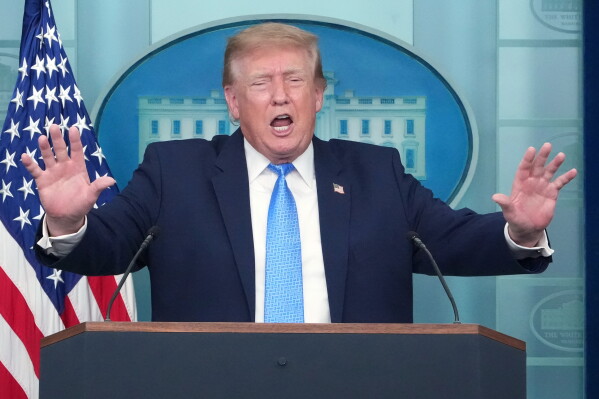
WASHINGTON, November 10, 2026: President Donald Trump said Monday that the FBI was looking into allegations involving Nvidia chief Jensen Huang after speaking with him. Trump said he believed Huang had no idea that a businesswoman reportedly suspected by US intelligence of gathering information for Beijing had been linked to the matter. The remarks came after Huang withdrew from two high-profile artificial-intelligence events, adding a public setback to a controversy that has prompted an independent board inquiry and fresh calls for congressional oversight.
Trump told reporters at the White House that he had asked Huang whether he knew the woman was a spy. Huang, according to the president, said he did not. Trump said he believed him and expected him to be in good shape. Reuters and The Associated Press reported the comments, but Trump did not describe the scope of any FBI inquiry, identify the investigators involved or say whether the bureau had opened a formal case. The Jensen Huang probe remains at an early stage: the FBI had not publicly confirmed an investigation in the reports reviewed.
The allegations centre on a business executive connected to a Singapore-based data-centre company that has bought Nvidia hardware. The New York Times reported that US intelligence officials believed the woman had gathered information for Beijing. Huang and Nvidia have not publicly identified her in their statements, and the reporting does not establish that Huang knowingly passed confidential information or took part in an intelligence operation. China has rejected the allegations as unsubstantiated.
Nvidia’s board announced on November 8 that independent directors, assisted by outside counsel, would examine reports that Huang had been the target of a foreign intelligence effort. The board said it had no reason to believe that US national security or Nvidia’s confidential information had been compromised. It also said Huang supported the review and had committed to cooperating fully.
That statement is the company’s current position, not a final finding. The board has not published a timetable, named the outside lawyers or explained which records and communications will be examined. It has also not said whether the inquiry will cover customer relationships, access to technical information, export-control compliance or all of those issues. The board said it would examine all available information and provide further updates when appropriate.
The market reaction was sharp, although the largest loss was an intraday figure rather than the closing result. Nvidia shares fell almost 7.5% at the start of Monday’s New York session, briefly erasing about $335 billion in market value, according to The Guardian’s live market coverage. The stock later recovered from that low but finished the session down 4.27% at $178.67; MarketWatch reported a loss of roughly $192 billion in market value for the day. The distinction matters: the $335 billion figure describes the early sell-off, not the final daily decline.
Huang separately sent a message to employees acknowledging that he had been unfaithful to his wife and apologising to his family, colleagues and shareholders. He did not name the business executive. In the same message, he said he supported the board’s investigation and would cooperate. The personal admission and the national-security allegations are distinct matters: neither an affair nor a reported relationship proves that company secrets were disclosed or that an intelligence service obtained sensitive information.
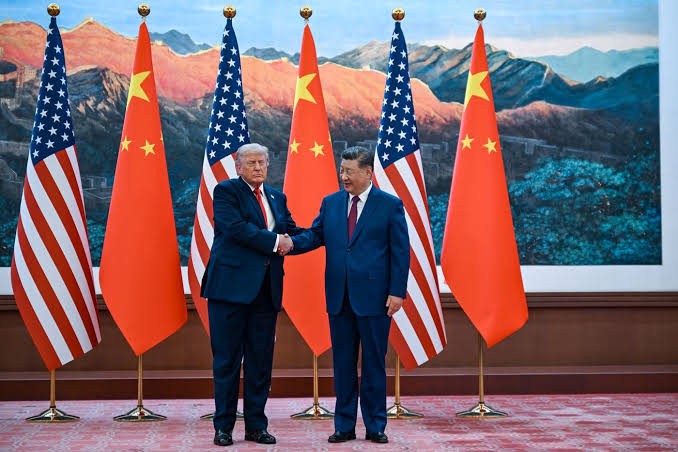
China’s Foreign Ministry rejected the espionage narrative on Monday. Spokesperson Guo Jiakun called the allegation unsubstantiated and described it as an attempt to smear China, according to AP’s account of the ministry briefing. Beijing’s denial does not resolve what US intelligence agencies may have assessed, just as the US reporting does not by itself establish that a transfer of protected information occurred. The central factual questions remain open.
Trump’s intervention adds a political dimension because Huang has been a frequent visitor to Washington as Nvidia has sought permission to sell advanced processors in China. The president’s public expression of confidence may reassure investors who feared an immediate leadership crisis, but it does not replace the board’s review or answer questions about the safeguards around a company whose products are central to the global AI industry.
TechCrunch reported that Huang withdrew from the ElevenLabs Summit scheduled for Wednesday in New York and from other speaking engagements, including the Anthropic CEO Forum. ElevenLabs confirmed the change to the publication. Nvidia is an investor in the voice-AI company. Neither Huang nor Nvidia publicly gave a reason for the withdrawals, so the schedule changes should not be treated as evidence that the board has reached a conclusion or that Huang is stepping aside as chief executive.
The withdrawals nevertheless reduce Huang’s immediate public presence at a time when customers, employees and investors are seeking clarity. Nvidia has not announced a leave of absence, a succession plan or any change to his role. The board has said it retains confidence in Huang and his leadership team. Whether he resumes the events, and when the company will offer a fuller account of the review, remain open questions.
Congressional scrutiny widened on Monday. House Democratic leader Hakeem Jeffries said lawmakers needed a full briefing on the Nvidia matter after a classified session with CIA Director John Ratcliffe and Director of National Intelligence Jay Clayton touched on the issue only briefly, with most of the meeting focused on Iran. Jeffries said Congress needed to understand what had happened and strongly supported restrictions on US chip sales to China in the annual defence authorisation bill.
That request is separate from an earlier letter by the chairs of three House committees asking Huang to attend a closed-door briefing on November 18. The committees said they wanted to question him about reported contacts involving a customer-linked executive and the company’s safeguards against foreign espionage. The request is not a subpoena or a public finding of wrongdoing. It is an effort by lawmakers to obtain information about how a major technology supplier manages sensitive customer relationships and protects information that may have national-security implications.
The board inquiry, any federal inquiry Trump referred to and congressional oversight have different purposes and powers. Nvidia’s directors are responsible for corporate governance and the protection of the company’s information. Federal investigators, if they are examining the matter, would determine whether there is evidence of a crime or a national-security breach. Lawmakers can question executives, seek documents and consider changes to export-control rules, but a request for testimony is not proof that an allegation is true.
The political debate is moving beyond Huang’s personal conduct to the rules governing advanced processors sold to China. Reuters reported that three measures are being considered for inclusion in the fiscal 2027 National Defense Authorization Act: the AI Overwatch Act, the Chip Security Act and the MATCH Act. They are not yet law. The proposals are part of negotiations over the annual defence bill, and their final form will depend on what the House and Senate agree to send to the president.
The AI Overwatch Act would give Congress a stronger role in decisions about exports of advanced chips. The Chip Security Act would require businesses to track chips overseas, with the aim of making it harder for restricted hardware to be diverted through intermediaries. The MATCH Act would press US allies to restrict sales of more semiconductor-manufacturing equipment to China. Together, the proposals reflect concern that export controls can be weakened if authorities cannot reliably identify the final user or follow hardware after it leaves the United States.
Jeffries said he supported restrictions in the final defence bill. Senators Elizabeth Warren and Jim Banks also argued that the allegations made the national-security case for tighter controls more urgent, Reuters reported. The measures have supporters in both parties, but they also face opposition from technology-industry groups that warn broader restrictions could reduce US competitiveness, complicate trade with allies and encourage customers to seek alternative suppliers.
Nvidia’s position illustrates the difficulty. The company has a commercial interest in selling processors to customers around the world, while Washington has sought to limit China’s access to computing systems that could support advanced military, intelligence or surveillance capabilities. A chip order may pass through distributors, cloud providers and data-centre operators before reaching the organisation that ultimately uses it. That makes end-user checks, documentation and the ability to trace products important parts of export enforcement.
The allegations involving a customer-linked executive have not established that Nvidia’s controls failed. The company has not confirmed that restricted chips were diverted in the case, and the board says it has no reason to believe that national-security information or Nvidia secrets were compromised. But the controversy has given lawmakers a new reason to question whether existing rules can keep pace with the speed and scale of AI hardware distribution.
For customers, the immediate concern is whether the review leads to changes in how Nvidia screens business partners or handles access to sensitive information. For investors, the questions include whether the inquiry affects leadership stability, regulatory exposure or the company’s ability to sell products in major markets. For policymakers, the challenge is to protect sensitive technology without creating rules so broad that they damage legitimate research, allied supply chains or the competitiveness of US chipmakers.
The next milestones are the board’s findings, any further statement from federal authorities, the requested congressional briefing and negotiations over the defence bill. Until those steps produce evidence or formal decisions, the allegations should remain allegations. Trump’s confidence in Huang is not an investigative conclusion, China’s denial is not a substitute for evidence, and the opening of a board review does not establish that a breach occurred.



Comments (0)
Be the first to comment. Comments are published after moderation.