


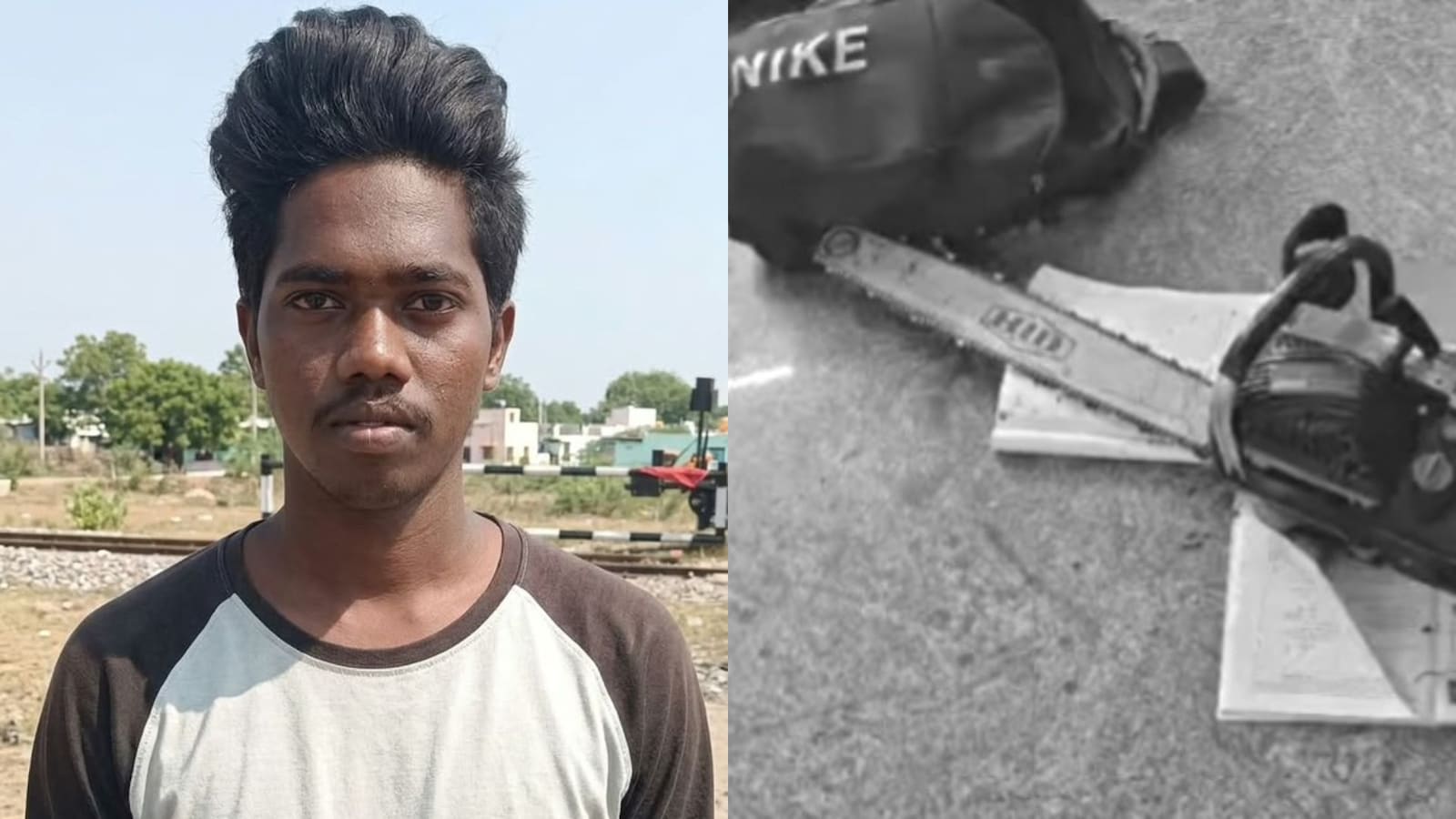
ANANTAPUR, November 1, 2026 — The man accused of attacking a school student with a chainsaw in Andhra Pradesh’s Anantapur district was injured in police firing on Sunday, according to reports that cited police sources. The Times of India’s earlier report described an attempted escape while the accused was being taken into custody. A later Indian Express update, citing police, said he had been hiding in Atmakur forest near Raptadu, was found by police teams and attacked officers with a knife; police said they fired six rounds in self-defence. The accounts differ on the immediate sequence and require clarification. A detailed public statement from the district police was not located by the time of this report.
The shooting is a new development in a case that began with an attack at a school in Raptadu on Saturday. It raises immediate questions about the sequence of events during the accused’s transport, the circumstances in which officers opened fire, and what investigators have established about the original assault. The later account from police, reported by The Indian Express, differs materially from the earlier escape-attempt description. It should be treated as the latest reported version, not an independently verified reconstruction, until a fuller official account is made public.
The Times of India’s earlier report described the shooting as following an alleged escape attempt while the accused was being taken into custody. In its later update at 10:12 p.m. IST, The Indian Express reported a different police account: the accused was not in custody, was hiding in Atmakur forest near Raptadu, and attacked police personnel with a knife when they found him. Police said they fired six rounds in self-defence. The accounts differ on the immediate circumstances, and a fuller police statement is needed to reconcile the sequence. The Indian Express said he was admitted to the Government General Hospital in Anantapur.
Those gaps matter because a police account of an attempted escape and the fact that an accused person was injured by gunfire are separate points. A complete chronology should identify where the accused was being taken, whether he was restrained, what prompted the alleged attempt to flee, whether officers gave warnings, and what threat they say required the use of a firearm. None of those details should be inferred from the mere fact that the accused was shot.
The accused was reported to have been taken to hospital for treatment. The reports reviewed for this article did not provide a detailed medical bulletin describing his injuries or confirming when he would be fit to be questioned. The hospital’s role is to treat him; any subsequent questioning or remand will depend on his condition and the relevant legal process. Until an official update is available, the extent of his injuries should be treated as unconfirmed.
The original incident took place on Saturday at a school in Raptadu, in Anantapur district. Reports said a 15-year-old student was attacked with a chainsaw and another student was hurt while trying to intervene. The attack caused alarm among families and staff because it took place on school premises, where children are expected to be protected from violence and where access by visitors or contractors needs to be controlled.
Early reporting described the accused as a young man known to people connected with the school area. Accounts about how he entered the premises and what preceded the attack have varied in detail. Some reports referred to work being carried out at the school, while others focused on an alleged personal motive. Those details remain allegations and should not be treated as proof of either the circumstances or the motive until investigators establish them.
The identity of a minor victim is not necessary to explain the public-safety issue and is not repeated here. The Indian Express’s later update said the student had been shifted to Manipal Hospital in Bengaluru and was on ventilator support, with vital parameters described as stable. An earlier report relayed a minister’s statement that bleeding had been controlled, while an IANS report said the next 48 hours remained crucial. The latest accessible update does not establish when the student may be able to come off the ventilator.
The latest report adds a second serious event to an already grave case. If an accused person is injured during a police operation, investigators need to establish not only what the accused allegedly did but also how officers responded. A clear account should distinguish the police version from any witness account, identify the officers involved, record the circumstances in which the weapon was discharged and preserve relevant medical, station and transport records.
The use of force is not automatically lawful or unlawful merely because police say a suspect tried to escape. The relevant facts include the nature of the alleged threat, whether less dangerous options were available, the necessity and proportionality of the force used, and the legal authority under which it was used. Those questions can only be assessed against evidence. The public reports available so far do not establish whether an internal review or a separate inquiry has been ordered in this non-fatal shooting.
India’s Supreme Court and the National Human Rights Commission have set procedures for police encounters, particularly cases in which a person dies during police action. The NHRC’s published guidance stresses documentation and investigation rather than accepting a police account as conclusive. The present case has been reported as a non-fatal injury, so death-specific requirements should not be assumed to apply in precisely the same way. The broader principle remains important: the circumstances of firearm use must be recorded and open to lawful scrutiny.
The accused’s rights do not depend on whether the alleged original offence is shocking. He is entitled to medical care, access to legal process and a determination of the allegations in court. At the same time, the seriousness of the school attack requires investigators to preserve evidence, protect witnesses and establish what happened without delay. Treating the police-firing episode as a separate factual question helps prevent the original allegations from being used either to prejudge the accused or to avoid scrutiny of the later use of force.
The next public update should reconcile the different accounts of the shooting, specify the location and time, and explain the police operation in Atmakur forest, including what happened when officers found the accused and why they fired. Investigators should also explain whether there were independent witnesses, whether nearby CCTV footage is available, how the weapon and ammunition were accounted for, and whether a medical examination recorded the trajectory and nature of the injuries. These are routine evidentiary questions, not conclusions that misconduct occurred.
A separate line of inquiry concerns the original attack. Police will need to establish how the accused reached the school, whether he had any prior contact with the victim, what the evidence says about motive, and whether anyone else helped plan or carry out the assault. Any claim about a rejected proposal, stalking or a personal dispute must remain attributed until supported by evidence. A reported motive is not a substitute for a completed investigation.
School administrators and local authorities will also face questions about entry controls and emergency response. A school cannot prevent every act of violence, but it should have a clear process for checking the identity and purpose of visitors, controlling access during repair work, alerting staff when a threat is reported and getting injured students medical help. Those practical questions can be examined without speculating about the accused’s state of mind or assuming that a particular security failure has already been proved.
For families, the immediate concern remains the injured student’s recovery and the safety of other children. Officials should provide verified medical updates through appropriate channels while protecting the privacy of a minor. Schools in the area may need to explain any temporary changes to access or security arrangements, but unverified messages about the case should not be circulated as fact. Accurate information is particularly important when an incident involves children and a rapidly developing police investigation.
As of the latest update, the full circumstances of the shooting remain unclear because published accounts differ on whether the accused was in custody or hiding in the forest. The exact injuries sustained by the accused and whether an independent review has begun were not established in the reports reviewed. The latest available medical update said the student was on ventilator support with stable vital parameters. Those gaps should be addressed by the authorities rather than filled with speculation.
The next milestones are likely to be a police briefing, a medical update, and the accused’s appearance before the appropriate court when his condition permits. The original assault and the police-firing episode should be documented separately. The public needs a clear explanation of both: what happened to the student at Raptadu school, and what happened when officers later used a firearm during the search in Atmakur forest.


Comments (0)
Be the first to comment. Comments are published after moderation.