


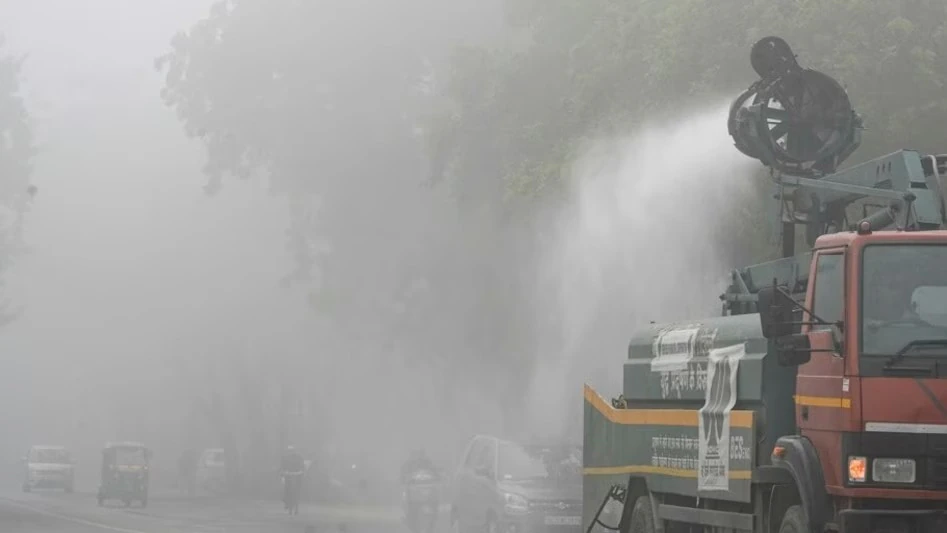
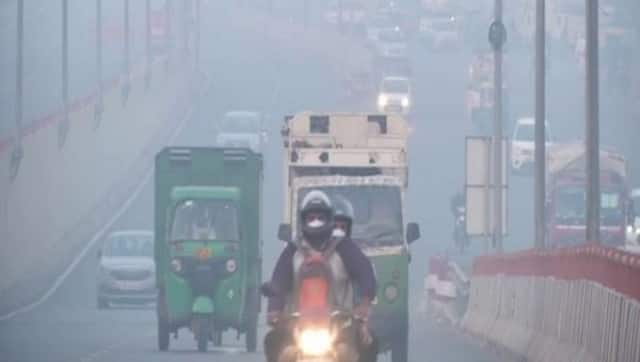
New Delhi, November 5: Delhi’s air quality is forecast to deteriorate from the “very poor” category to “severe” over the next three days, with the official Air Quality Early Warning System warning of a further deterioration from November 6 through 8 as the capital approaches Diwali. The forecast comes as the city’s average Air Quality Index stood at 370 at 8 am on Thursday and a number of monitoring stations had already crossed the severe threshold.
The early-warning system, operated by the Indian Institute of Tropical Meteorology under the Ministry of Earth Sciences, projected very poor conditions for November 5 and severe air from November 6 to 8. Its extended outlook indicated that pollution could remain between severe and very poor levels in the days that follow. The forecast is an assessment of expected conditions, not a guarantee that every monitoring station will record the same category throughout the period.
Thursday’s readings showed how uneven the pollution had become across the capital. The Indian Express reported that the city’s 8 am average was 370, while Jahangirpuri recorded 459. At least 12 monitoring stations were above 400, the threshold for severe air quality, including Punjabi Bagh, Narela, Alipur, Rohini, Mundka and Sonia Vihar. Other parts of Delhi remained in the very-poor or poor categories.
Also read: Delhi Air Quality Worsens to Very Poor at AQI 369; Mandir Marg Records 508
The early-warning system’s outlook is based on atmospheric conditions that influence how quickly pollutants disperse. Its November 5 update listed a predicted maximum mixing depth of 1,650 metres and a ventilation index of 12,000 square metres per second for the day. The projected ventilation index was 16,000 on November 6, 12,000 on November 7 and 2,500 on November 8. The system notes that a ventilation index below 6,000, together with average wind speeds below 10 kmph, is unfavourable for the dispersal of pollutants.
The projected severe category from November 6 to 8 is therefore the most important near-term warning for residents. The CPCB classification places AQI readings between 301 and 400 in the very-poor band and readings between 401 and 500 in the severe band. The official guidance attached to the scale says very poor air can cause more serious health effects, while severe conditions carry a health warning for the wider population.
Daily averages can mask much higher readings at individual locations. A city-wide figure is calculated from monitoring stations and does not mean every neighbourhood has identical air. Residents near stations reporting severe readings may face a different local situation from people in areas still classified as very poor or poor. Hourly and station-level readings can also change as wind direction, mixing height and local emissions shift.
That distinction matters when comparing figures published by different monitoring services. Official CPCB-based readings and station data follow the government’s AQI framework. Private monitoring platforms may use different sensors, coverage or calculation methods and can display substantially different numbers. A high reading from a private platform should not be substituted for the official city average without explaining how it was measured.
The forecast places the deterioration immediately before Diwali, which falls on November 8 this year. The period is already marked by a combination of seasonal emissions and weather that can limit dispersion. Stubble burning in neighbouring agricultural states remains one contributor to the wider regional pollution load, while transport, industry, construction dust and household sources add emissions within the National Capital Region.
Punjab recorded 2,347 farm-fire incidents between September 15 and November 4, according to figures cited by The Indian Express. That was lower than the 2,839 recorded over the corresponding period in 2025, and well below the 14,173 reported in 2023. The lower count does not mean crop-residue burning has stopped contributing to pollution; the effect on Delhi depends on the location and timing of fires, wind direction, atmospheric mixing and other emissions operating at the same time.
Weather can also change the short-term outlook. The official forecast points to severe conditions across November 6 to 8, while meteorologist Navdeep Dahiya told The Indian Express that wind speeds could rise on November 6 and 7, potentially helping disperse some of the accumulated pollution during parts of the day. Those are different forecasting inputs and should not be treated as a settled improvement. A temporary increase in wind may bring relief at certain hours without removing the risk of a later rise in pollution.
The festival period adds uncertainty because firecracker emissions can produce sharp, short-lived increases in particulate matter. The scale of any change will depend on how much fireworks activity occurs, the weather at the time and the background pollution already present. The early-warning system’s severe outlook for November 8 makes the timing particularly important, but the actual AQI will only be known from monitoring observations as the day progresses.
For people living in Delhi and the surrounding districts, the forecast is a signal to follow official station-level updates rather than rely on a single headline number. Conditions can vary between neighbourhoods and from morning to evening. Children, older people and those with existing heart or lung conditions are among the groups identified by public-health guidance as more vulnerable to polluted air; the official AQI scale itself warns that severe conditions may affect the wider population.
Public authorities are already operating under pollution-control measures introduced ahead of the winter peak. The Commission for Air Quality Management’s graded response framework is designed to add restrictions as conditions worsen, covering areas such as construction dust, road dust, diesel generators and transport. The effectiveness of those steps depends on enforcement across Delhi, Haryana, Uttar Pradesh and Rajasthan, because pollution does not stop at city or state borders.
Transport is one of the areas where authorities can try to reduce emissions while maintaining access to work and essential services. The Fortune Post’s earlier coverage reported additional weekday Metro services after Stage II of the Graded Response Action Plan took effect. That response is part of a broader effort to encourage public transport, but it cannot by itself offset emissions from every source affecting the airshed.
Also read: Delhi Metro Adds 20 Weekday Trips as GRAP-II Curbs Take Effect
For agencies, the immediate priorities are to enforce existing restrictions, monitor construction and road dust, coordinate with neighbouring states on farm fires and communicate changes in the forecast. The distinction between forecast and observation should remain clear in official advisories. If conditions improve for a few hours, that should not be presented as the end of the episode while the multi-day outlook continues to indicate severe risk.
Delhi’s next few days will test whether changing winds can provide temporary relief before the festival and whether emissions during Diwali push readings higher. The official early-warning system currently expects severe air from November 6 through 8, while the November 5 city average remains very poor. Residents and public agencies should treat that as a warning window, not as a final measurement of what every locality will experience.
Comments (0)
Be the first to comment. Comments are published after moderation.