


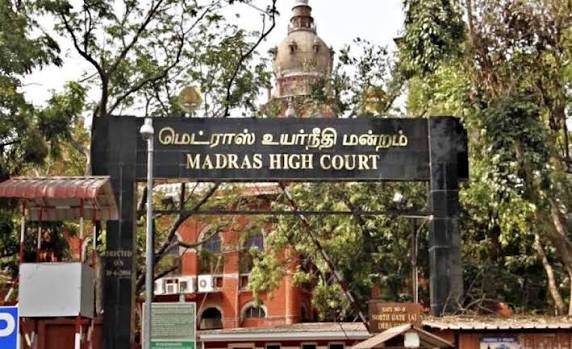
CHENNAI, November 4, 2026 — The Madras High Court has set aside a police order refusing permission to residents of Sitharkadu village in Mayiladuthurai district to stage a sit-in protest over alleged air pollution from a government-run rice mill. The court held that a peaceful demonstration cannot be stopped merely because the police anticipate a possible law-and-order problem. It directed that the protest be permitted at the village cremation ground from November 29, subject to safeguards intended to keep the gathering peaceful and allow funeral rites to continue if required.
The petition was filed by M. Anburaj, a resident of Sitharkadu, after police refused permission for a proposed demonstration. Residents wanted to draw the attention of district and state authorities to what they describe as persistent pollution from a Modern Rice Mill operated by the Tamil Nadu Civil Supplies Corporation. Their complaints, as reported in court coverage, concern emissions and the handling of pollution-control measures at the facility. These are the residents’ allegations; the protest-permission ruling did not amount to a technical finding that the mill had breached environmental standards.
The residents’ grievance is not limited to a single incident. Reports on the case say villagers have raised concerns over the mill for years and have questioned whether the pollution-control equipment is being operated and maintained effectively. They have also referred to the impact on people living near the facility. The court was not asked in this petition to measure emissions, decide whether a consent condition had been violated or order the plant to close. Its immediate task was narrower: whether the police could refuse permission for the proposed peaceful protest on the grounds stated.
The distinction between the environmental complaint and the right to demonstrate is important. A court can protect the process through which residents bring a grievance to public attention without deciding the underlying technical dispute. The pollution allegations may still require examination by the relevant environmental regulator, including a site inspection, monitoring records and compliance documents. A protest order cannot substitute for those statutory processes, and permission to protest does not itself prove that the mill is polluting.
Justice V. Lakshminarayanan referred to the constitutional protections for expression and peaceful assembly. Article 19(1)(a) protects freedom of speech and expression, while Article 19(1)(b) protects the right to assemble peacefully and without arms. The court treated the proposed sit-in as a form of expression through which residents sought to place an environmental concern before public authorities. It said the demonstration could not be stopped at the outset simply because officials feared that a law-and-order problem might arise.
The judgment also referred to fundamental duties under Article 51A. Clause (a) asks citizens to respect the Constitution and its ideals, while clause (g) refers to the duty to protect and improve the natural environment. The judge considered the residents’ attempt to draw attention to alleged pollution as consistent with the responsibility to protect the environment. That reasoning does not make every environmental allegation automatically correct; it explains why a peaceful public representation about the environment can have constitutional significance.
The court relied on the Supreme Court’s decision in Mazdoor Kisan Shakti Sangathan v. Union of India, which discussed the place of peaceful protest in a democratic system. The Supreme Court recognised that public demonstrations can provide an outlet for grievances, while also making clear that protest rights must be balanced with public order and the rights of other people. The Madras High Court applied that broader principle to the specific facts before it: a proposed sit-in at a cremation ground, with conditions designed to prevent disruption.
The ruling should not be read as saying that police can never regulate a demonstration. Articles 19(2) and 19(3) allow reasonable restrictions on speech and assembly for constitutionally recognised purposes. Authorities may impose proportionate conditions where there is a specific and credible risk to public safety, traffic, access or the rights of others. The court’s objection was to a refusal based only on a general apprehension, without sufficient grounds to sustain the decision in this case.
The court did not grant permission without safeguards. The organisers were directed to furnish a list of participants to the police in advance and to ensure that the sit-in remained peaceful. If the police identified individuals who were likely to exploit the gathering to create a law-and-order problem, the organisers were directed to exclude those persons from the list. The court also required participants to make way if funeral rites or other death-related ceremonies had to take place at the cremation ground during the protest.
Those conditions reflect the unusual location chosen for the demonstration. A cremation ground is not an ordinary public meeting space: families may need access for funeral rites at short notice, and the site must remain usable for that purpose. The order therefore balances the residents’ request to use the space for a sit-in with the community’s need to conduct ceremonies. The requirement to preserve access is not a minor detail; it is central to the court’s decision to permit the protest at that particular venue.
The organisers will also have to manage the gathering in a way that avoids blocking access routes or creating avoidable tension with residents who are not taking part. A peaceful protest depends not only on the absence of violence but also on compliance with the conditions imposed by the court. The police retain responsibility for public safety, but they must act within the limits of the order and cannot treat the mere possibility of disagreement as sufficient reason to cancel the event.
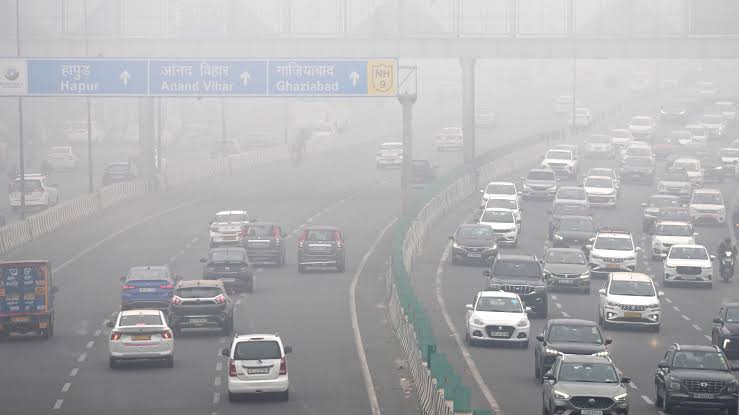
Also read: Delhi AQI Reaches 261 as Winter Pollution Curbs Begin
The order is also a reminder that environmental grievances can involve more than the technical process of measuring pollution. Residents may seek inspection reports, ask regulators to enforce consent conditions, approach local officials and use lawful public forums to make their concerns visible. These routes serve different purposes. A demonstration can communicate the seriousness of a grievance, while the pollution-control authority must rely on monitoring data, statutory powers and documented compliance when deciding whether enforcement action is warranted.
The sit-in is scheduled to begin on November 29, 2026. The organisers must comply with the participant-list requirement and the conditions protecting funeral rites. The local police will remain responsible for maintaining order, but the refusal that prompted the petition has been set aside. If a fresh and specific safety issue arises, it would have to be addressed in accordance with the court’s directions and applicable law rather than through a blanket assumption that a protest may become disruptive.
The environmental complaint remains a separate issue. Residents can continue to pursue their allegations through the Tamil Nadu Pollution Control Board and other competent authorities. Relevant evidence would include inspection records, emissions monitoring, the operating status of pollution-control equipment, consent conditions and any directions already issued to the mill. If the authorities find violations, they have statutory tools to require corrective action. If they do not, they should be able to explain the basis of their findings.
For other communities, the judgment is a reminder that a peaceful protest is a constitutionally protected form of expression, but not an unrestricted licence to occupy any place or disregard the rights of others. The location, scale, conditions and specific risks matter. The court’s order does not resolve every dispute about protest permissions; it shows that authorities must give legally sustainable reasons when they restrict a peaceful gathering and that conditions may be preferable to an outright ban.
The immediate outcome is therefore procedural but significant for the villagers: they can proceed with the sit-in under the safeguards set by the court. Whether the protest leads to a fresh inspection or other action on the rice mill will depend on the evidence and the response of the competent regulators. The court has protected the residents’ ability to raise the issue publicly without deciding the merits of the pollution allegations. That distinction should remain clear as the November 29 date approaches.
The order is also fact-specific because the proposed venue is a cremation ground and the petition concerns a sit-in rather than an unrestricted procession or occupation. A different site, larger gathering or credible evidence of a particular safety risk could justify different conditions. The ruling does not require police to approve every request exactly as submitted; it requires them to assess the actual proposal, explain any restrictions and avoid treating a general fear of disruption as proof that a peaceful gathering cannot be managed.
For residents, the next practical step is to keep the protest within the permission granted and continue the environmental complaint through the appropriate regulator. A documented record of dates, odour or dust incidents, photographs, medical complaints where relevant, inspection requests and replies can help an authority decide whether a site visit or monitoring exercise is required. Those materials should be presented to the pollution-control body rather than treated as a substitute for technical testing. The court’s protection of the protest gives residents a public forum; it does not predetermine what the regulator will find.


Comments (0)
Be the first to comment. Comments are published after moderation.