


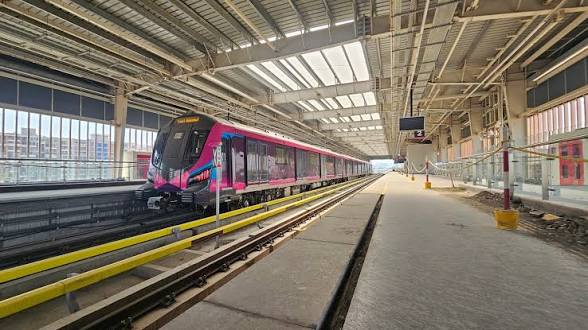
Pune, November 3, 2026 — Pune Metro Line 3, the elevated corridor connecting the Hinjewadi information-technology hub with Shivajinagar, was inaugurated on Tuesday, marking a major milestone for public transport in one of Maharashtra’s fastest-growing urban regions.
The corridor is approximately 23.2 kilometres long and includes 23 stations, linking a major employment district with central Pune. The project has been reported at an estimated cost of around ₹8,313 crore. Passenger services are expected to begin on November 4, with the initial operating plan and service timings to be confirmed by the operating authorities. Travellers should rely on the latest official service notice for the opening timetable rather than assume that inauguration means every station and service pattern is immediately operating at full capacity.
Hinjewadi is home to a large concentration of technology companies and offices, while Shivajinagar provides access to established commercial, institutional and transport areas. A direct rapid-transit connection between the two can offer commuters an alternative to road travel, particularly during peak periods when congestion increases journey times and makes arrival times less predictable. The actual time saved will vary by origin, destination, transfer needs and the distance between stations and workplaces.
The practical benefits will depend on more than the inauguration itself. Commuters need dependable train frequency, clear station access, safe pedestrian routes, convenient feeder buses and last-mile connections to workplaces and residential neighbourhoods. If those links are weak, some passengers may continue to rely on private vehicles or taxis for parts of the journey. A successful corridor is therefore measured not only by the track and stations delivered but by how easily people can use the service for ordinary daily trips.
For Pune’s transport system, the corridor is significant because road congestion is linked to the city’s expanding employment base and the geography of its growing suburbs. A metro line can move large numbers of people through a defined corridor, but its effect on traffic depends on whether people can reach stations easily and whether services fit their working hours and travel patterns. Employers may need to review shift timings and shuttle arrangements to help staff connect with the service.
The project’s cost and scale also make operating performance important. Authorities will need to communicate the fare structure, first and last train times, frequency, interchange arrangements and procedures for passengers with disabilities. Clear information in stations and digital channels can help commuters plan journeys before the service becomes part of their daily routine. Signage, accessible station design, safe crossings and well-managed drop-off areas can influence whether residents consider the metro a practical alternative.
Metro infrastructure can support lower-emission travel when it replaces trips that would otherwise be made by private vehicles. The overall environmental benefit depends on ridership, the electricity used to operate the system, construction impacts and the extent to which buses, walking and cycling connect with stations. The inauguration is therefore an opening milestone, not by itself proof of a measured reduction in congestion or emissions. Authorities would need to compare travel patterns and ridership over time to establish the scale of any change.
Employers in Hinjewadi may also need to adjust staff travel guidance as passenger services begin. Companies could benefit if a reliable transit option reduces the uncertainty of commuting, but the impact will vary depending on where workers live, their shift timings and the distance between stations and office campuses. Small businesses and residents near stations may experience changes in footfall, though the direction and size of those effects will depend on access and surrounding development.
Early passenger experience will be an important test. Authorities should monitor crowding, service reliability, access at stations and the quality of feeder connections, then publish updates where adjustments are needed. The first weeks of operations can reveal practical problems that are difficult to identify during construction and ceremonial testing. Reliable public information about delays and service interruptions will also matter as commuters decide whether to incorporate the line into daily routines.
Passengers should check the operator’s latest service announcement before travelling, especially during the initial days, because opening schedules and operating arrangements can change. The inauguration confirms the project’s transition into the service phase; the quality of everyday operations will determine how much value it delivers to commuters. Over time, ridership, reliability, integration with other transport and the ease of reaching stations will provide a more useful measure of the corridor’s success than the opening ceremony alone.


Comments (0)
Be the first to comment. Comments are published after moderation.