


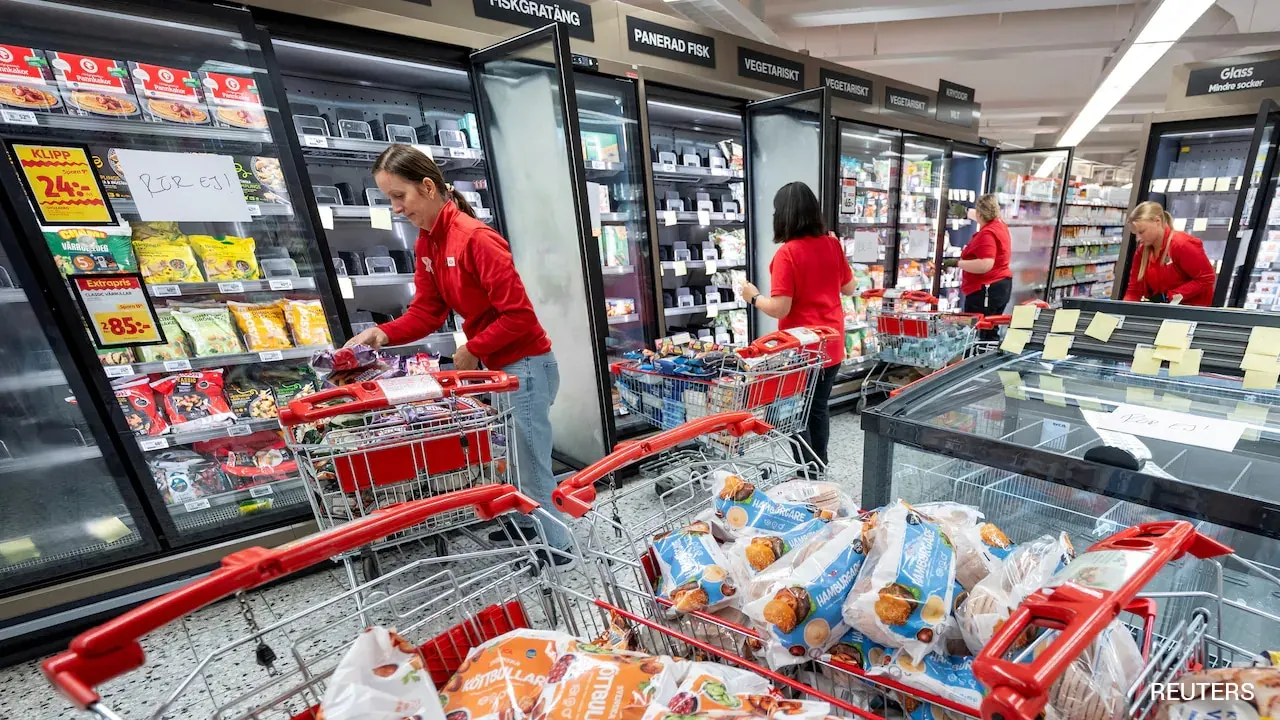
November 3, 2026 — Supermarkets across Europe are investigating a wave of refrigeration disruptions after systems controlling store fridges and freezers were apparently manipulated remotely, forcing retailers to remove food from sale and raising fresh concerns about the security of connected equipment used in essential supply chains.
Reports from retailers and national newsrooms describe incidents in Belgium, Sweden, Estonia, Finland, Ireland, Luxembourg and the Netherlands, with later reporting also identifying problems in Italy and Portugal. The scale varies by country and chain, and the available accounts do not establish that every incident was carried out by the same actor. Several retailers have confirmed cyber incidents or unauthorised changes, while others say they are still investigating technical faults.
In Belgium, Carrefour said around 15 of its roughly 700 stores were affected. Delhaize reported refrigeration problems in several dozen outlets, while other chains and smaller retailers also reported disruptions. Sweden’s Coop confirmed an incident affecting a small number of stores and said the problem had been resolved. In Ireland, Musgrave said refrigeration systems at 13 SuperValu stores were affected and products were removed as a precaution. Retailers and suppliers have reported that some systems were restored, although the extent of food losses across the region remains unclear.
Some reports described control settings being raised to unusually high temperatures, including readings of 50 degrees Celsius in individual cases. Such temperatures are not safe storage conditions for chilled or frozen food. Retailers therefore faced a practical choice: isolate affected units, check stock and discard products where food-safety rules required it. The incidents did not mean that all food in the affected stores was unsafe, and there is no verified evidence in the reporting reviewed that contaminated products reached consumers. The exact quantities discarded have not been established.
The suspected attacks follow a similar incident in France on October 12, when refrigeration systems at hundreds of supermarkets and independent stores reportedly malfunctioned after temperature settings were changed. The recurrence has drawn attention to the software and remote-management equipment used to monitor refrigeration in distributed retail networks. Such systems can help staff respond quickly to faults, but remote access can also create an entry point if credentials, network access or software are not adequately secured.
In several reported cases, the equipment was connected to externally managed control systems. Danish refrigeration supplier Danfoss was named in reporting about equipment used at some affected stores, but that does not by itself establish that the supplier’s systems were responsible for the incidents. Retailers, suppliers and authorities will need to distinguish between a vulnerability in a product, compromised customer access, weak network separation and other possible causes. No group has publicly claimed responsibility in the reporting reviewed.
Authorities in Belgium have opened an investigation, while cybersecurity officials in other affected countries have acknowledged the incidents or said they are examining them. Publicly available information has not established a common command-and-control infrastructure, a single perpetrator or a definitive motive. Any suggestion that a state actor is responsible remains speculation unless investigators produce evidence supporting that conclusion.
The immediate public concern is food safety and continuity of supply rather than a demonstrated shortage. Retailers have taken affected products out of circulation and said stores were able to remain open in many cases. Distribution centres and deliveries were reported to be operating normally at some chains, but that should not be assumed for every retailer or country. Consumers should follow local food-safety advice and avoid buying products that have been explicitly recalled or withdrawn; they should not assume that all refrigerated goods in an entire country are affected.
The wider lesson is that operational technology in ordinary commercial settings can have consequences beyond the computer network. Refrigeration controls support food preservation, and a remote change to a temperature setting can trigger waste, interrupt sales and create pressure on store staff even without a conventional ransomware demand. Similar risks can apply to heating, building management, industrial cooling and other connected systems when they are reachable through poorly protected remote access.
Retailers and equipment operators will need to review remote-access permissions, multi-factor authentication, software updates, network segmentation and alerting for unusual configuration changes. They should also ensure that manual checks and safe fallback procedures are available if digital controls are compromised. Legacy equipment can be difficult to replace quickly, but leaving it exposed without compensating safeguards can increase the consequences of a breach. Suppliers and store operators will need to coordinate because responsibility for the equipment, connectivity and maintenance may be divided among several parties.
For now, the investigation remains open. The key unanswered questions are whether the incidents share a technical signature, how access was obtained, how many stores and products were affected, and whether the attacks were intended to cause financial disruption, test access to operational systems or achieve another objective. Authorities have not publicly identified a perpetrator, and the reported incidents should not be treated as proof of a wider coordinated campaign until investigators establish the links.
Comments (0)
Be the first to comment. Comments are published after moderation.