


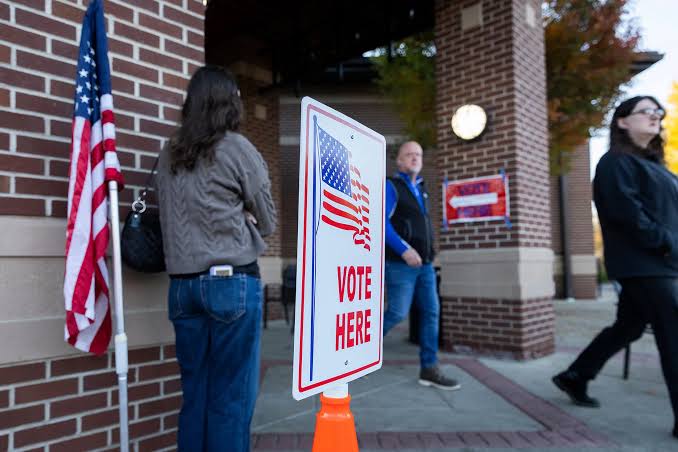
WASHINGTON, November 4, 2026 — Early results from the United States midterm elections point to a Democratic gain in the House of Representatives and a more competitive contest for control of the Senate, setting up a potentially difficult final two years for President Donald Trump. US media projections cited by Reuters indicated that Democrats were on track to win the House, while the party also flipped Republican-held Senate seats in North Carolina and South Carolina. The Senate outcome remained unresolved as several battleground states continued counting votes.
The results are important because the midterms determine the balance of power in Congress for the second half of a president’s term. They do not elect a president, and they do not remove the president from office. Instead, voters choose members of the House and a portion of the Senate, along with governors, state legislators and local officials. The new congressional balance will shape committee leadership, legislative priorities, investigations and confirmation proceedings when the next Congress begins in January.
Reuters reported that Democratic candidates won Senate seats in North Carolina and South Carolina, giving the party two of the four net pickups it needed to secure a Senate majority. Former North Carolina governor Roy Cooper defeated Republican Michael Whatley, flipping a seat held by the Republicans. In South Carolina, paediatrician Annie Andrews defeated Darline Graham in a result Reuters described as a major upset. The two victories narrowed the path to a Democratic majority, but they did not settle the chamber’s control.
Democrats also held Senate seats in Georgia and New Hampshire, where the races had been considered competitive earlier in the campaign. Other outstanding Senate battlegrounds included Alaska, Iowa, Kansas, Maine, Michigan and Ohio, according to the Associated Press. Several races remained too close to call as vote counting continued. Millions of ballots were still uncounted in some of those states when the report was filed. The outcome therefore depended on both the final vote totals in those races and the number of seats each party retained elsewhere.
The House picture was clearer but not yet complete. The Associated Press reported that Democrats were moving towards control after defeating six Republicans in key battleground races. The party needed a net gain of three seats to reach a majority in the 435-member chamber. Many of the most closely contested districts had not been called when the early report was published. Media projections and live-count assessments are based on partial vote totals and analysis; they are not the same as a final certified result from every state.
The distinction between a projected majority and a fully counted result is especially important in close races. State election authorities must complete counting under their own rules, review provisional and absentee ballots where applicable, and certify the results. Recounts or legal challenges can follow in very close contests. A party may be projected to control a chamber before every seat is formally certified, but the final composition is established through the official process.
The election also produced notable state-level outcomes. The Associated Press reported that Keisha Lance Bottoms won Georgia’s gubernatorial race, becoming the first Black woman elected governor of a US state. Governors influence state budgets, education, transport, emergency management and the implementation of federal programmes. Those contests can have a direct effect on residents even when the national debate is dominated by the battle for Congres.
If Democrats control the House, they would choose the Speaker and committee chairs, set much of the chamber’s agenda and gain greater power to investigate the administration. House committees can hold hearings, request documents and issue subpoenas within the rules governing congressional oversight. The ability to start or advance legislation would also shift, although a bill still needs to pass the Senate and be signed by the president or survive a veto override.
Senate control has a different set of consequences. The Senate confirms cabinet officials, ambassadors and federal judges, and it plays a central role in approving treaties and considering legislation. A Democratic majority would allow the party to control committee leadership and the scheduling of many nominations. It could slow or block some of Trump’s appointments, while giving Democrats more leverage in negotiations over budgets, debt limits and other measures.
A change in congressional control would not mean that the president loses executive authority. Trump would remain in office and retain the veto power. Most major legislation would still require agreement across both chambers, and Senate rules such as the legislative filibuster can make it difficult to pass many bills without broader support. A divided Congress can therefore create gridlock, but it can also increase the role of oversight and negotiation.
The midterm result is often treated as a referendum on the president, especially when the president is a dominant figure in the campaign. Reuters reported that exit polling found half of voters viewed the election as an opportunity to rebuke Trump, while about 70 per cent wanted Congress to provide stronger checks and balances on the president. Those figures are survey findings, not a count of votes for a single policy. They help explain the political mood but do not establish why every individual voter chose a candidate.
Affordability and the cost of living were central issues in the campaign, alongside immigration, the administration’s approach to the Iran war and concerns about fuel prices. Voters experience these subjects differently across states and districts. A household facing high housing costs may prioritise a different issue from a worker in an energy-producing region. The results therefore combine national dissatisfaction with local candidate choices, turnout patterns and the particular contests on each ballot.
A change in House control would increase the likelihood of hearings and investigations into administration decisions, spending and the use of federal agencies. The Senate could influence the pace of judicial and executive confirmations. Both chambers would also have a role in budget negotiations and the passage of legislation on taxes, health care, immigration, energy and technology. The scope of any change would depend on the size of the majority and the willingness of individual lawmakers to vote with party leaders.
Technology policy is one area to watch. Congress has been debating how to regulate artificial intelligence, data centres, online platforms, competition and the use of personal information. A new committee leadership structure could change which hearings are held and which bills receive attention. It would not, by itself, rewrite existing regulations or immediately change the rules that companies follow. Agencies would still operate under existing statutes unless Congress passes new legislation or courts alter the legal position.
Trade and immigration policy also matter to businesses outside the United States. Congressional oversight can shape debates over tariffs, supply chains, visa rules and funding for border agencies. But the president retains significant authority in foreign policy and many executive decisions. For India, the practical effect will depend on the specific legislation, executive actions and diplomatic choices that follow, not simply on which party wins a chamber.
Financial markets can react to expectations about tax policy, regulation, fiscal spending and political stability, but a single election result does not determine the direction of the dollar, equities or bond yields. Reuters reported that currency traders were watching the early results as the dollar weakened and the rupee attempted to extend a recovery. The report also noted that the election’s foreign-exchange effects were expected to be short term rather than a structural shift. Market moves should be interpreted alongside economic data and central-bank expectations.
The Fortune Post’s earlier report explained the stakes before polling began, including the House and Senate arithmetic, governorships and state-level contests. This update focuses on the results that have since been projected or called. The two stages of the election are distinct: a pre-election preview describes what is at stake, while the result report must identify which contests have been decided and which remain open.
Also read: US Midterm Elections 2026 Begin as Voters Decide Control of Congress
The next milestones are the remaining Senate calls, the final House seat count and the certification of state results. Once the winners are established, party leaders will begin organising the new Congress, choosing committee chairs and negotiating the first legislative priorities. Until that process is complete, statements about a full Democratic sweep or a settled Senate majority should be treated cautiously. The confirmed picture is a strong Democratic advance, a projected House gain and a Senate contest that remains unresolved.






Comments (0)
Be the first to comment. Comments are published after moderation.