


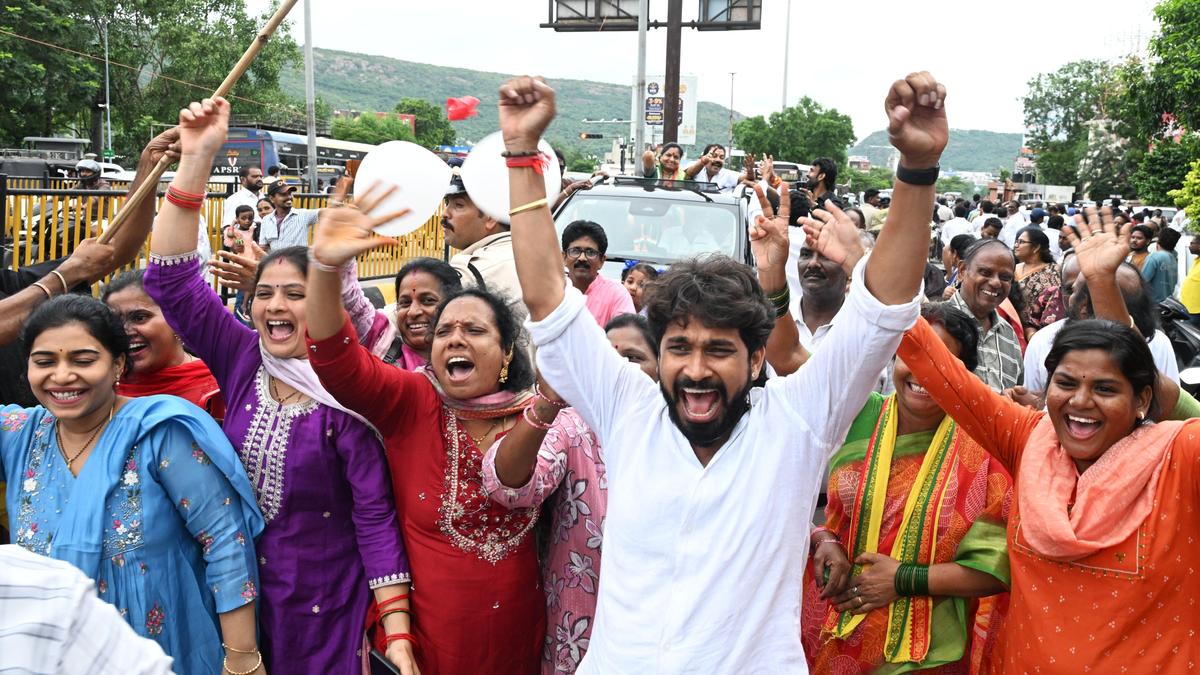
AMARAVATI, November 4, 2026 — The Telugu Desam Party-led National Democratic Alliance has emerged as the dominant force in Andhra Pradesh’s urban local body elections, securing a commanding share of mayoral and municipal chairperson contests as counting progressed on November 3. The YSR Congress Party recorded a significant setback but won the mayoral contest in Anantapuram, where TDP rebels split the ruling alliance’s vote. The results offer the first major test of the state coalition’s urban support since the 2024 Assembly election, but they also leave local administrations with immediate responsibilities over roads, drainage, sanitation and water supply.
The elections covered 100 urban local bodies, with polling held in 92 and several posts decided without a contest. The contested areas included 13 municipal corporations and 79 municipalities and nagar panchayats. Counting was conducted across the state on Tuesday, November 3, although the process in Chirala municipality was postponed to November 6 after heavy rain associated with Cyclone Murasu. The distinction between the total election schedule and the bodies counted on the day matters when comparing statewide totals.
The Times of India reported late on Tuesday that the TDP was heading towards nine mayoral posts, while its Jana Sena ally had won both mayoral seats it contested. The YSRCP won the Anantapuram mayoral election through Ramesh Goud, despite the party securing only around 15 of the city’s 62 divisions. TDP rebels won four divisions and were reported to have affected the alliance’s prospects by splitting votes in some contests. The figures describe the position reported late on counting day, not a single final statewide party seat total.
Among the TDP mayoral victories reported by the newspaper were Guntur, Machilipatnam, Nellore, Tirupati and Chittoor. The party’s nominees in Greater Visakhapatnam, Vizianagaram, Ongole, Kurnool and Kadapa were leading or had substantial margins when the report was filed. Jana Sena’s Reddi Appalanaidu won the Eluru mayoral seat, while party leader Vangaveeti Radhakrishna was heading towards a major win in Vijayawada. The final status of every contest should be checked against the official declaration rather than inferred from a late-night lead.
The alliance’s advantage extended to municipalities and nagar panchayats. The Times of India said NDA candidates were leading in 62 of the 68 chairperson posts for which counting was taken up, while the alliance had already secured 17 municipal towns unopposed. Its report put the coalition’s tally at 80 of 86 municipalities. The newspaper also described strong ward-level results in several towns, including Mandapeta, Yemmiganur and Narsapuram. These figures show the scale of the coalition’s advantage but should not be confused with a certified tally for every ward.
The final polling turnout was 62.16 per cent, according to figures reported by The New Indian Express from the State Election Commission. Of 96,89,061 registered voters, 60,22,411 cast ballots. The figure was higher than the earlier provisional count of 60.96 per cent published on November 2, after more complete polling information and repoll data were incorporated. Chimakurthy recorded the highest turnout at 84.36 per cent, while Tirupati had the lowest among the 92 urban local bodies at 46.85 per cent.
The counting operation itself was substantial. The State Election Commission arranged 138 counting centres, 556 counting halls and 6,831 tables, with 47,817 personnel deployed. The commission also placed 1,372 CCTV cameras at strong rooms and counting halls. Those arrangements matter because local elections involve thousands of ward-level contests, multiple municipal categories and several stages of counting. A headline about mayoral results can conceal the complexity of ward declarations, recounts and unopposed seats.
Municipal corporations and councils are responsible for services that shape daily life more directly than many state-level policy announcements. Their functions include local roads, street lighting, waste collection, drainage, water distribution, public health measures and the maintenance of public spaces. The exact division of responsibilities varies under state municipal laws and the administrative structure of each urban body, but elected councils and mayors influence priorities, budgets and the scrutiny of municipal officers.
A strong ruling-coalition majority can make it easier to pass budgets, coordinate projects and align local plans with state government programmes. It can also reduce the number of political veto points within a council. That does not guarantee faster delivery. Municipal performance depends on revenue collection, engineering capacity, procurement, land availability, staff vacancies and the ability of the state government to release funds. Residents will judge the new leadership by whether services improve, not only by the size of the electoral margin.
The results also give the TDP, Jana Sena and BJP a test of their seat-sharing arrangements. The alliance divided mayoral contests among its partners, with TDP contesting most corporation posts and Jana Sena and BJP taking smaller shares. Such arrangements can prevent allied candidates from splitting votes, but they also create bargaining over chairperson positions, ward committees and local leadership. The Anantapuram result illustrates the risk when rebel candidates remain in the field and draw votes away from the official nominee.
For the YSRCP, the municipal results create an organisational challenge after its defeat in the 2024 Assembly election. Winning Anantapuram shows that the party retained pockets of support, but its performance across several corporations and municipalities points to a need to rebuild local networks. The party’s future prospects will depend on candidate selection, local leadership, public service issues and whether it can turn allegations about the election process into documented complaints that election authorities can examine.
The campaign and polling period included complaints about nomination access, polling agents and alleged irregularities. YSRCP chief Y. S. Jagan Mohan Reddy accused the ruling coalition, police and election authorities of manipulating the process. The TDP rejected those allegations and said the elections were conducted fairly. Those competing claims should remain attributed to the parties. A political statement is not a finding by the State Election Commission, a court or the police.
The Fortune Post previously reported that police were verifying 41 incidents from 20 districts after the polling. That report concerned complaints and alleged incidents, not proof that each complaint represented an offence. The results story is separate: it concerns who won or led the mayoral, chairperson and ward contests. The two issues should not be merged. Election complaints can continue to be examined after a result is declared, and a complaint does not automatically invalidate a ward or municipality.
Also read: Andhra Police Verify 41 Election Incidents After Civic Polls; Repoll Demand Awaits Review
Chirala is an important exception to the counting picture. The Times of India reported that counting there was postponed to November 6 because of incessant rain linked to Cyclone Murasu. The delay means the statewide political picture can be described without claiming that every municipal result was final on November 3. Election officials must complete the remaining count, publish formal declarations and resolve any recount or procedural questions under the applicable rules.
The next test is governance. The coalition now has to translate its advantage into reliable services, transparent contracts and credible local budgets. Municipal councils will also need to explain how they plan to manage waste, improve roads, maintain drains before the next monsoon and expand access to water. Opposition councillors can still scrutinise expenditure and raise local grievances even where they are outnumbered. A strong mandate increases the governing party’s responsibility to demonstrate results.
For residents, the most useful way to assess the outcome is to follow the official ward and chairperson declarations for their own town, then track the first budget and service decisions of the new councils. Statewide party totals provide political context, but municipal performance is local. The quality of waste collection in one neighbourhood, the reliability of drinking-water supply in another and the repair of a damaged road will be more immediate measures of success than a victory speech.



Comments (0)
Be the first to comment. Comments are published after moderation.