


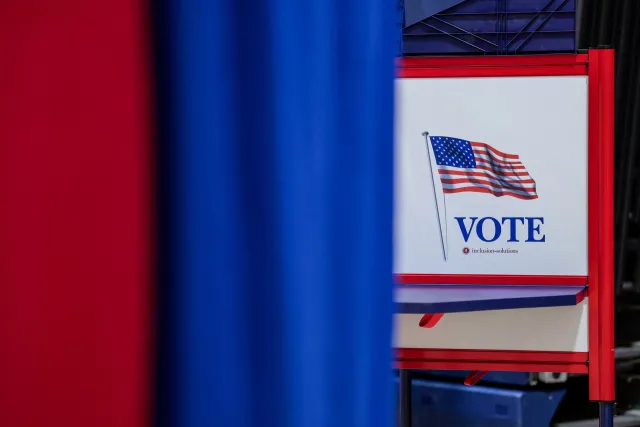
WASHINGTON, November 3, 2026 — The US midterm elections 2026 began on Tuesday as Americans headed to the polls, with control of Congress, dozens of governorships and thousands of state and local offices at stake. The first polling sites opened in the eastern United States, while other states were due to begin voting in stages through the day. At the time of this report, no results were available and the outcome of the closely watched congressional contests remained uncertain.
The election will determine whether Republicans retain their narrow majorities in the House of Representatives and Senate or Democrats gain control of one or both chambers for the final two years of President Donald Trump’s term. All 435 voting seats in the House are being contested, along with 35 Senate seats. Voters will also choose governors in 36 states and three US territories, as well as state legislators, local officials and the outcome of ballot measures.
The stakes extend beyond Washington. A change in control of either chamber would alter the balance between the White House and Congress, affecting legislation, federal spending, investigations and oversight. State-level contests will shape decisions on education, taxes, abortion policy, election administration and other issues that directly affect residents. The results will also offer a broad measure of how voters view the administration midway through Trump’s second term.
Early voting has been substantial. CBS News reported that more than 57 million people had already cast ballots before Election Day, while the Associated Press said turnout was on course to exceed the previous midterm election. Early voting totals are compiled differently across states and do not predict the final result on their own. They do, however, show how much of the electorate has already made its choice before polling stations opened on Tuesday.
Republicans entered Election Day with a narrow advantage in both chambers. In the Senate, Republicans hold 53 seats, while Democrats and independents who caucus with them hold 47, according to the seat count cited by The Guardian. Democrats need a net gain of four seats to reach a majority. Thirty-three regular Senate contests are being held, alongside two special elections in Florida and Ohio to fill seats that became vacant before the end of their terms.
The House presents a different challenge. All 435 voting seats are on the ballot, and Democrats need a net gain of four seats to take control. A small number of competitive districts can determine the majority, which means the national result may depend on turnout and vote margins in a relatively limited group of constituencies. The party that controls the House chooses its leadership, chairs committees and has substantial influence over which bills receive consideration.
Senate control has consequences of its own. The chamber considers legislation alongside the House and plays a central role in confirming senior executive and judicial nominees. A change in the majority would affect committee leadership, the pace of confirmations and the administration’s ability to move its priorities through Congress. Even if the same party retains both chambers, a narrow majority can make it difficult for congressional leaders to manage disagreements within their own ranks.
The gubernatorial contests add another layer. The National Governors Association lists 39 gubernatorial elections for 2026, covering 36 states and three territories. Governors influence state budgets, public services, emergency response, infrastructure and the implementation of federal programmes. Their parties and policy choices can also shape how states respond to national debates over immigration, energy, education and election rules.
State legislatures are also facing a large turnover test. The National Conference of State Legislatures says voters in 46 states will choose 6,139 state legislators on November 3, representing more than 83% of all state legislative seats nationwide. The same organisation lists 146 statewide ballot measures in 39 states and the Northern Mariana Islands. Those measures include questions involving taxes, budgets, abortion, voter eligibility, school sports and redistricting.
That state-level voting matters because many of the policies that shape daily life are set outside Washington. Legislatures determine how state revenue is raised and spent, establish rules for public schools and local authorities, and can change the way elections are administered. The results may therefore influence policy even in places where the presidential administration’s national agenda is not the main issue in a local campaign.
The economy and the cost of living have been central concerns for voters. The Guardian’s live coverage identified affordability as a leading issue, with household expenses and fuel costs featuring prominently in the campaign. Inflation affects voters differently depending on wages, housing costs, debt and employment, but it provides a common test of whether people feel their financial position has improved or deteriorated during the administration.
The war involving the United States and Iran has added to that debate. Disruption around the Strait of Hormuz has contributed to volatility in global energy markets, and changes in crude prices can affect fuel, transport and business costs. The conflict has also raised questions about the administration’s foreign-policy decisions and whether diplomatic efforts can prevent a wider escalation. Those concerns are especially relevant to households and businesses that are already sensitive to energy prices.
Immigration remains another defining issue. Trump and Republican candidates have emphasised border enforcement, while Democrats have challenged the administration’s methods and raised concerns about the treatment of migrants and the use of federal authority. The subject intersects with local policing, labour markets, public services and legal questions over the limits of federal and state power. Voters are weighing both policy goals and the way those policies have been implemented.
Artificial intelligence has also become part of the political debate. The expansion of data centres and AI infrastructure raises questions about electricity demand, water use, local development, employment and the future of work. Some communities may welcome investment and new jobs, while others are concerned about the pressure large facilities can place on power networks and local resources. The issue is still developing, but it has moved beyond technology policy into local economic and environmental decisions.
Campaigns have tried to connect these national subjects to the circumstances of individual states and districts. A voter in an energy-producing state may focus on jobs and production, while a household in a high-cost city may be more concerned about housing, transport and childcare. Candidate quality, local economic conditions and the organisation of each campaign can matter as much as the national message in close races.
Trump is not on the ballot, but both parties have treated the election as a judgment on his presidency. The president has urged voters to view the contest as a choice over the direction of the country, while Democrats have argued that the results should reflect dissatisfaction with the administration’s handling of prices, immigration and the Iran war. The election will test how far those national arguments influence turnout in districts and states with different political histories.
Also read: Trump’s Final Midterm Campaign Pitch Focuses on Economy, Iran War
The vote is taking place amid unusually intense disputes over the role of federal agencies in elections, which are primarily administered by state and local authorities. The Associated Press reported that the Justice Department planned extensive monitoring of polling places, while Democrats and allied groups organised their own observers. The competing efforts have added to concerns about intimidation, federal influence and the possibility that legal challenges could continue after voting ends.
Several administration initiatives have already been blocked or limited by courts. On Monday, the US Supreme Court rejected an emergency request from the Trump administration to make California set aside roughly 20,000 mail ballots associated with people federal officials suspected might be noncitizens. The court’s decision left the state’s normal ballot-processing procedures in place. California officials had argued that the federal list contained errors and that segregating ballots so close to Election Day could prevent eligible citizens from having their votes counted.
The AP reported that evidence from arrests and investigations continues to show that noncitizens casting ballots is extremely rare. The dispute has nevertheless become a prominent part of the wider argument over election security and the division of authority between federal and state governments. The legal questions are likely to remain relevant during the counting and certification process, particularly if close races lead to further challenges.
Mail voting has also drawn attention because of concerns about postal delays. Election administrators and voting-rights advocates have advised people submitting late absentee ballots to use official drop boxes or deliver them to polling places in person where state rules allow, rather than relying on last-minute mail delivery. The rules differ by state, and a ballot that is valid in one jurisdiction may be subject to different deadlines or procedures in another.
Weather could complicate voting in parts of the Southwest. The Associated Press reported that heavy rain and flash flooding were expected to make it harder for some voters to reach polling places in parts of Colorado, Arizona and New Mexico. Officials have been assessing local conditions and possible changes to polling locations. Voters in affected areas have been advised to check information from their local election authorities before travelling.
Election officials will also have to manage the practical task of counting ballots under different state rules. Some jurisdictions begin processing mail ballots before Election Day, while others have restrictions on when counting can start. Close margins, late-arriving eligible ballots, signature checks and recount requirements can delay the final result. A projection by a news organisation is not the same as a certified result, and the timing of calls will vary by state and race.
Polls close at different times across the country. The first locations in parts of Indiana and Kentucky are scheduled to close at 6 p.m. Eastern time, with other states following in stages. Some of the most closely watched contests may not be decided on election night if margins are narrow or counting procedures require additional verification. The Guardian has also noted that ranked-choice voting and legal challenges could delay calls in some races.
For voters, the immediate priority is to follow the instructions of local election officials, confirm polling locations and observe the rules that apply in their state. For campaigns, the focus shifts from persuading undecided voters to monitoring turnout, protecting access to the count and preparing for possible recounts or legal disputes. The credibility of the final result will depend on transparent procedures and the completion of the required certification process.
The first returns will provide clues about turnout and the performance of candidates in states where counting begins quickly, but early results can be misleading if they come from areas with different political preferences. The Senate map will be watched closely in Georgia, North Carolina, Ohio, Michigan, Maine, Texas, Kansas, Iowa and Alaska. House control may depend on a broader group of competitive districts, some of which could report results later than statewide races.
Governors’ races and ballot measures will provide a separate picture of state-level priorities. Changes in party control could affect education budgets, election procedures, abortion policy, tax rules and the direction of infrastructure spending. The large number of state legislative contests means that policy changes may occur even where the national congressional balance remains unchanged.
The political consequences will extend beyond the immediate result. If Democrats gain control of one or both chambers, the administration could face more aggressive congressional oversight and a tougher path for legislation. If Republicans retain control, Trump would have a stronger basis for advancing his agenda, although narrow margins could still make internal party disagreements difficult to manage. The Senate result will also affect confirmations and the legislative timetable.
For now, the central fact is that voting has begun and the electorate’s decision is not yet known. Pre-election polling, campaign forecasts and early-vote totals can help explain the contest, but none can substitute for ballots counted under state law. The balance of power in Washington and the direction of policy in dozens of states will become clearer only as election officials report and certify the results.





Comments (0)
Be the first to comment. Comments are published after moderation.