


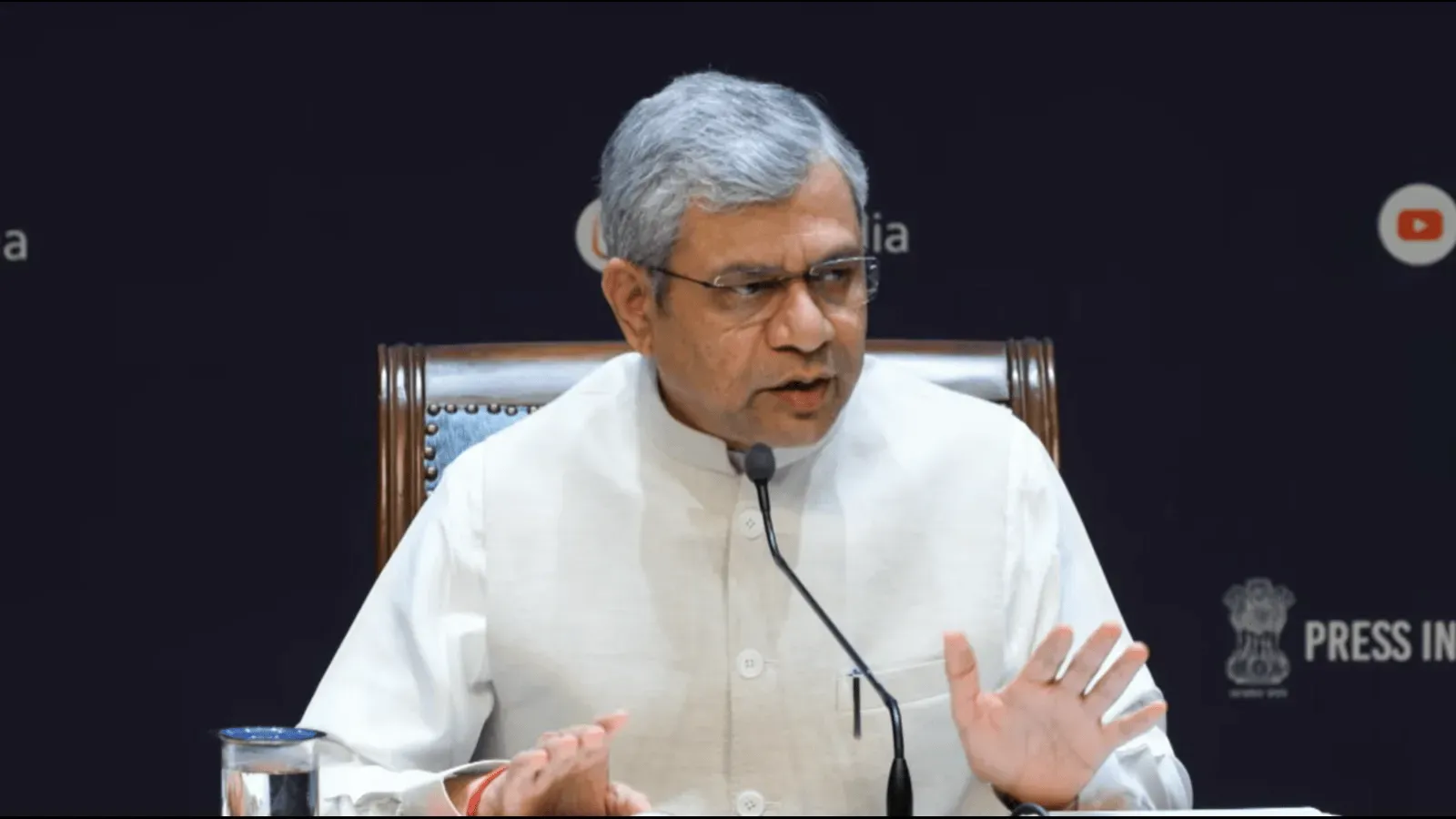
NEW DELHI, November 4, 2026 — The Union Cabinet has approved a ₹14,500-crore viability-gap funding programme intended to support 92 gigawatt-hours (GWh) of new grid-scale energy storage, giving India a larger policy push to manage the growing share of solar and wind power in its electricity system.
The plan, announced by Information and Broadcasting Minister Ashwini Vaishnaw after the Cabinet meeting, divides the targeted capacity into 60 GWh of pumped-storage hydropower, 30 GWh of battery energy storage systems and 2 GWh of other emerging storage technologies. The government has set a five-year implementation window running from the 2026-27 financial year to 2030-31, according to reports of the minister’s briefing.
The scheme is designed to make projects that might struggle to attract private finance commercially viable. Storage facilities require substantial upfront investment, while their revenue depends on how often they are charged and discharged, the price difference between those periods and the services they can provide to the grid. Viability-gap funding is intended to narrow that gap rather than pay for every project in full.
The government estimates that the programme could support projects involving total investment of about ₹97,600 crore. That is a projected investment figure, not a direct budget allocation. The ₹14,500 crore is the proposed public support envelope; the balance would have to come from developers, lenders and other financing sources as projects are selected and built.
India’s power system is adding renewable capacity quickly, but the timing of generation does not always match the timing of demand. Solar plants produce most strongly during daylight hours, while household and commercial demand often rises in the evening. Wind generation can change with weather patterns and is not always available when the grid needs it most.
Without enough flexibility, a grid can face two problems at once: surplus electricity at certain hours and a shortage of readily available power at others. Storage can move some of that energy across time. It can absorb electricity when supply is abundant, then return it during periods of higher demand or lower renewable generation. That can reduce the need to curtail renewable output and help system operators maintain frequency and reliability.
The 92 GWh target is an energy-capacity measure. It describes how much electricity the storage fleet could hold, not the instantaneous power it can deliver. A project’s output rating, duration, operating rules and connection to the transmission network will determine how useful it is in practice. The distinction matters because two storage projects with the same GWh capacity can provide different services if their power ratings and discharge durations differ.
Pumped storage uses electricity to move water to an upper reservoir and releases it through turbines when power is needed. It can provide long-duration storage and other grid services, but projects require suitable geography, water availability, land, clearances and long construction periods. Battery systems can usually be installed more quickly and respond rapidly, although they face their own questions around cell supply, fire safety, degradation, recycling and replacement costs.
The allocation gives pumped hydro the largest share of the planned capacity, at 60 GWh. Battery systems account for 30 GWh, while the remaining 2 GWh is reserved for other technologies. The mix suggests the government is not treating batteries as the only answer to the storage challenge. Different technologies can serve different time horizons and operating needs, and a balanced portfolio may reduce dependence on a single supply chain.
Also read: Adani’s Dhamra Port Switches Entire Electricity Use to Renewables
Viability-gap funding is commonly used when a project is considered important for the public interest but its expected commercial returns are not strong enough to attract sufficient private capital on ordinary terms. The government contributes a portion of the cost or provides support tied to project milestones, allowing developers to raise the rest through equity and debt.
For storage, the revenue challenge can be more complicated than for a conventional power plant. A battery may earn money by buying or charging electricity when prices are low and selling or discharging when prices are higher. It may also receive payment for providing ancillary services, reserve capacity or other forms of grid support. Those markets are still developing, and revenue can vary by location, duration, dispatch rules and the availability of transmission capacity.
The scheme is therefore relevant not only to developers but also to electricity distribution companies, transmission planners, market operators and regulators. A storage facility that is poorly located or cannot access the right market services may remain underused even if it receives public support. Project selection and grid planning will be as important as the size of the subsidy.
Moneycontrol reported that battery projects supported under the programme would have to meet a domestic-content requirement of 40 per cent. If implemented as described, that condition would link the storage target to India’s manufacturing ambitions. It could encourage investment in cells, battery packs, power-conversion systems and associated components, although the impact will depend on how the requirement is defined and whether domestic suppliers can meet price, quality and delivery expectations.
Also read: India Starts ₹2,300 Crore E-Methanol Plant at Kandla Port
The Cabinet announcement did not identify the projects that will receive support, the states in which they will be located or the final tariff and bidding structure. Those details will matter to investors. Developers will need clarity on eligibility, payment schedules, performance requirements, land and water approvals, grid connectivity and the treatment of storage assets in electricity-market rules.
The planned capacity is substantial, but it should not be read as 92 GWh already under construction or guaranteed to be commissioned by 2031. The scheme creates a framework for supporting projects; actual delivery will depend on competitive selection, financing, equipment supply, construction and the ability to connect facilities to the grid on schedule.
Pumped-storage projects can take years to move from surveys and environmental assessments to construction. Their local effects need to be assessed carefully, particularly where reservoirs, forests, rivers, agricultural land or communities may be affected. A project that improves grid flexibility nationally can still create significant local costs if land acquisition, water management and environmental safeguards are not handled transparently.
Battery storage has a different set of risks. Prices have fallen over the longer term, but the economics remain sensitive to the cost of cells and financing. Batteries lose usable capacity as they age, and developers must account for replacement, recycling, fire protection and safe operation. A domestic-content rule may strengthen local supply chains, but it will need to be designed so that projects remain competitive and are not delayed by shortages of components.
Regulators will also have to make sure that storage can earn revenue for the services it provides. If a facility is expected to reduce peak demand, support renewable integration and stabilise the grid, the rules must allow it to be paid appropriately for those functions. Clear market signals can help private developers make long-term investment decisions without relying entirely on subsidies.
The programme arrives as India tries to expand non-fossil electricity while keeping power available through periods of high demand. Storage cannot replace every form of dispatchable generation, and it does not remove the need for stronger transmission lines, flexible power plants, forecasting and demand management. It is one part of a wider system that must coordinate generation, networks and consumption.
For consumers, the potential benefits are indirect. Better storage can help reduce renewable curtailment, manage peak demand and limit the need for expensive short-term balancing. Whether those benefits translate into lower tariffs will depend on project costs, procurement contracts, market rules and how savings are shared across the power system.
The next milestones to watch are the detailed scheme guidelines, the first project tenders, the treatment of domestic content, and the pace at which pumped-storage and battery projects receive approvals. The Cabinet has set a large capacity target and a public-support envelope. The test now is whether the programme can turn that announcement into operating assets that make electricity more reliable as India’s renewable fleet grows.



Comments (0)
Be the first to comment. Comments are published after moderation.