


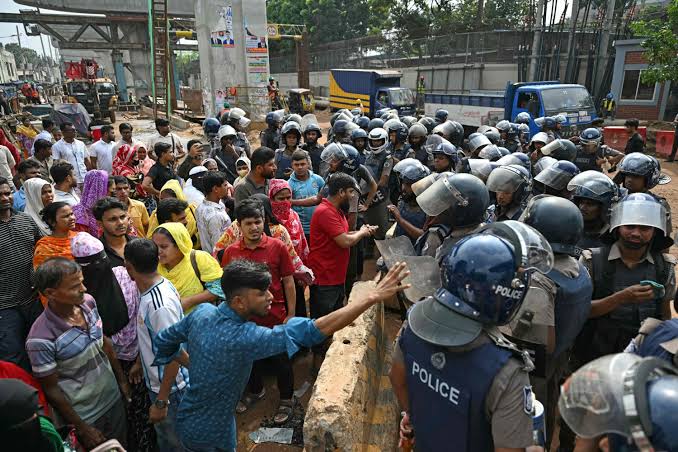
DHAKA, November 3, 2026 — Wage protests by garment workers in Bangladesh entered a fourth day on Tuesday, disrupting factory operations and transport links in industrial areas around the capital as workers pressed for a higher minimum monthly wage.
Workers are demanding 30,000 taka (about $245) a month, compared with the current minimum of 12,500 taka. They say persistent inflation and rising living costs have eroded the purchasing power of existing wages. Demonstrations and clashes were reported in Ashulia, Gazipur and Mirpur, where protesters attempted to block major roads.
Police used tear gas and sound grenades to disperse demonstrators in Ashulia after protesters threw bricks and stones at law enforcement personnel, Reuters reported. Dozens of people, including police officers, were injured. Additional security personnel were deployed as the unrest spread across industrial belts around Dhaka.
Factory operations have also been affected. Nearly 700 factories were shut on Monday, and several plants in Gazipur and Ashulia again suspended operations or declared holidays on Tuesday. The disruption comes as manufacturers prepare for the peak production period for spring and summer export orders.
Bangladesh’s garment industry employs about four million people and accounts for more than 80 per cent of the country’s export earnings. It is also a major supplier to international brands, including H&M, Zara and Gap. A prolonged shutdown could delay shipments and put pressure on the country’s position as a sourcing hub competing with manufacturers in Vietnam and India.
The government formed a six-member wage board on November 1 to review pay in the sector, but the move has not ended the demonstrations. Factory owners have cited higher operating costs, uncertainty in energy markets and softer demand in major export destinations as factors affecting their ability to absorb additional costs.
H&M told Reuters that it had seen no major supply-chain disruption, with only a limited number of factories temporarily closed, and said it was assessing any potential effect on production. The company also reiterated support for adequate compensation and improved working conditions for garment workers.
The dispute puts pressure on both the government and manufacturers to find a settlement that addresses workers’ demands while limiting further disruption to export orders. The scale of the industry means a prolonged stoppage could have consequences for workers, suppliers and Bangladesh’s wider economy.


Comments (0)
Be the first to comment. Comments are published after moderation.