


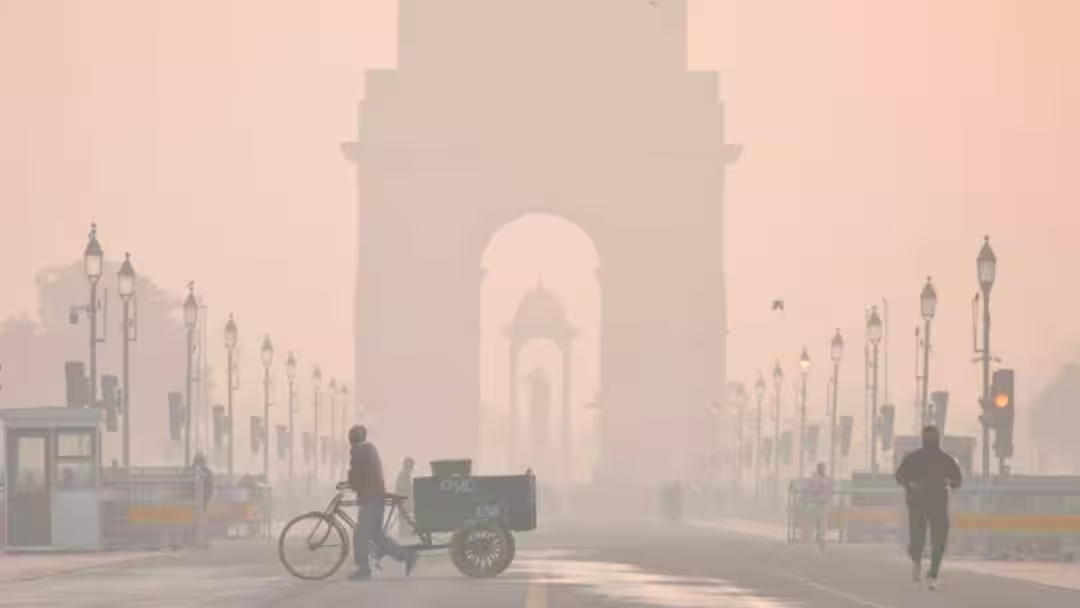
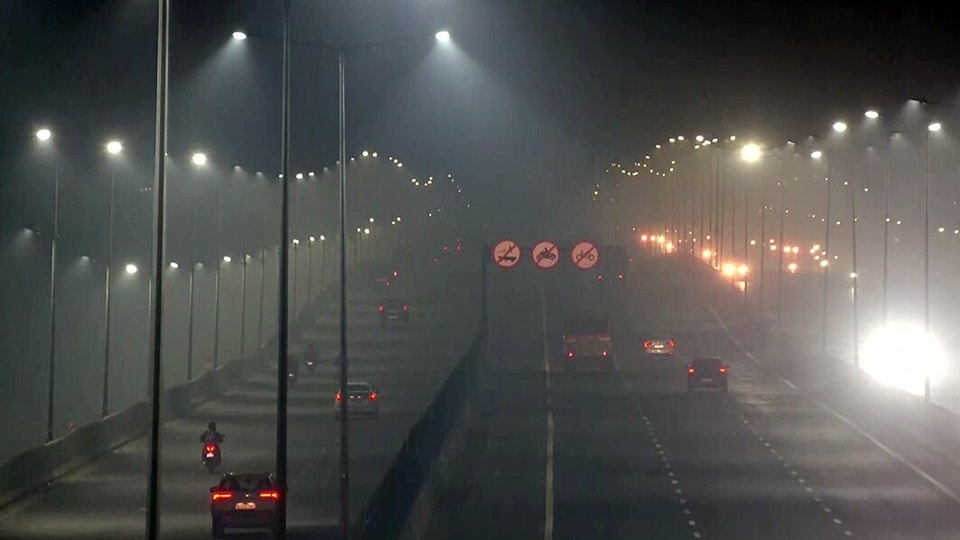
NEW DELHI, November 9, 2026 — The Delhi AQI after Diwali stood at 370 citywide at 9 am on Monday, placing the capital in the “very poor” category after the festival. Several monitoring locations recorded readings above 400, entering the “severe” band, while a visible haze hung over parts of central Delhi. The citywide figure was reported by Reuters from official air-quality data; station readings varied across neighbourhoods.
The distinction between the city average and individual monitoring stations matters. Under the national AQI scale, readings from 301 to 400 are classified as very poor, while 401 to 500 are severe. A citywide reading of 370 does not mean every part of Delhi faced the same level of pollution, but it also does not describe the highest exposure experienced by residents near a station reporting a value above 400. Traffic corridors, construction sites and other local sources can produce sharp differences over short distances.
The morning deterioration followed a weekend in which the Supreme Court had allowed only certified green firecrackers to be sold and used for tightly limited periods. The permission applied on November 7 and 8, with bursting allowed from 6 am to 7 am and again from 8 pm to 10 pm. The complete ban was scheduled to return on November 9. Reuters reported that fireworks were heard late into Diwali night in parts of Delhi and Mumbai, but the available reporting does not establish that every firecracker used was certified or that all post-midnight activity was authorised.
Fireworks can add a concentrated burst of fine particles and gases to the air, but they are not the sole explanation for Delhi’s winter pollution. The capital enters November with emissions from road transport, construction and road dust, industrial activity, household fuels and waste burning already accumulating in the region. Crop-residue burning in neighbouring states can add to the load during the post-harvest period. The contribution of each source changes with weather, location and the time of day, so no single source can be treated as the explanation for the citywide reading.
Weather conditions can make those emissions more difficult to disperse. Cooler nights and mornings, weak surface winds and a shallow atmospheric mixing layer can keep pollutants close to the ground. When the air is relatively stagnant, emissions released by vehicles and other sources remain concentrated for longer instead of being carried away or diluted. A short-lived increase from fireworks can therefore arrive on top of an already polluted background, making the morning reading worse than it might have been under stronger winds.
The Associated Press reported that cooler temperatures and weak winds were contributing to the accumulation of pollution after the festival. The effect is not uniform: a monitoring station beside a busy road or near a construction site may record a different level from a station in a residential or green area. The Central Pollution Control Board’s network is designed to show those variations, while the citywide AQI provides a single summary for the day. Both measures are useful, but they answer different questions.
Delhi’s pollution problem also extends beyond the municipal boundary. The National Capital Region is a connected airshed, with traffic, industry, power generation, construction and agricultural activity spread across several states. Emissions do not stop at the Delhi border, and measures taken in one district can be weakened if neighbouring jurisdictions do not act at the same time. That is why the Commission for Air Quality Management coordinates pollution-control measures across Delhi and the surrounding region rather than treating the capital as an isolated city.
The Graded Response Action Plan is intended to add temporary controls as air quality deteriorates. Its stages are tied to the city’s reported AQI range and include measures such as more intensive mechanical road sweeping, water sprinkling and dust suppression, checks on construction sites, restrictions on certain polluting activities and steps to make public transport more attractive. The measures in force must be read from the Commission’s latest order; a severe reading at one station is not, by itself, proof that a higher citywide GRAP stage has been invoked.
Delhi’s Metro has already added weekday services under an earlier GRAP response, and the public transport network remains one of the practical ways to reduce private-vehicle use during a pollution episode. The Delhi Metro Rail Corporation announced 20 additional weekday trips from November 3, taking the number of extra trips across the network to 40. More services can help only if they are convenient enough for commuters to replace car and two-wheeler journeys. Ridership, service frequency and road-traffic data will be needed to assess the effect rather than assuming that additional trips automatically translate into cleaner air.
Also read: Delhi Metro Adds 20 Weekday Trips as GRAP-II Curbs Take Effect
The Supreme Court’s temporary firecracker permission was also accompanied by product and enforcement conditions. Only approved green crackers could be sold through designated traders, and the permitted hours were limited to two short windows on November 7 and 8. The court’s directions did not turn conventional fireworks into permitted products, nor did they make certified crackers pollution-free. The return of the full ban on November 9 means that the temporary festival window has ended.
Also read: Supreme Court Allows Green Crackers in Delhi-NCR on November 7 and 8
Very poor and severe air quality can affect people differently, depending on the length of exposure, the concentration of particles and a person’s health. Children, older people and those with respiratory or cardiovascular conditions may be more vulnerable to pollution episodes. The AQI is a public information tool, not a diagnosis of an individual’s health, and a citywide number cannot show the exposure of every household, school or workplace. Residents should follow advisories issued by health and local authorities and pay attention to conditions near where they live and work.
Enforcement is another part of the response. The Supreme Court’s directions called for designated sales points, checks on product certification and QR codes, restrictions around hospitals and other sensitive locations, and reporting on air quality before and after the festival. The Commission for Air Quality Management and state agencies also have responsibilities under the winter action plan and GRAP. The immediate question is whether prohibited products and activity are being detected and whether the agencies responsible for dust, traffic and industrial emissions are carrying out the measures already ordered.
For residents, the next useful data point is not another isolated photograph of smog but the sequence of readings from the CPCB network through the day and over the coming week. A morning value can rise or fall as wind, temperature and traffic change. Comparing the citywide average with station-level readings, and tracking the same locations over time, will show whether the post-Diwali spike is easing or becoming part of a longer pollution episode.
The festival-related increase will eventually pass, but Delhi’s winter air-quality problem will not be solved by the end of the firecracker ban alone. Sustained improvement depends on cleaner transport, control of road and construction dust, reliable industrial compliance, better waste management and coordination across the wider NCR. The 370 reading on Monday morning is a warning about the conditions residents are breathing now; the longer test is whether the measures taken between pollution peaks reduce the baseline that the city returns to each winter.
Comments (0)
Be the first to comment. Comments are published after moderation.