


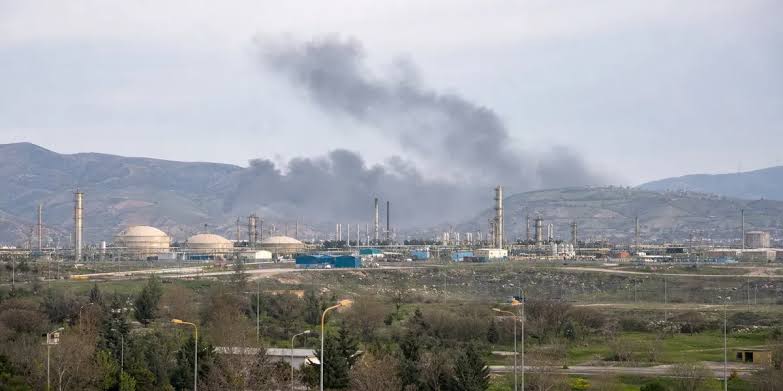
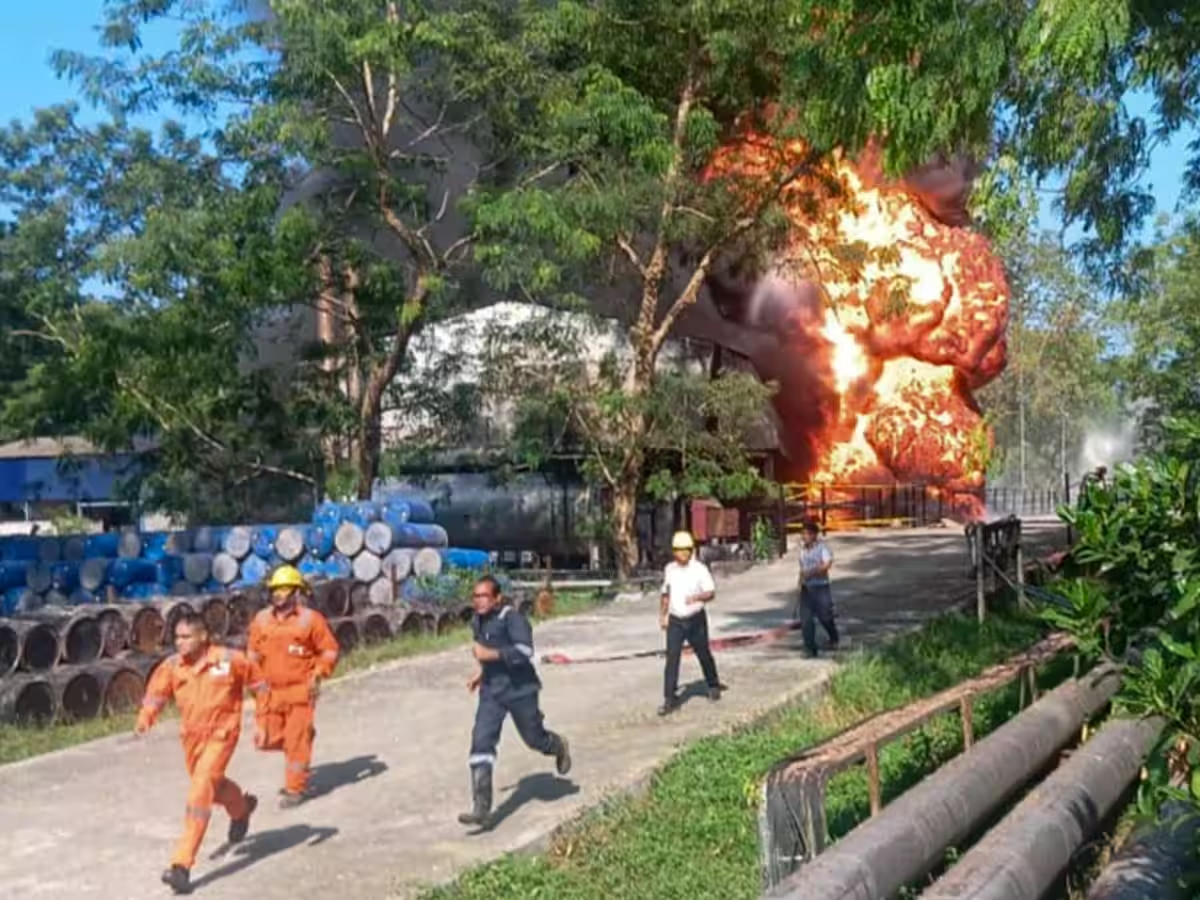
CHAMCHAMAL, November 9, 2026 — Production was suspended at Iraq’s Khor Mor gas field after a reported drone attack on Sunday, according to two security sources cited by Reuters, raising fresh concern over the reliability of a facility that supplies fuel for electricity generation across the Kurdistan Region. An engineer at the site told the news agency that a gas storage facility was struck and workers were ordered into shelters as smoke rose from the complex.
Shafaq News separately reported that a drone targeted the field in Sulaymaniyah province. The initial accounts did not provide a verified casualty figure, a full damage assessment or an estimate of when operations could resume. No group had claimed responsibility in the reporting reviewed, and the available accounts did not establish who launched the aircraft or from where it came.
The incident is developing. Reuters attributed the suspension of production to two security sources and the description of the damaged facility to an engineer. Shafaq News reported the attack, while official material from the Kurdistan Regional Government and the field’s operators reviewed for this article did not contain a statement confirming Sunday’s incident. The distinction is important: the reported strike and halt in production are supported by multiple accounts, but the scale of the damage and the duration of the interruption remain unknown.
Khor Mor is one of the largest gas fields in the Kurdistan Region and a central part of the area’s domestic energy system. The gas is processed and sent through a pipeline to power stations in Chemchemal, Bazian and Erbil. Dana Gas, one of the operators, says the project supplies fuel for more than 75 per cent of the region’s electricity-generation capacity and benefits more than six million people. The company also says the gas is used for local industrial customers and that the field produces condensate and liquefied petroleum gas alongside sales gas.
The field’s importance means a production halt can affect more than the companies operating the site. Gas-fired power stations depend on a steady flow of fuel, and a sudden interruption can force electricity authorities to adjust generation, draw on alternative supplies or manage outages. The actual effect of Sunday’s reported attack will depend on how much gas was in the system, whether other sources can compensate and how quickly the operator can safely restart the facility. None of those details was available in the first reports.
The scale of the project has increased over time. Dana Gas says the Khor Mor processing plant reached a capacity of about 750 million standard cubic feet of gas per day after the KM250 expansion was commissioned in October 2025. That is a processing-capacity figure, not confirmation of the volume being produced immediately before Sunday’s incident. The operator reported that output had reached about 700 million cubic feet per day in December 2025 and was expected to continue ramping up during 2026.
The development is part of a wider effort to reduce reliance on imported fuel and diesel generators. Gas supplied from Khor Mor supports public electricity generation and industrial activity, while the field’s liquids provide additional products for local markets. A disruption can therefore affect power availability, manufacturing costs and the confidence of companies that rely on the region’s energy infrastructure.
The latest incident comes after previous attacks and security threats affecting oil and gas facilities in the Kurdistan Region. The KRG’s Department of Media and Information has documented repeated drone and missile attacks on civilian and economic infrastructure during the regional conflict. Its published assessment said attacks on energy installations had disrupted production and processing, affected household and industrial electricity supplies and increased operational risks for investors.
Khor Mor itself has been targeted before. A major attack in November 2025 struck a storage facility and halted gas supplies, leading to widespread power disruption. Reuters reported at the time that Dana Gas suspended production after a rocket hit a storage tank, while regional officials warned of a substantial reduction in electricity generation. The field later resumed operations, with the Kurdistan Regional Government’s electricity ministry confirming that gas deliveries to power stations had restarted.
Those earlier events show why the location and type of damage matter. A strike on a storage unit, processing train, pipeline or control system can have different consequences for the field’s ability to deliver gas. Even when the main production equipment is intact, workers may need to secure the site, inspect equipment and confirm that pipelines and storage systems can operate safely. If the attack damaged critical components, repairs and the arrival of replacement equipment could take longer.
The operator’s structure also gives the incident an international dimension. Khor Mor is developed by Pearl Petroleum, a consortium that includes Dana Gas and Crescent Petroleum, alongside European partners OMV, MOL and RWE. Dana Gas and Crescent Petroleum each hold a 35 per cent interest, while the other partners hold smaller stakes. The companies’ investments are tied to long-term gas supply and infrastructure plans in the Kurdistan Region.
On November 6, Dana Gas and Crescent Petroleum announced that Pearl Petroleum had placed a $500 million senior secured bond, with proceeds intended in part to refinance existing debt and support further development at Khor Mor and Chemchemal. The placement attracted international investors, the companies said. Sunday’s reported attack does not establish that the financing or expansion plans will be delayed, but it underlines the security risks that investors must weigh when funding energy assets in a conflict-affected region.
The initial reporting leaves several basic questions unanswered. Reuters said two security sources reported a drone attack and the suspension of production. An engineer said the strike hit a gas storage facility and that workers were moved into shelters because of fears of further attacks. Shafaq News reported that a drone targeted the field, but its initial report did not provide a detailed damage assessment or identify the source of the attack.
There was no verified information in the initial reports about injuries, fatalities, the number of drones involved or whether the facility’s fire-suppression systems were activated. The reporting also did not establish whether the drone was intercepted, whether it hit its intended target or whether the storage facility suffered structural damage. It would be premature to assign responsibility to an armed group or a neighbouring state without evidence from investigators or an official statement.
The absence of an immediate public statement from the regional government or operator does not mean that the incident did not occur. Energy companies and security agencies may need time to inspect a site before releasing details, particularly if there is concern about a follow-up attack. But until the operator or authorities publish a verified assessment, the public record should remain limited to what the security sources, engineer and local reporting have established.
For residents and businesses, the immediate concern is whether electricity generation will be affected. If gas deliveries remain interrupted, power stations may have to reduce output or rely on alternative fuel. The region’s electricity authorities will need to say whether the grid has lost generation capacity, whether scheduled supply has changed and how long any restrictions are expected to last. Those details were not available when the initial reports emerged.
For the operators, the first tasks are likely to involve securing the site, accounting for staff, inspecting the affected storage and processing equipment and establishing whether gas can be safely delivered through the pipeline network. A restart decision would depend on technical checks as well as security advice. The field’s recent expansion means the system is larger and more complex than in earlier years, but it also supports a wider network of power and industrial users.
The next reliable update should come from the Kurdistan Regional Government’s ministries responsible for natural resources, electricity and security, or from Pearl Petroleum and its shareholders. A statement confirming the damaged equipment, any casualties, the status of gas deliveries and the expected repair period would help distinguish a temporary precautionary shutdown from a longer production interruption.
Investigators will also need to establish the launch point and responsibility for the attack. Without that information, claims about the motive or the identity of the attackers would be speculative. The region has faced repeated attacks on energy facilities during the wider conflict, but the history of previous incidents cannot be used to attribute this one.
The wider issue is the vulnerability of critical energy infrastructure. Khor Mor supplies gas for power generation and industry, and the region’s dependence on the field makes its uninterrupted operation a public concern as well as a commercial one. Protecting pipelines, storage facilities, processing units and workers requires security measures that do not disrupt the civilian services those facilities support. The cost of repeated shutdowns can extend beyond lost production to power cuts, delayed investment and higher operating expenses.
For now, the confirmed position is that Reuters’ sources reported production suspended after a drone attack, an engineer described damage to a storage facility, and Shafaq News independently reported that the field had been targeted. The number of casualties, extent of damage, responsibility and restart timeline remain unconfirmed. The next assessment from the operator or regional authorities will determine whether the interruption is brief or has wider consequences for electricity supply in the Kurdistan Region.
Comments (0)
Be the first to comment. Comments are published after moderation.