


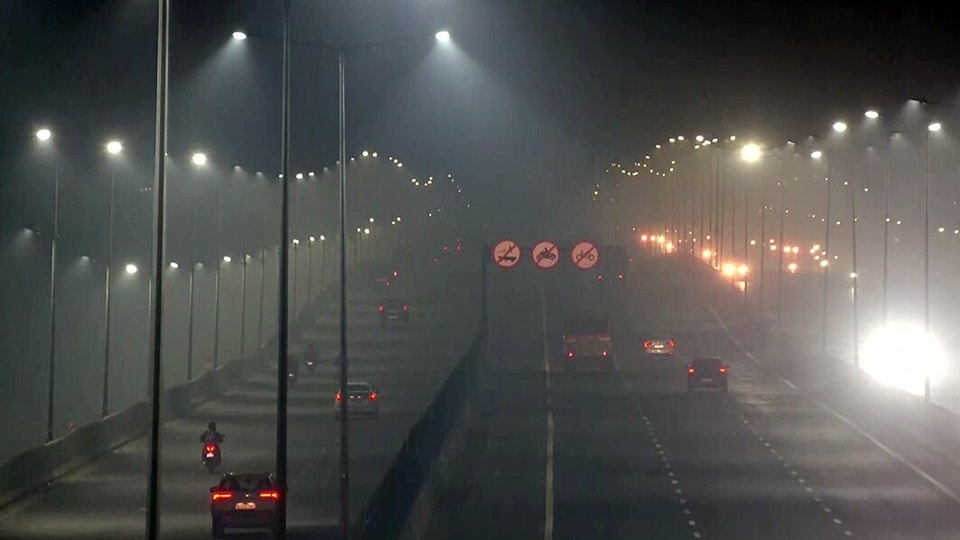
New Delhi | November 8, 2026 — Delhi AQI averaged 376 on Diwali, keeping the capital in the “very poor” category as pollution intensified at several monitoring stations during the evening. At 7 pm, 19 of the city’s 59 reporting stations were in the “severe” band, while 33 recorded “very poor” air. The Commission for Air Quality Management’s dashboard showed a citywide reading of 371 at 10 pm. The Indian Institute of Tropical Meteorology’s Air Quality Early Warning System forecasts that Delhi could move into the severe category on Monday, November 9.
The daily average rose from 369 on Saturday to 376 on Sunday, remaining below the threshold of 401 at which the Central Pollution Control Board classifies air quality as severe. The evening station readings showed a sharper picture in several neighbourhoods: seven stations were in the “poor” category, 33 in “very poor” and 19 in “severe”. Jahangirpuri recorded an AQI of 460 at 7 pm, the highest reading in the Times of India’s station-level update. The figures describe different reporting windows: a daily average, individual station readings and a later citywide dashboard snapshot should not be treated as interchangeable.
The forecast is especially important because the deterioration is expected to continue after the main Diwali celebrations. The official bulletin from the Indian Institute of Tropical Meteorology’s Air Quality Early Warning System, issued on November 8, classified Sunday’s outlook as very poor and Monday’s as severe. It projected a return to very poor conditions on November 10 and 11, while warning that the ventilation index would remain unfavourable for pollutant dispersion. The forecast can change as weather conditions and emissions evolve, but it indicates that the immediate risk is not confined to the night of the festival.
The CPCB’s national AQI scale places readings from 301 to 400 in the very poor category and readings from 401 to 500 in the severe category. Delhi’s daily average of 376 therefore remained below the severe threshold, even though a number of individual stations had already crossed it. At 7 pm, 19 monitoring stations were classified as severe, 33 as very poor and seven as poor. Jahangirpuri’s reading was 460 at that time.
A later CAQM dashboard update showed Delhi’s citywide AQI at 371 at 10 pm, still within the very poor band. That snapshot does not replace the daily average of 376: the two figures cover different reporting periods. The CAQM dashboard continued to list Stage III of the Graded Response Action Plan as active, with the restrictions in force from November 6.
That difference matters for people making decisions about travel, exercise and time outdoors. A citywide average is calculated from readings across the monitoring network; it does not mean that every part of Delhi has the same concentration of pollutants. A neighbourhood near a busy road, industrial source or local pollution hotspot may record a substantially higher level than the capital-wide average. Readings can also change during the day as wind, traffic, temperature and atmospheric mixing shift.
PM2.5 was the predominant pollutant across much of the monitoring network on Sunday. These fine particles can penetrate deep into the respiratory system, and sustained exposure is a concern for people with asthma, chronic lung disease and cardiovascular conditions. Children, older people and pregnant women are also among the groups generally considered more vulnerable to poor air quality. The CPCB’s own category guidance warns that very poor air can cause more serious health effects, while severe conditions affect healthy people and can seriously affect those with existing diseases.
The difference between the city average and local readings is also relevant when comparing dashboards. A station value is not interchangeable with the daily average, and private air-quality services may use different sensors or scales. For a reliable comparison, residents should check the CPCB-linked station data and note the time of the observation rather than treating every AQI number as if it were measured at the same place and hour.
The IITM early-warning bulletin said ventilation conditions were unfavourable for the coming period. When winds are light and the atmosphere does not mix pollutants effectively, emissions released near the surface can remain concentrated close to where people live and work. The system identifies a ventilation index below 6,000 square metres per second, alongside average wind speeds below 10 kilometres per hour, as conditions that impede effective dispersion.
Sunday’s bulletin forecast easterly winds of up to 15 kilometres per hour and a mixing depth of about 2,000 metres for the day. For Monday, it projected winds from the east-southeast to east at up to 12 kilometres per hour and a lower mixing depth of about 1,600 metres. It still assessed the ventilation index as unfavourable. These are forecast conditions, not fixed observations for every hour, but they help explain why pollution may remain trapped even after the festival’s concentrated emissions have passed.
Firecracker smoke adds to the particulate burden during Diwali, but it is not the only source of Delhi’s pollution. Vehicle exhaust, road and construction dust, industrial emissions, waste burning and crop-residue fires in neighbouring states all contribute to the wider airshed. The relative share of each source changes with the weather and the time of day. It would therefore be misleading to attribute the entire rise in the city’s AQI to fireworks alone.
Delhi’s Decision Support System estimated that transport would account for about 19 per cent of the city’s pollution contribution on Sunday. The system put the contribution from stubble burning at 3.5 per cent, with a forecast of around 2.99 per cent for Monday. These are modelled source-contribution estimates, not direct measurements of emissions from every vehicle or farm fire. They do, however, underline that the problem extends beyond the festival and requires action on routine sources as well as seasonal ones.
The Commission for Air Quality Management invoked Stage III of the Graded Response Action Plan across the National Capital Region with immediate effect on November 6. The commission’s public notice lists the action as applying to the entire NCR. The invocation came ahead of the latest daily average and reflects the use of forecasts and the wider regional situation in deciding when emergency measures should begin.
Under the revised GRAP schedule, Stage III corresponds to the severe air-quality band, generally associated with AQI readings of 401 to 450. Its measures include restrictions on certain older vehicles and a halt to non-essential construction and demolition activity that generates dust, alongside stronger enforcement of existing controls. The fact that Delhi’s Sunday average was 376 does not mean the Stage III order has been withdrawn: the commission’s invocation remains in force unless it issues a subsequent order changing the stage.
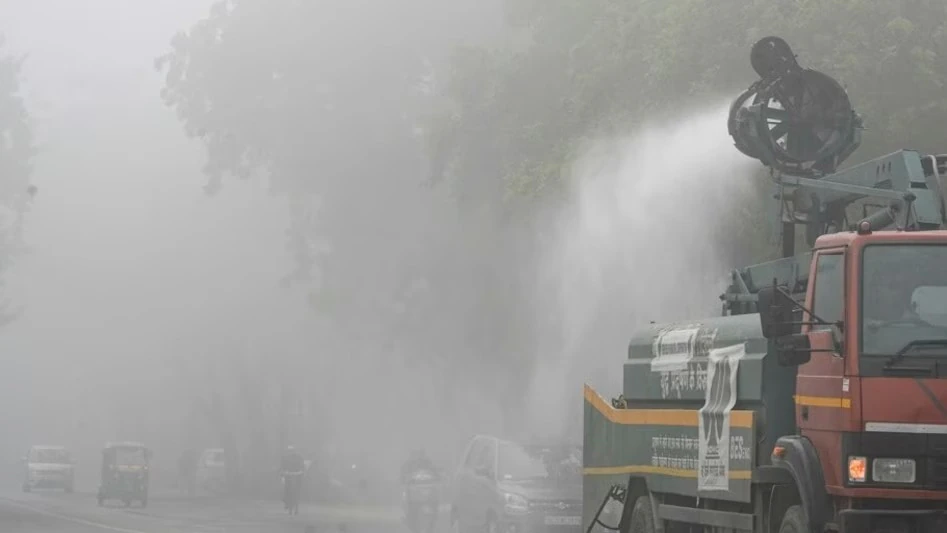
Stage III also operates on top of measures from earlier stages. Agencies are expected to intensify road-dust control, mechanical sweeping and water sprinkling, inspect construction sites, enforce vehicle restrictions and coordinate action across Delhi, Haryana, Uttar Pradesh and Rajasthan. Because the National Capital Region functions as a connected airshed, pollution management in one city cannot be separated from emissions and weather conditions in the surrounding districts.
The immediate test for the authorities is whether these measures are enforced consistently while the forecast points to severe conditions on Monday. Vehicle restrictions and construction curbs can reduce some emissions, but they cannot remove the accumulated pollution already present in the air. The effect of individual measures also takes time to appear in monitoring data, particularly when wind and atmospheric mixing are unfavourable.
For residents, the next few days call for attention to local station readings and official advisories rather than reliance on a single citywide number. People with respiratory or heart conditions should follow medical advice and avoid unnecessary strenuous outdoor activity when readings are high. Schools, workplaces and public agencies may also need to take decisions using both the AQI and the forecast, especially if severe conditions persist beyond Monday.
Delhi’s pollution episode is entering a more consequential phase after Diwali. The city’s daily average remained in the very poor band, several monitoring locations recorded severe air during the evening, and the official forecast expects the overall category to worsen on November 9 before easing to very poor later in the week. Whether that easing occurs will depend on weather and on the combined effect of transport, dust, industrial and seasonal emissions across the NCR.
Also read: Delhi AQI Forecast to Turn Severe From November 6 Ahead of Diwali
Also read: Delhi Air Pollution: City Tops IQAir Ranking Ahead of Diwali

Comments (0)
Be the first to comment. Comments are published after moderation.