


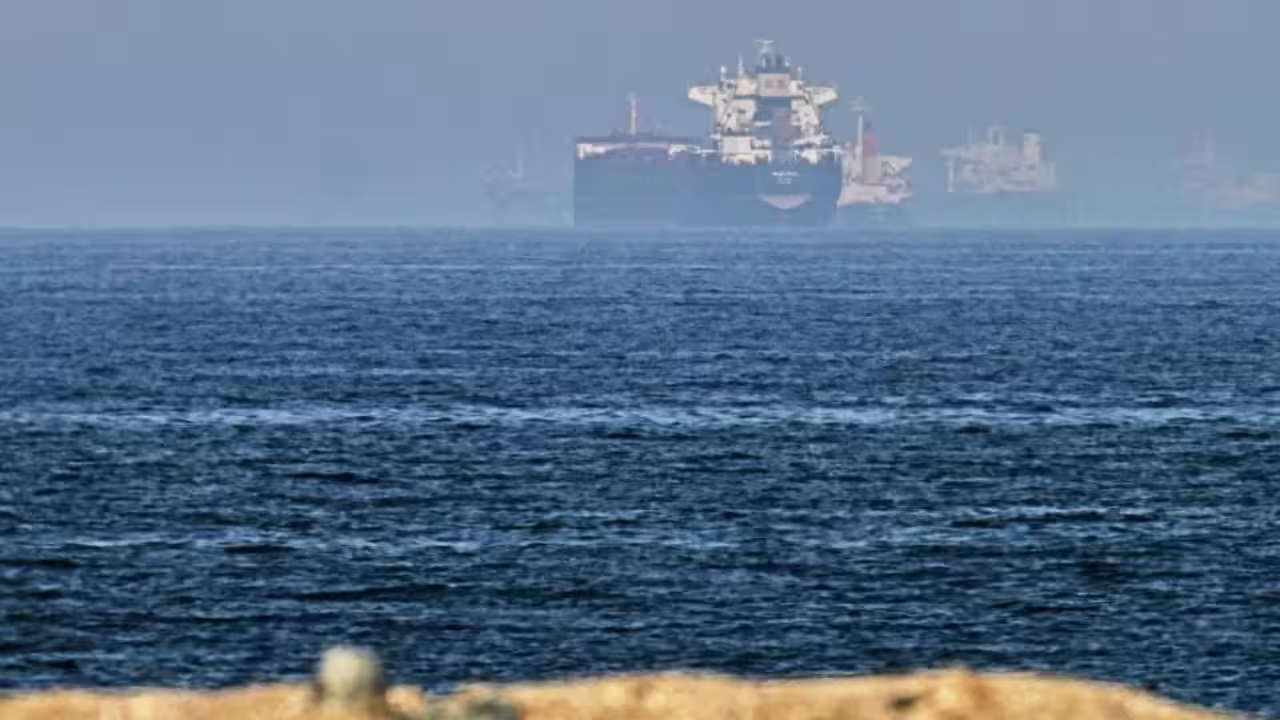
DOHA, November 7, 2026 — Qatar is pressing an interim framework that could link the reopening of the Strait of Hormuz to renewed access for international nuclear inspectors at Iran’s bombed facilities, according to a report published on Saturday by The Guardian. The proposal would require Washington to lift its naval blockade and release part of Iran’s frozen assets, while Tehran would allow the International Atomic Energy Agency (IAEA) to inspect sensitive sites. The governments involved have not published a text of the plan or announced an agreement.
The reported terms are more specific than the public statements made by the mediators. Qatar’s prime minister, Sheikh Mohammed bin Abdulrahman Al-Thani, said on Saturday that Doha’s mediation with Washington and Tehran was continuing to prevent a wider escalation. He said significant progress had been made and expressed confidence that a settlement could be reached. In remarks reported by Reuters, he said negotiators should not wait for a perfect agreement when a workable one could be reached.
The Guardian reported that Qatar had presented a proposal under which Iran could retain its stockpile of highly enriched uranium inside the country, while considering a process to dilute it and allowing IAEA inspectors to visit nuclear sites hit by US and Israeli strikes. In return, the United States would lift its naval blockade and release a portion of roughly $8 billion in frozen Iranian assets. The proposal envisages the Strait of Hormuz reopening on the second day of implementation, using a route agreed with Oman and submitted to the International Maritime Organization.
Those details remain reported terms, not confirmed commitments. Qatar’s foreign ministry said on November 3 that mediators were exchanging proposals and that both sides were reviewing them, but it was not possible at that stage to speak of a specific breakthrough. Reuters separately reported on Saturday that the Qatari prime minister saw progress in the negotiations; it did not independently confirm the inspection-for-reopening terms described by The Guardian. The Financial Times has also reported that mediators are discussing an interim arrangement, with the fate of Iran’s enriched uranium and the order of reciprocal steps among the most difficult issues.
The reported framework is built around a sequence rather than a single announcement. Washington would first ease the naval restrictions and release part of the frozen funds. Iran would then provide access for the IAEA, while the strait would reopen under a shipping arrangement negotiated with Oman. The timing matters because each side would be asked to act before it could be certain that the other had fulfilled every part of the bargain.
For Iran, the nuclear provisions are particularly sensitive. The reported plan does not require Tehran to transfer its enriched uranium stockpile abroad, a demand that has been central to previous US proposals. Instead, the option under discussion is to dilute the material and allow inspectors to visit facilities damaged in the strikes. That could offer a route to verification without requiring Iran to accept the full set of conditions Washington has sought. It would still leave questions about the quantity, location and condition of the material, the scope of inspection access and how compliance would be certified.
Also read: Iran Says Hormuz Could Reopen Within Two Days Under Qatar-Mediated Proposal
For the United States, lifting a naval blockade and releasing frozen assets before a final nuclear settlement would carry political and security risks. The administration would need a mechanism to verify that Iran had opened the waterway and granted meaningful access to inspectors. Tehran, in turn, would want guarantees that sanctions relief and the easing of maritime restrictions would not be reversed after it had taken the first steps. Neither government has publicly endorsed the reported terms, and no timetable for implementation has been announced.
The proposal also sits alongside demands that go beyond the nuclear file. The Guardian reported that Iran has sought an end to the fighting in Lebanon, the withdrawal of US forces from parts of the Iranian coastline, sanctions relief and compensation for war damage. Those demands are not the same as the narrower steps needed to reopen shipping. A deal that addresses the strait but leaves the wider conflict unresolved could reduce immediate economic pressure without ending the risk of renewed confrontation.
Oman’s role is central to the proposed maritime arrangement. The route would have to be understood by commercial ship operators, insurers and naval forces, not only by the governments negotiating the agreement. Submitting a route to the International Maritime Organization could provide a formal point of reference, but it would not by itself guarantee safe passage. The parties would still need to agree how vessels are identified, how incidents are handled and which authority would respond if a ship were threatened or a mine were discovered.
Iran has also been advancing a separate plan for reopening the waterway, Reuters reported, with Tehran seeking the lifting of the US blockade, the release of frozen assets and agreement on a route before normal traffic resumes. That sequence differs from the latest Qatari framework, which puts IAEA access and the timing of a nuclear inspection arrangement into the same package. The distinction matters: the proposals may share some elements, but they do not represent a single agreed document.
The waterway is one of the world’s most important energy chokepoints. The US Energy Information Administration estimates that about 20.9 million barrels of oil per day moved through the Strait of Hormuz in the first half of 2025, equivalent to roughly one-fifth of global petroleum liquids consumption. The agency has also estimated that about 11.4 billion cubic feet of liquefied natural gas passed through the strait each day in 2024, accounting for more than one-fifth of global LNG trade.
Most of the crude oil and condensate moving through Hormuz is destined for Asian markets. India, China, Japan and South Korea are among the major destinations, while Qatar’s LNG exports also depend on safe passage through the waterway. A prolonged disruption can affect more than the price of crude: it can raise shipping insurance costs, delay cargoes, complicate refinery planning and tighten supplies of gas used for power generation and industry.
For India, the risk is not limited to the cost of imported oil. A longer disruption could affect the timing of crude and LNG deliveries, raise freight costs and add uncertainty for companies that plan purchases weeks in advance. The scale of the impact would depend on how long the disruption lasts, whether alternative routes and suppliers can compensate, and how quickly normal commercial traffic can resume. An announcement that the strait is open would therefore need to be followed by evidence that tankers and gas carriers can use it safely.
Energy markets are likely to look for operational details rather than rely on diplomatic language alone. A credible reopening would require clear rules for commercial vessels, confirmation that the route is safe, and a system for resolving disputes at sea. If those details are absent, shipowners may continue to delay voyages even if negotiators announce a political understanding.
The most important uncertainty is whether the proposal can bridge the gap between the two governments. Qatar has publicly described its role as mediation and has said that proposals are being exchanged. The reported framework would connect a nuclear inspection process to the reopening of the strait, but neither Washington nor Tehran has confirmed that it accepts the terms. The IAEA has not announced a new inspection schedule for the damaged facilities.
The next signs to watch are any formal statement from the US administration or Iran’s government, a public description of the route being discussed with Oman, and an indication that the IAEA has been asked to prepare for access. Without those steps, the proposal remains a diplomatic option rather than an agreement. The strait’s reopening, the nuclear file and the wider conflict will continue to be linked, but they are not interchangeable problems.
Comments (0)
Be the first to comment. Comments are published after moderation.