


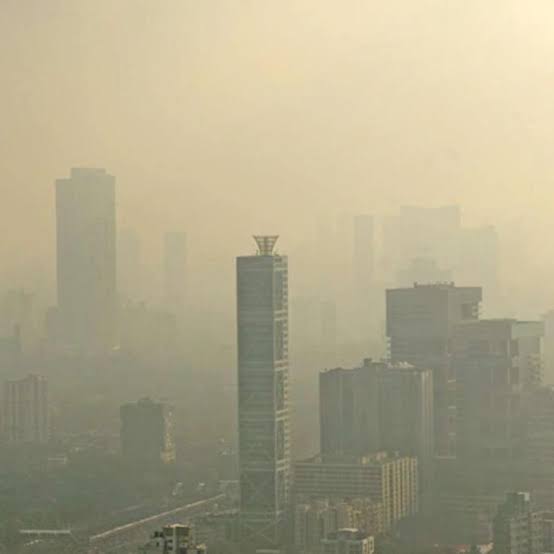
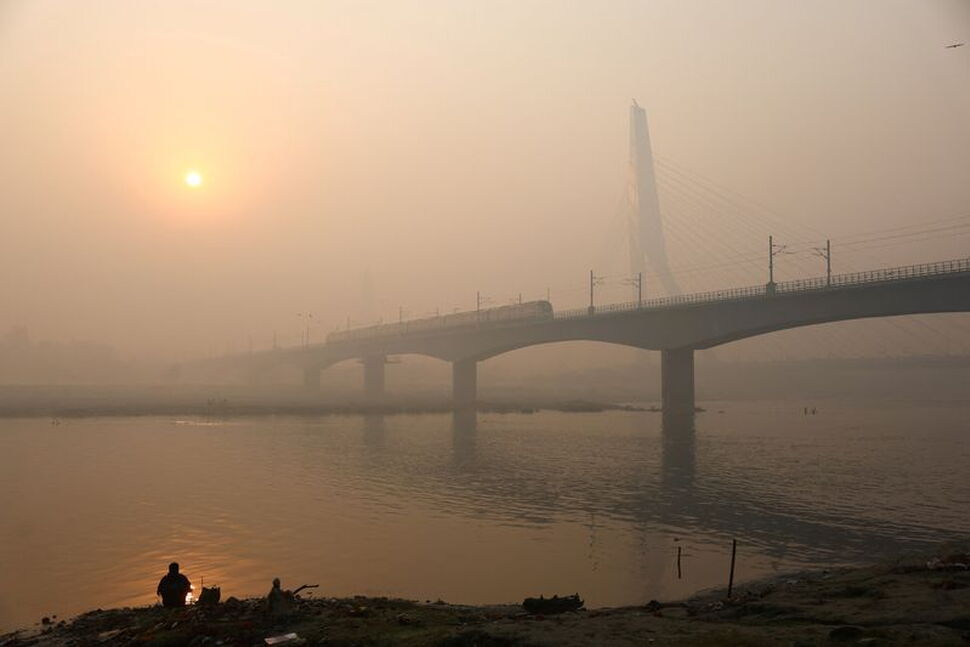
MUMBAI, November 9, 2026 — Mumbai’s air quality looked comparatively better during the afternoon of Diwali, but monitoring reports showed a sharp rise in particulate pollution at several locations after nightfall. The city’s air-quality index was reported at 132 at 4 pm on Sunday, November 8, placing it in the Central Pollution Control Board’s “moderate” category. Separate station-level readings later showed substantial increases in fine and coarse particulate matter, underlining why a single citywide number cannot describe the air people breathe in every neighbourhood.
The afternoon reading was lower than the 188 reported at a comparable point on Diwali last year. The Indian Express, citing the city monitoring network, had reported an AQI of 131 at 1 pm, with 20 of 26 reporting stations in the moderate band. Bandra East recorded 195, Shivaji Nagar 183, the Bandra-Kurla Complex 173, Ghatkopar 170 and Chembur 168. These were station readings, not separate citywide averages, and they should be compared only with observations taken at similar times and under the same measurement system.
The Times of India reported that the 4 pm city reading was 132, while particulate readings at selected stations rose later in the evening. In Andheri, the reported PM2.5 reading increased from 42 at 8 pm to 483 at 10 pm. PM10 readings were also elevated at locations including Chembur, Deonar and Malad. Those station-level pollutant readings are not interchangeable with the citywide AQI. They describe different pollutants, locations and reporting windows, and the published reports do not provide a single common time series for every station.
The distinction matters because an AQI is a composite communication tool. India’s national index converts readings for several pollutants into sub-indices and uses the worst available sub-index to determine the overall category. The result is useful for communicating broad health risk, but it does not mean every pollutant is at the same level or every neighbourhood has identical exposure. A person living near a busy road, construction site or industrial area may encounter conditions that differ from the city average.
Weather can change pollution concentrations over a few hours. Coastal Mumbai often benefits from sea breezes that move air inland and can help disperse or transport pollutants. Wind direction, wind speed, the height of the atmospheric mixing layer and local temperature conditions all influence whether emissions remain close to the ground or spread over a wider area. A favourable afternoon breeze can temporarily improve readings without removing the emissions that will be released later.
Diwali adds a concentrated source of smoke and particles to the ordinary urban emissions from vehicles, industry, construction activity, generators and waste burning. Fireworks can release fine particles and gases in a short period. The amount reaching a particular monitoring station depends on where fireworks are used, how the wind carries the plume and whether the atmosphere is able to mix the emissions away from street level. A station close to a local burst of activity can record a sharp rise even when other parts of the city are less affected.
Researchers have repeatedly cautioned against treating a single weather factor as the explanation for an entire pollution episode. A strong sea breeze may lower a citywide reading for a time, while a later wind reversal or a calmer night can allow emissions to accumulate. The National Air Quality Index is also based on pollutant averaging rules; a short-lived spike at one hour is not the same thing as a 24-hour average. This is why a daytime AQI and a late-evening particulate reading can both be accurate descriptions of different conditions.
Station coverage also matters. Mumbai’s monitoring network includes sites with different surroundings and exposure patterns. A monitor near a traffic corridor may respond to vehicle emissions, while one near a residential area may be more affected by local combustion or construction dust. The network is designed to show a spread of conditions, but gaps in coverage mean a reading cannot be assumed to represent every street or housing complex.
Under the CPCB scale, an AQI from 101 to 200 is classified as moderate. The board’s health description says this band may cause breathing discomfort to people with lung disease, asthma and heart disease, as well as children and older adults. The next band, 201 to 300, is poor and is associated with breathing discomfort for many people on prolonged exposure. Very poor and severe categories carry progressively greater risks, including respiratory illness and effects on people who do not have a diagnosed condition.
A moderate citywide reading is therefore not a declaration that the air is harmless. It is a signal that the average is below the poor band while vulnerable groups may still experience discomfort. People with asthma, chronic obstructive pulmonary disease, cardiovascular illness or other respiratory conditions should follow their clinician’s advice and pay attention to local readings. Parents and caregivers should be cautious about strenuous outdoor activity for children when particulate levels rise, especially close to roads or visible smoke.
PM2.5 and PM10 are not the same pollutant measurement. PM2.5 refers to particles with an aerodynamic diameter of 2.5 micrometres or less; PM10 includes particles up to 10 micrometres. Fine particles can penetrate deeper into the respiratory tract. Coarser particles can irritate the nose and throat and may carry dust or other material. A high PM2.5 reading at one station should not be relabelled as the city’s AQI without applying the national calculation method.
Residents should also be careful when comparing figures from different apps. Some international services use a different AQI scale from India’s CPCB system. A number on one dashboard may therefore have a different category and health interpretation from the same number on another. Check the provider, the scale, the station and the time attached to the reading before drawing a conclusion.
The immediate public-health response is to reduce avoidable exposure while agencies continue monitoring emissions. Residents can check the nearest available monitoring station rather than relying only on a city average. During a pollution spike, people who are sensitive to smoke can avoid strenuous outdoor exercise, keep windows closed when outdoor air is visibly smoky, and use a well-fitted particulate respirator if they must spend time near heavy smoke. An indoor air cleaner may reduce particles in a room when correctly sized and maintained, but it cannot substitute for controlling emissions at source or for medical advice.
Municipal authorities have a separate responsibility to address routine sources that remain after the festival. Road dust, uncovered construction material, debris movement, waste burning and poorly maintained diesel equipment require consistent enforcement. The city’s ward-level monitoring and construction-site checks are more useful when the public can see whether notices result in corrective action. A temporary improvement in the AQI should not be treated as evidence that the underlying emissions have disappeared.
For transport and construction agencies, the next steps include checking dust-control compliance, ensuring that waste is not burned in open spaces and maintaining reliable monitoring stations. For residents, reporting visible garbage burning or dust-generating violations through the relevant municipal channel can help officials identify local sources. Complaints should include a location and time rather than an unverified claim about the entire city.
The next few days will show whether the evening particulate rise was a short festival-related episode or part of a longer period of poor dispersion. The useful indicators are the CPCB station readings, wind direction and speed, rainfall, and any new advisory from the Brihanmumbai Municipal Corporation or the Maharashtra Pollution Control Board. The citywide average, local station values and pollutant concentrations should be read together, not treated as competing versions of one number.
Mumbai’s Diwali readings illustrate a broader point about urban air quality: a relatively better afternoon can coexist with a sharp night-time pollution episode. The reported 132 city reading was lower than last year’s comparable figure, but the later station-level spikes show why monitoring cannot stop at a single daily headline. Sustained improvement will depend on cleaner routine emissions, reliable local data and enforcement that continues after the festival lights are switched off.
Also read: Delhi AQI Rises to 376 on Diwali; Severe Air Forecast for Monday
Also read: Air Purifiers in India: HEPA Filters, Room Size and What AQI Means
Comments (0)
Be the first to comment. Comments are published after moderation.