


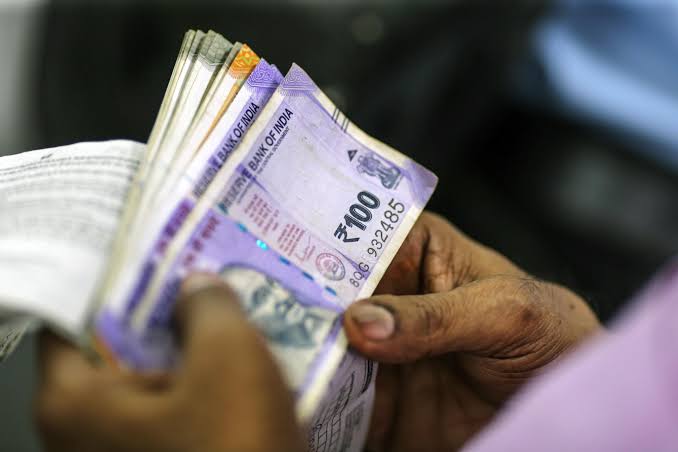
MUMBAI, November 2, 2026 — The Indian rupee entered Monday’s trading session with its recent recovery under scrutiny as weaker Asian currencies and unsettled global risk sentiment threatened to limit further gains. Traders expected the currency to open close to Friday’s levels, around ₹94.94–₹94.98 per US dollar, after a sharp rebound in the previous session. The move offered some relief after the rupee had weakened to around ₹95.28, but market participants cautioned that a single day of dollar selling was not enough to establish a durable change in direction.
Reuters reported that a large foreign bank sold dollars heavily on Friday, helping the rupee recover, although the source of those flows was not clear. That uncertainty matters: a currency can strengthen quickly when a large transaction changes the balance of supply and demand, even if the underlying pressures on trade, capital flows and energy costs have not materially changed. The near-term test is whether buyers return after the initial flow has passed.
The external backdrop is mixed. Asian currencies weakened as investors reassessed the prospects for technology companies after a sell-off in US technology shares. Concerns that very large artificial-intelligence investments may not generate returns quickly enough have encouraged some investors to reduce risk. That shift can affect emerging-market currencies even when the domestic economic story is unchanged, because global funds often adjust exposure across several markets at once.
India has some offsetting support. Foreign investors were net buyers of Indian equities on Friday, according to Reuters, and a separate market preview reported purchases worth about ₹36 billion. Such flows can improve sentiment toward Indian assets, but equity buying does not translate automatically into sustained rupee strength. Investors may hedge their currency exposure, and daily portfolio flows can reverse quickly when global markets become more volatile.
Oil is another important variable. Brent crude eased from a recent high near $118 a barrel to about $111, Reuters reported, as officials from Iran and Qatar continued discussions aimed at ending the US-Israeli war involving Iran. Lower oil prices can help India because the country depends heavily on imported crude. A sustained fall would reduce the amount of foreign currency needed by refiners and other importers, all else being equal. But prices remain elevated, and the effect on India’s import bill will depend on how long the decline lasts and whether shipping and supply risks also ease.
The rupee’s latest move therefore sits at the intersection of three forces: oil, global appetite for risk and the flow of dollars into and out of India. If crude continues to retreat and foreign investors maintain their purchases of Indian shares, the currency may find support. If technology stocks remain under pressure, the dollar strengthens broadly or oil prices rebound, the relief could prove short-lived. None of these outcomes is certain, and market participants are watching flows rather than treating a particular exchange-rate level as guaranteed.
Reuters also reported that the Reserve Bank of India’s net short dollar position in the forward market reached a record $240 billion in September, up from $200 billion in August. The report linked the increase, in part, to foreign-currency inflows under the FCNR(B) deposit scheme that were swapped with the central bank. The figures are important context for understanding the RBI’s broader currency operations, but they should not be confused with a same-day cash loss or a simple measure of the central bank’s available foreign-exchange reserves.
A forward position reflects contracts that are due to be settled in the future. It can influence the timing and size of future dollar and rupee flows, but its implications depend on maturity dates, the structure of the transactions and the central bank’s wider balance sheet. A large net short dollar position does not by itself show that the RBI has exhausted its capacity to act, nor does it establish the exchange rate at which the central bank will intervene. The detailed schedule of contracts and future market conditions matter.
The FCNR(B) scheme was designed to attract foreign-currency deposits from non-resident Indians. When those funds enter the domestic financial system through arrangements involving the RBI, they can bolster near-term foreign-currency liquidity while also creating future settlement obligations. That is one reason analysts examine both spot-market activity and the central bank’s forward book rather than relying on headline reserve figures alone. The precise effect on the rupee depends on how the transactions are structured and when they mature.
For the RBI, the policy challenge is to limit disorderly currency movements without promising to defend a fixed exchange rate. Intervention can smooth abrupt moves and address temporary shortages of dollars, but it cannot permanently remove the effects of a high import bill, weak global risk appetite or sustained portfolio outflows. Currency management also interacts with domestic liquidity: when the central bank sells dollars for rupees, the operation can absorb rupee liquidity unless offset by other measures.
For businesses, the immediate concern is not whether the rupee touches a particular round number but how unpredictable it becomes. Importers paying in dollars can face higher rupee costs when the currency weakens, especially for crude, machinery, electronics, chemicals and other inputs purchased abroad. Firms with foreign-currency loans may also see repayment costs rise if they have not hedged their exposure. Companies that hedge can reduce some uncertainty, but hedging carries costs and does not eliminate every risk.
Exporters can receive more rupees for each dollar earned when the domestic currency weakens, but the benefit varies by industry. Businesses that import raw materials or components may see part of that gain offset by higher input costs. Exporters with foreign-currency expenses, overseas borrowing or contracts priced in rupees may also experience different effects. The exchange rate alone does not determine profitability; order volumes, global demand, pricing power and the cost of hedging all matter.
Households are affected more indirectly. A weaker rupee can increase the local-currency cost of imported fuel and goods, although the pass-through to retail prices depends on taxes, inventories, contracts and decisions by companies. Students paying overseas tuition and families funding international travel may need more rupees to meet dollar-denominated bills. The effect is not immediate or uniform, but sustained currency weakness can add to costs across several parts of the economy.
Investors will also watch the opening direction of Indian equities and the performance of the dollar against other major currencies. Reuters reported that Indian benchmarks were poised for a firmer start, while the broader Asian session remained vulnerable to concerns about technology spending. A positive opening for domestic shares could help sentiment, but the rupee’s direction will also depend on actual dollar demand from importers, portfolio transactions and any signs of central-bank activity.
There are limits to what can be concluded from pre-market indications. Exchange rates can move after local trading begins as corporate demand, hedging orders and global developments enter the market. Reports of intervention are often based on dealer observations rather than a real-time confirmation from the RBI, which does not disclose every transaction as it occurs. The Friday recovery should therefore be described as a market move associated with dollar selling, not as proof of a new policy commitment or a permanent floor.
The next signals to watch are the rupee’s behaviour after the opening, the direction of crude prices, changes in global technology shares and the persistence of foreign portfolio inflows. A calmer external environment could give the currency room to consolidate Friday’s gains. A renewed flight to the dollar or a rise in oil prices could put the recovery under pressure again. The RBI’s forward-market exposure will remain part of the broader assessment, but it should be read alongside current flows and the timing of future settlements rather than in isolation.




Comments (0)
Be the first to comment. Comments are published after moderation.