


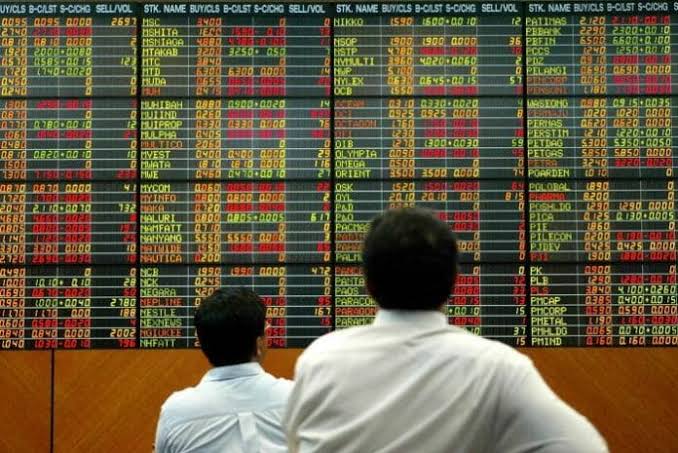
SINGAPORE, November 2, 2026 — Asian stock markets opened the week under pressure as investors reassessed whether the expected returns from artificial-intelligence infrastructure can keep pace with the extraordinary sums technology companies are committing to data centres, chips and computing capacity. In early trading reported by Reuters, Japan’s Nikkei 225 was down 0.5%, South Korea’s Kospi fell 0.8% and MSCI’s broad Asia-Pacific index excluding Japan eased 0.4%.
Also read: Asian Stocks Rise as Anthropic IPO Filing Supports AI Shares
The declines followed a difficult October for technology shares and came ahead of earnings from major US companies this week. The concern is not that demand for AI has disappeared; it is that spending is rising so quickly that investors want clearer evidence of durable revenue, cash flow and returns on capital. The market figures in this report are early-session snapshots and can change during the trading day.
Japan’s Nikkei was 0.5% lower in the early session, while South Korea’s Kospi was down 0.8%, according to Reuters. The broader MSCI gauge of Asia-Pacific shares outside Japan slipped 0.4%. The Kospi had already lost about 16% during October, making the latest decline part of a broader retreat rather than an isolated move.
Trading was not uniformly negative across every asset. Reuters reported that US S&P 500 futures were up 0.4% and Nasdaq futures had rebounded 0.6% after the technology-heavy Nasdaq Composite lost nearly 7% in October, its worst monthly performance since the tariff-driven sell-off in April 2025. Futures indicate where investors expect markets to open; they do not guarantee how the cash market will finish.
In Japan, the Wall Street Journal reported the Nikkei was down 0.9% at 62,714.43 at 0014 GMT, with bank and technology shares among the main drags. The difference from Reuters’ 0.5% decline reflects separate reporting snapshots during a moving market. It is a reminder that intraday percentages should always be read with their timestamp and index definition.
Building and operating AI systems requires a large, continuing flow of capital. Cloud companies are expanding data-centre capacity, chipmakers are adding production and advanced packaging, and businesses are investing in networking, cooling, power supply and specialised software. Those investments can support future sales, but the cash is spent before every new facility or product has demonstrated how much revenue it can generate.
Reuters cited Goldman Sachs estimates that capital expenditure by major cloud and technology companies could approach $800 billion in 2026 and rise to $1.2 trillion in 2027. The figures are estimates, not audited spending totals or guaranteed outcomes. Goldman also expects strong earnings growth for US companies, but a slower pace in 2027 than in 2026. The tension is important: profits can continue to rise while the rate of improvement slows, leaving share prices vulnerable if valuations already assume exceptional growth.
Investors are increasingly distinguishing between AI demand and the economics of supplying it. Chip vendors can benefit from large orders, but customers may change procurement plans if infrastructure becomes too expensive. Cloud operators may report rapid revenue growth while also carrying higher depreciation, electricity, construction and financing costs. A project can be strategically important and still deliver a lower return than investors expected.
The risk is not limited to companies that build AI models. Semiconductor manufacturers, server suppliers, data-centre landlords, electrical equipment makers and utilities are all exposed to the investment cycle in different ways. Some may continue to benefit even if spending growth slows; others could face excess capacity or more intense price competition if supply expands faster than customers’ needs.
Investors will be watching results from Apple, Advanced Micro Devices and Palantir, which Reuters said were scheduled to report during the week. AMD has confirmed that it will publish its fiscal third-quarter 2026 results after the market close on Tuesday, November 3. The companies operate in different parts of the technology economy, but their disclosures may help investors judge consumer demand, chip orders and the pace at which AI-related products are becoming material sources of revenue.
For chipmakers, the questions include demand visibility, product availability, margins and whether customers are placing orders for immediate deployment or building capacity well ahead of use. For cloud and software companies, investors will look for evidence that AI features are attracting paying customers, increasing usage or helping to retain clients. Revenue growth alone may not reassure markets if capital expenditure and operating costs rise even faster.
Also read: Samsung Reports Record Q3 Profit as AI Chip Demand Grows
Guidance will matter as much as the reported quarter. A company can post strong historical results and still see its shares fall if management signals that spending will rise, demand is becoming less predictable or returns will take longer to arrive. Conversely, clear evidence of sustained customer demand and disciplined spending could help restore confidence in the sector.
The AI debate is unfolding alongside other market pressures. Oil prices remained elevated even as crude futures eased in early trading on Monday. High energy costs can complicate the outlook for inflation and corporate margins, while also influencing bond yields and central-bank decisions. Gold, which had fallen sharply in October, recovered modestly in the early session reported by Reuters.
Central-bank decisions and economic data could add another layer of volatility. Reuters reported that markets were anticipating possible rate increases from the Reserve Bank of Australia, the Bank of England and Sweden’s Riksbank, while expecting Norway’s central bank to hold. US manufacturing data was due on Monday, with the monthly employment report scheduled for Friday. Those releases may change expectations for growth, inflation and borrowing costs.
US midterm elections are another source of policy uncertainty. Reuters noted that changes in congressional control could create additional political hurdles for data-centre development. Permitting, electricity access, water use and local opposition can affect how quickly projects are built, so the sector’s investment outlook depends on more than chip demand alone.
For Indian investors, a sustained retreat in global technology shares can influence sentiment towards information-technology services, semiconductor-linked businesses and companies seeking overseas capital. It can also affect foreign portfolio flows and the tone of trading when domestic markets open. These effects are not automatic: Indian share prices also respond to local earnings, valuations, currency moves, domestic liquidity and policy decisions.
Investors should therefore separate a global risk-off move from company-specific changes in earnings prospects. A fall in US technology shares does not by itself prove that every AI-related business is overvalued, just as a strong chip result does not guarantee that all infrastructure spending will be profitable. Cash generation, balance-sheet strength, customer concentration and the timing of investment returns remain central to assessing individual companies.
The next market test is whether earnings and guidance can show that AI spending is translating into revenue and cash flow at a pace investors can support. The direction of oil prices, bond yields and central-bank expectations will also matter. Monday’s declines are an early snapshot, not proof of a lasting bear market; a sustained recovery would require evidence that the investment cycle remains profitable, while further disappointments could extend the repricing of technology shares.






Comments (0)
Be the first to comment. Comments are published after moderation.