


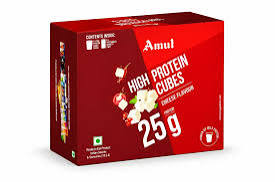
NEW DELHI, 2 November 2026 — Amul has added a savoury snack to its high-protein range: High Protein Cubes, sold in a 190-gram box containing five 38-gram portions. The company says each portion provides 25 grams of protein and about 150 kilocalories. Its online shop lists the five-pack box at a maximum retail price of ₹400, equivalent to ₹80 per portion, although availability can change and the listing showed the product as sold out when checked.
The launch puts a familiar dairy cooperative into a packaged-snack category where the front-of-pack promise can be more prominent than the details that matter to a buyer: ingredients, allergens, sodium, saturated fat, serving size and the amount of protein actually delivered. The numbers are useful, but they should be read as one part of a food label rather than as a complete judgement about whether a snack fits an individual diet.
The product is presented as a ready-to-eat, seasoned savoury snack. Reports published after the October 30 announcement describe five flavours: Peri Peri, Korean Kimchi, Tandoori, Cheese and Herbs, and Tomato. Each small pack comes with a separate seasoning sachet. Amul has also suggested that the cubes can be added to soups, gravies or bhel, rather than eaten only as a snack.
Also read: FSSAI Calls for Cold-Chain Compliance in Perishable Foods
The company’s stated nutrition figures are 25 grams of protein and 150 kcal in a 38-gram portion. A five-pack box therefore contains five portions and, if each portion matches the stated figure, 125 grams of protein in total. That is a calculation from the per-pack claim, not a laboratory test by The Fortune Post. Buyers should check the product’s own current label for the final nutrition declaration and ingredients, especially if the recipe or pack changes.
The Amul Shop listing identifies the product as a 190-gram pack of five and shows an MRP of ₹400. That makes the unit price ₹80 per 38-gram serving. Online stock status is not a guarantee of availability in every city or on every platform; a product page can remain visible while stock is temporarily unavailable. The listing should be checked again before travelling to a store or planning a purchase.
Twenty-five grams of protein in a 38-gram portion is approximately 65.8 per cent of the pack’s weight. That explains how a product can be described as containing roughly 65 per cent protein by weight. It does not mean that 65 per cent of the food’s calories come from protein, nor does it tell a consumer everything about the source or quality of the protein. Those are separate questions.
Using the standard energy conversion of roughly four kilocalories per gram of protein, 25 grams of protein would account for about 100 kcal. The stated total of 150 kcal leaves energy that can come from other components, subject to rounding and the exact nutrition declaration. A buyer should not use the protein figure alone to infer total carbohydrate, fat, sodium or micronutrient content.
Protein is needed for tissue maintenance and repair, and higher-protein foods can be useful for people trying to meet a dietary target. But needs differ with age, body size, activity, health status and the rest of the diet. A single packaged snack does not replace balanced meals, and a high-protein claim is not a medical claim that the product will build muscle, cause weight loss or treat a condition.
Nutrition panels are only comparable when the quantities are comparable. One product may report nutrients per 100 grams, another per serving and a third per package. For these cubes, the reported serving is 38 grams. If a person eats two packs, the protein and calories are approximately doubled from the company’s stated per-pack values. The seasoning sachet should be included in the label’s stated serving unless the pack says otherwise.
The ingredients list shows what the product is made from and usually lists ingredients in descending order by weight. Consumers with milk, soy, wheat or other food allergies should not assume that a protein snack is safe because it is marketed as a dairy-company product. The actual ingredient and allergen declaration on the pack is the source to rely on. If the label is unclear, do not guess; contact the manufacturer before eating it.
A savoury snack can deliver a substantial amount of protein and still contain salt, flavourings or fats that a buyer wants to limit. The information available in the launch announcement is not a substitute for the full nutrition panel. People monitoring blood pressure, kidney disease or another health condition should follow advice from their clinician or dietitian rather than treating a protein-per-rupee comparison as a personalised nutrition plan.
Also read: FSSAI Initiates Prosecution Against Three Food Firms
India’s Food Safety and Standards Authority regulates pre-packaged food labels and nutrition and advertising claims. Its Labelling and Display Regulations and Advertising and Claims Regulations are useful reference points for understanding how packaged foods communicate their properties. A consumer can use those rules as context, but should assess the actual product label rather than infer compliance from a marketing phrase.
At the advertised figures, ₹80 divided by 25 grams works out to ₹3.20 per gram of protein. That arithmetic gives a starting point for comparison, not a definitive ranking. A serving of paneer, eggs, pulses, yoghurt, milk or another protein source may deliver different quantities of protein, calories, fibre, salt and other nutrients. Retail prices also vary by city, pack size, retailer and promotions.
A fair comparison should use the price actually paid, edible quantity, protein per serving and the food’s wider nutritional profile. It should also account for waste and convenience. A shelf-stable or ready-to-eat snack may suit a person travelling or working away from a kitchen, while a home-prepared meal may offer more flexibility over ingredients and portion size. Neither option is automatically best for every household.
The company’s online shop lists other high-protein products, including paneer, milk, lassi and whey-based products. These are not interchangeable products: some need refrigeration, some are drinks, and some are ingredients rather than snack foods. A consumer choosing among them should compare the form that will realistically be eaten, not just the largest protein number on the page.
The cubes may appeal to people who want a portable savoury option, need food between work or study commitments, or want an alternative to sweet protein drinks. The small individual packs may help with portion control, although the flavour sachet and the overall label still matter. Convenience is a real benefit when it makes a planned snack easier to carry and eat.
People with food allergies, medically restricted diets or specific kidney-related protein limits should inspect the full ingredient and nutrition panel before purchase. Parents should not treat a product designed for general consumers as a substitute for age-appropriate food guidance. If a person is using protein supplements because of illness, undernutrition or a prescribed training plan, a registered dietitian or clinician can help determine the appropriate amount and source.
The public launch information confirms the product’s name, stated portion size, protein figure, calories, flavours and online selling channel. The shop listing gives the five-pack box weight and MRP, but availability can change. The full product label—not a headline or retailer summary—should be used to check ingredients, allergens, sodium, saturated fat, storage directions, date marking and manufacturer details.
The practical conclusion is straightforward: the cubes offer a clearly stated protein quantity in a compact portion, at a listed price of ₹80 per serving. Whether that is a good purchase depends on the full label, personal dietary needs, taste, stock availability and what else the buyer could eat for the same amount. The protein number is a useful starting point, not the whole decision.





Comments (0)
Be the first to comment. Comments are published after moderation.