


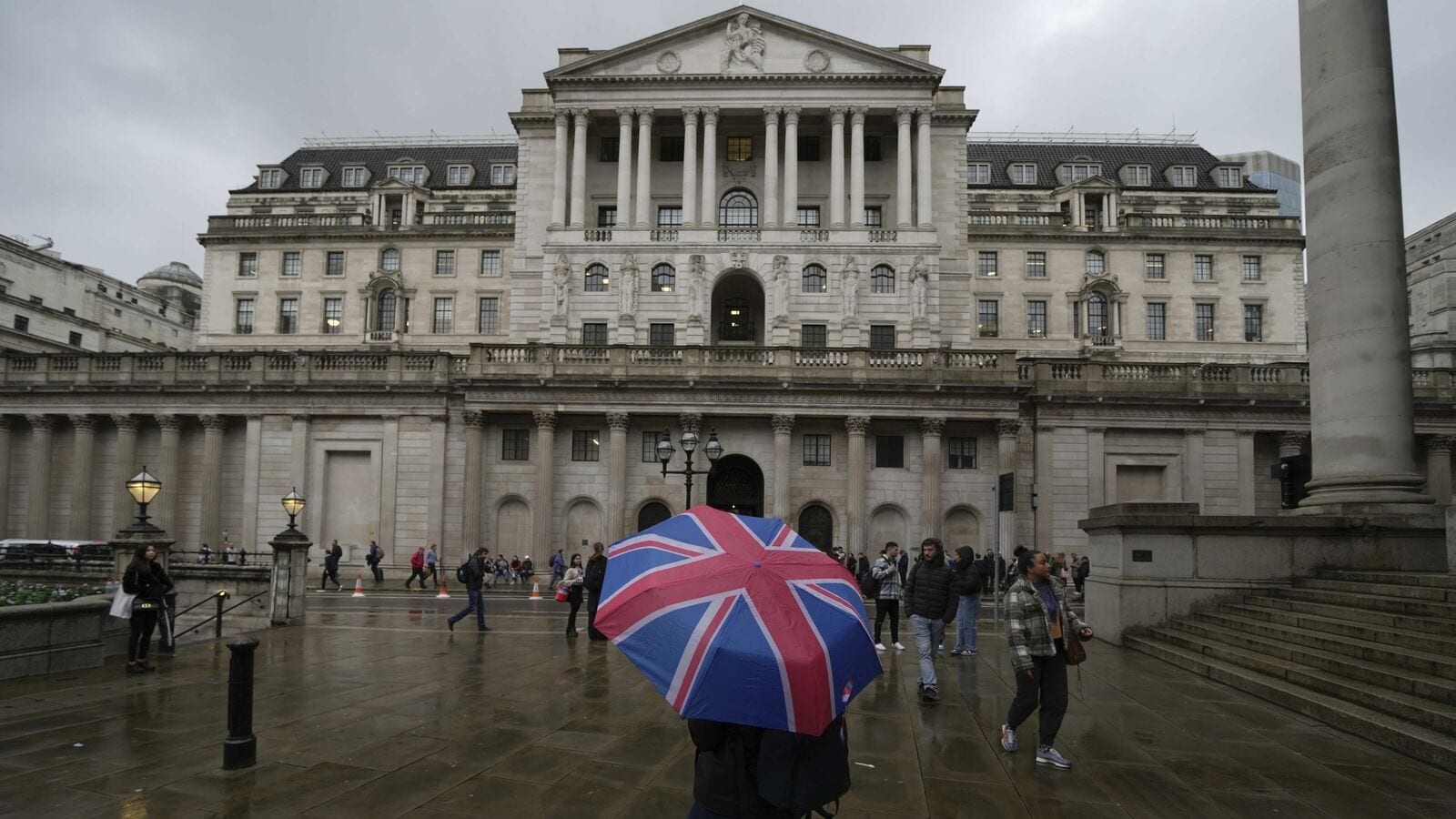
LONDON, November 2, 2026 — A Bank of England rate hike is widely expected this week as higher energy costs keep pressure on British inflation, but policymakers could signal that markets are overestimating how far borrowing costs will rise after the decision.
Economists surveyed by Reuters expect the Monetary Policy Committee to lift Bank Rate from 3.75% to 4% on Thursday, November 5. If confirmed, it would be the first increase since August 2023. The decision has not been made: the forecast reflects economists’ expectations, not an announcement by the central bank.
The immediate pressure comes from inflation data that have moved further from the Bank’s 2% target. The UK Consumer Prices Index rose 3.5% in the 12 months to September, up from 3.1% in August, according to the Office for National Statistics. The September reading was above the 3.4% increase economists had expected in a Reuters poll and the 3% rate the Bank had projected in its July forecasts.
The ONS said transport, particularly motor fuels, made the largest upward contribution to the change in the annual inflation rate. Core CPI, which excludes food, energy, alcohol and tobacco, also edged higher, to 2.8% from 2.6%. Services inflation rose to 3.7% from 3.4%, pointing to price pressure beyond the direct cost of fuel.
Energy prices have become a central complication for the Bank because the prolonged conflict in the Middle East has made the outlook for oil and gas more volatile. Central bankers cannot set global energy prices, but they must judge whether the initial increase will spread into wages, business costs and the prices of other goods and services.
The committee’s most recent decision offers a clear indication of the debate ahead. At its September meeting, the Monetary Policy Committee voted six to three to keep Bank Rate at 3.75%. The three dissenting members preferred a quarter-point increase to 4%, according to the Bank’s published minutes.
The split reflected different views about how quickly higher energy costs might become embedded in the wider economy. Members who favoured a rise placed more weight on the risk that persistent fuel and food inflation could influence wage negotiations and companies’ pricing decisions. Those who supported holding rates argued that restrictive borrowing costs and softer conditions in parts of the labour market could help contain those pressures.
The distinction matters because a rate increase would not bring down the world price of oil or gas. Its purpose would be to restrain demand and prevent a temporary external shock from turning into a longer-lasting rise in domestic prices. Raising rates too late could allow inflation expectations to harden; tightening too aggressively could weaken household spending, investment and employment while the economy is already facing higher costs.
The Bank’s September minutes said there had so far been limited evidence of material second-round effects in wage- and price-setting. But policymakers also warned that the risk could grow if energy prices remained elevated for longer. That leaves the committee weighing data that show inflation running above target against uncertainty about how much of the increase will persist.
The immediate decision is only part of the market debate. Reuters reported on Monday that investors have been pricing in several additional quarter-point increases during 2027. Those expectations could take Bank Rate to between 4.75% and 5% if they were fully realised.
Economists are less united on that longer path. The Bank may raise rates this week while avoiding a commitment to a series of further increases. The wording of its statement, the updated economic forecasts and comments from Governor Andrew Bailey will therefore be closely examined for clues about how policymakers assess the balance between inflation risks and weaker activity.
Rate expectations can move financial markets before the official decision. Bond yields reflect investors’ views about future borrowing costs, inflation and the risks attached to holding government debt. Currency markets also respond to changes in expected returns, although exchange rates are influenced by economic conditions and policy decisions in other countries as well.
For households, the effect would depend on the type of borrowing they have. People on tracker mortgages or loans linked directly to Bank Rate could face a prompt increase in payments if the rate rises. Borrowers on fixed-rate deals would generally not see their contracted payments change immediately, although the cost of refinancing can be affected by market expectations before the Bank acts.
Savers could receive higher returns on some deposit products, but banks do not necessarily pass on a policy-rate increase in full or at the same speed to every account. The net effect on a household budget depends on whether the family is primarily a borrower or saver, the size of its debt, when its mortgage or loan resets and how energy and other living costs change.
Businesses face a similar trade-off. Higher rates can raise financing costs for companies that borrow to fund inventory, equipment or expansion. At the same time, firms may be dealing with higher fuel, freight and input costs. Companies with limited pricing power could find it difficult to pass those costs to customers without losing sales, while firms with stronger demand may attempt to recover more of the increase through prices.
Government finances are also exposed to the interest-rate outlook. Higher market yields can increase the cost of issuing or refinancing debt, although the effect on the budget depends on the maturity profile of outstanding bonds and broader fiscal conditions. The UK government’s recent budget included support for households and motorists facing energy costs, but economists cited by Reuters expect the measures to have only a modest effect on the inflation outlook.
The Bank will also have to consider the risk that higher borrowing costs slow activity just as households and firms absorb the energy shock. Monetary policy works with a lag: changes to the Bank Rate do not immediately alter every mortgage, business loan or price, and the full effect on spending and inflation can take months to emerge.
The UK’s reliance on imported energy leaves its inflation outlook vulnerable to developments beyond its borders. Even if oil prices ease, the effect on retail fuel, transport, production and household bills may not be immediate. Firms can have existing contracts and hedges that delay the pass-through of higher costs, but those protections can expire if the shock lasts.
Energy supply decisions by major producers and the safety of shipping routes are therefore part of the wider inflation picture. A decision to hold production targets steady does not guarantee that more crude will reach buyers, just as a change in global prices does not translate automatically into the same change in consumer bills.
Also read: OPEC+ Set to Keep December Oil Output Targets Unchanged
The interaction between energy supply and the power system is also visible in India, where a fall in hydropower output coincided with a sharp rise in coal-fired generation in October. The circumstances differ from those in Britain, but both illustrate how fuel availability, demand and energy prices can complicate inflation and policy decisions.
Also read: India’s Coal Generation Rises 25.7% as Hydropower Falls
The Bank is due to announce its decision at 12:00 GMT on Thursday, November 5, alongside the Monetary Policy Report and meeting minutes. A press conference is scheduled for 12:30 GMT. The vote split will be important, but so will the committee’s explanation of the inflation outlook, the persistence of the energy shock and the amount of spare capacity it sees in the economy.
Investors will look for whether the Bank endorses the market’s expectation of further increases or stresses that decisions will depend on incoming evidence. A 25-basis-point increase, if delivered, would not by itself establish a sustained tightening cycle. A hold would also need to be interpreted alongside the committee’s forecasts and its assessment of the risks.
The next UK inflation release is scheduled for November 18, according to the ONS. Data on wages, employment, business activity and energy prices will help policymakers judge whether the September acceleration is continuing and whether cost pressures are spreading more broadly. Developments in the Middle East could alter that assessment quickly, making the path beyond this week uncertain.
For now, the central expectation is that the Bank will raise rates to 4% on November 5. That remains a forecast, not a confirmed decision. The more consequential question for borrowers, businesses and markets may be whether policymakers see the move as a one-off response to the current shock or the beginning of a longer period of tighter monetary policy.




Comments (0)
Be the first to comment. Comments are published after moderation.