


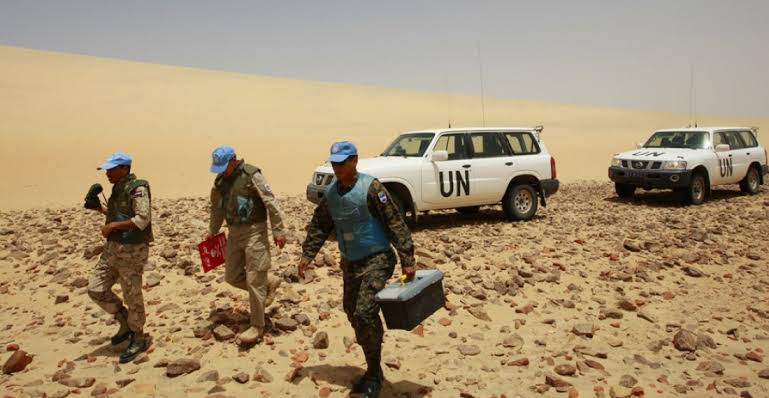
NEW YORK, November 2, 2026 — The MINURSO mission — the United Nations Mission for the Referendum in Western Sahara — has ceased operations after its mandate expired on October 31, beginning a wind-down that ends 35 years of UN field presence in the disputed territory. The UN said a smaller team will oversee the liquidation process and the return or disposal of mission assets after the Security Council failed to agree on a renewed mandate.
The breakdown followed competing US and Russian proposals that failed at the Security Council on October 30. Russia vetoed a US-backed draft, while a Russian counterproposal received too few votes to pass. The result leaves the territory without the mission that had monitored the 1991 ceasefire and supported a referendum on self-determination that was never held.
The UN said November 1 marked the start of the liquidation period. A smaller team reporting to the Department of Operational Support will manage the orderly transport of assets belonging to troop-contributing countries and the appropriate disposal of UN equipment. That process is different from a political settlement: it concerns the closure of the operation, not a decision on who should exercise sovereignty over Western Sahara.
Also read: UN Demands Investigation After Human Rights Staff Member Dies in Houthi Custody
Associated Press reported that MINURSO ceased operations on Sunday after 35 years. The Secretary-General’s spokesperson said the UN remained concerned about security across the territory and the risk that hostilities could escalate. The mission’s departure therefore removes a long-standing monitoring presence at a time when the underlying dispute remains unresolved.
MINURSO was established in 1991 under Security Council Resolution 690, following a settlement plan accepted by Morocco and the Polisario Front. Its tasks included monitoring the ceasefire and supporting preparations for a referendum in which the Sahrawi people could determine the territory’s future. The vote never took place, largely because the parties could not agree on voter eligibility and the political terms of the process.
The mission’s end does not settle the dispute or automatically mean that fighting will resume. It does, however, reduce the UN’s operational footprint for monitoring and de-escalation. The practical consequences will depend on how the parties behave, whether diplomatic contacts continue and whether the Security Council finds a way to rebuild agreement around the mission’s future.
The immediate crisis emerged from two competing draft resolutions on October 30. The US proposal received 11 votes in favour but was blocked by Russia’s veto. A rival Russian draft seeking a one-year extension failed to secure the nine affirmative votes required for adoption: it received three votes in favour, one against and 11 abstentions, according to Reuters reporting carried by ThePrint.
The two texts reflected different approaches to the long-running dispute. The US draft would have placed Morocco’s autonomy proposal at the centre of negotiations and reworked the mission’s role. The Russian counterproposal sought a more straightforward renewal of the existing mandate while leaving room for a strategic review. Neither plan secured the support needed to keep the operation running beyond October 31.
The failure was consequential because the Council had routinely renewed MINURSO’s mandate for decades. The previous extension, Resolution 2797 adopted in 2025, set October 31, 2026, as the expiry date and called for negotiations aimed at a just, lasting and mutually acceptable solution that provides for the self-determination of the people of Western Sahara.
The 2025 resolution also asked the Secretary-General to provide a strategic review of MINURSO’s future mandate, taking account of the negotiations. But the Council did not agree on a replacement resolution before the deadline. The lack of a new mandate left the UN to begin the closure process rather than continue the mission under an agreed framework.
Western Sahara is a former Spanish territory on Africa’s north-western Atlantic coast. Morocco administers most of the territory and regards it as part of the kingdom, while the Polisario Front seeks independence for the Sahrawi people and is backed by Algeria. The UN continues to classify Western Sahara as a non-self-governing territory.
Morocco welcomed the non-renewal of the mandate. Its royal palace described MINURSO as an “instrument to internationalize the dispute,” according to AP. The Polisario Front called the decision “unacceptable,” while Algeria’s foreign ministry said it deeply regretted the outcome and criticised the US draft’s approach.
The disagreement is rooted in the unresolved question of self-determination. The 1991 settlement plan envisaged a referendum, including independence as an option, but the parties could not agree on the list of eligible voters. Morocco wanted Sahrawis living in the territory it controls to be included, while the Polisario Front argued for a narrower voter list based on the Spanish colonial census.
That impasse has shaped diplomacy for decades. Morocco has gained support from a growing number of countries for its autonomy proposal, while the Polisario Front and its supporters maintain that the Sahrawi people must be able to choose their political future. The collapse of the mandate negotiations has not resolved those competing claims; it has exposed the Security Council’s inability to agree on how the UN should continue supporting a settlement.
The liquidation period is intended to manage the practical closure of the mission rather than end every UN activity connected with Western Sahara. The Secretary-General’s spokesperson said a smaller team would oversee the return of equipment belonging to troop-contributing countries and the disposal of UN assets. The UN has not announced a replacement field mission under a new mandate.
AP reported that MINURSO was authorised to have 534 personnel and had a budget of more than $62 million for the 2026–2027 financial year. Twenty mission personnel had lost their lives over its history. The closure therefore involves more than a change in the mission’s name or reporting structure: it requires personnel, equipment and logistical arrangements to be wound down in an orderly manner.
The absence of an agreed successor also leaves unanswered how the UN will maintain regular situational awareness on the ground during the transition. The Secretary-General’s warning about escalation highlights the concern, but the public statements reviewed for this report do not describe a new monitoring arrangement that would replace MINURSO’s former role.
The dispute is also a flashpoint in relations between Morocco and Algeria, which severed diplomatic relations in 2021. Algeria hosts and supports the Polisario Front, while Morocco has made sovereignty over Western Sahara a central foreign-policy objective. A reduction in UN monitoring could increase uncertainty, although the extent of any security effect will depend on developments on the ground and the parties’ decisions.
The UN’s political role is not limited to the physical mission. Resolution 2797 asked the Secretary-General and his Personal Envoy to facilitate negotiations and called on the parties to engage without preconditions. Those diplomatic efforts can continue in principle, but the end of MINURSO’s operational mandate leaves the process without the same field presence and agreed institutional framework.
For the Security Council, the immediate challenge is whether members can find common ground on the mission’s functions and the basis for negotiations. A future arrangement would need enough support to pass the Council while addressing the parties’ sharply different positions on autonomy, independence and the referendum. No such agreement had been announced by the time of this report.
Also read: Jaishankar at UNGA 2026: India Targets Terrorism, Gulf War and UN Reform
The next indicators will be the pace of MINURSO’s liquidation, any public assessment of security conditions from the Secretary-General and whether Council members resume talks on a successor arrangement. The mission’s closure is a concrete operational change, but it does not determine Western Sahara’s status or resolve the referendum question. The risk is that a diplomatic stalemate becomes harder to manage as the UN reduces its presence on the ground.


Comments (0)
Be the first to comment. Comments are published after moderation.