


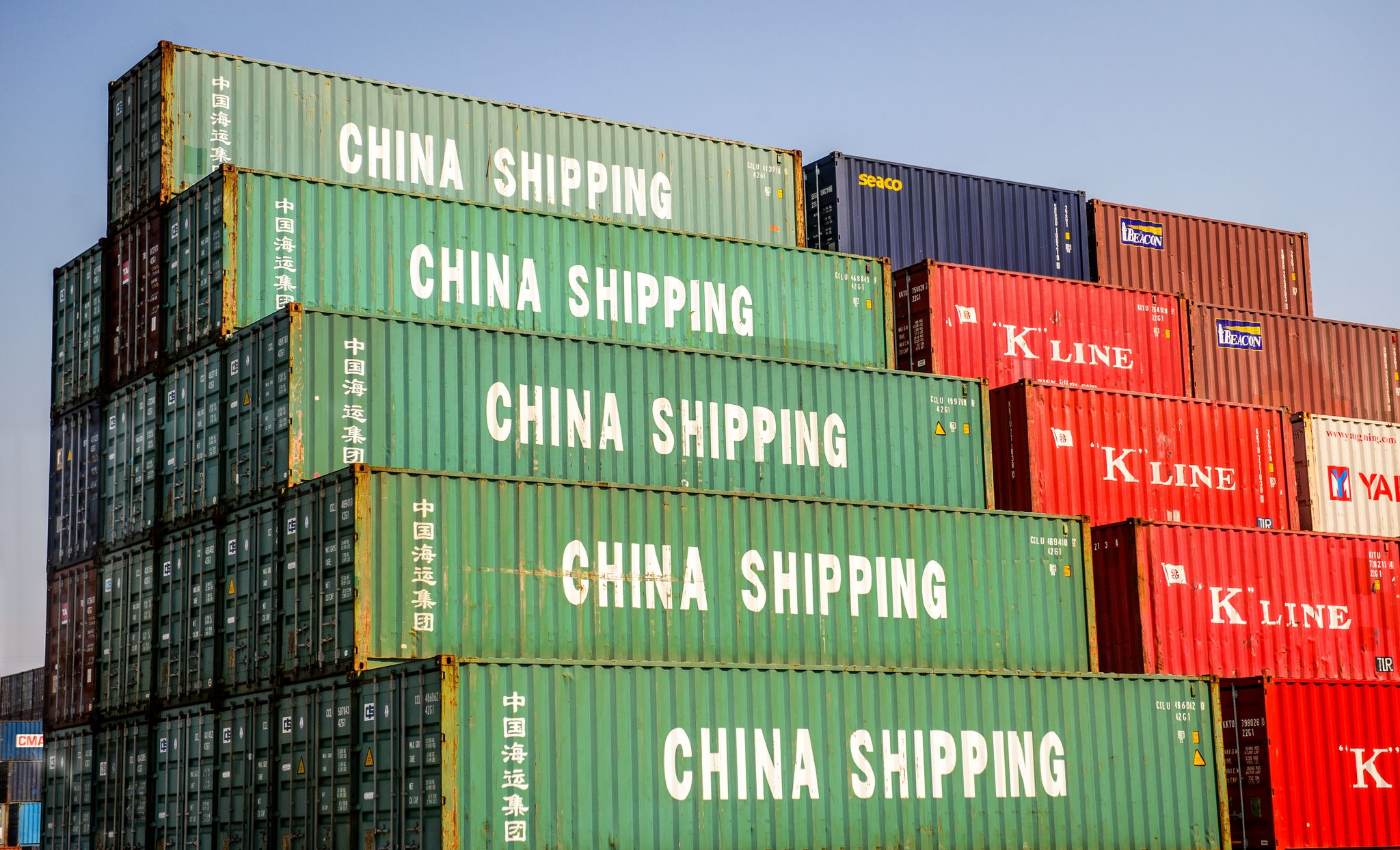
BEIJING, November 10, 2026 — China’s trade surplus reached $1.04 trillion in the first 10 months of 2026, crossing the trillion-dollar mark for a second consecutive year as exports surged on demand for high-tech products linked to the global artificial-intelligence build-out. Customs data reported by Reuters showed exports rose 35.2% in October from a year earlier in US-dollar terms, while imports increased 41.6%.
The export growth was slightly below September’s 36.3% jump but stronger than economists had expected. Imports also accelerated, rising faster than the 32% median forecast in a Reuters poll and up from 31% growth in September. The cumulative surplus reached the milestone a month earlier than it did in 2025, underscoring the weight of external demand in an economy still dealing with weak household consumption and a prolonged property downturn.
The latest customs figures show that China’s export engine remained unusually strong at the start of the final quarter. Shipments in October rose 35.2% in US-dollar terms, extending a run of rapid growth that has been supported in part by overseas demand for electronics, components and equipment used in artificial-intelligence infrastructure. The increase came ahead of the 33.5% growth forecast by economists surveyed by Reuters.
China’s cumulative trade surplus for January through October reached $1.04 trillion, according to the figures reported by Reuters. The total had already exceeded $1 trillion for the second consecutive year and reached the milestone one month earlier than in 2025. The figure is the difference between the value of goods exported and imported over the period; it is not a measure of corporate profit or a direct measure of household prosperity.
Imports also rose sharply. Their 41.6% annual increase in October was well above the 32% median forecast and faster than September’s 31% growth. The initial report did not provide a detailed breakdown by commodity or trading partner, so it is not yet possible to attribute the increase to particular categories such as energy, machinery, semiconductors or consumer goods. The stronger import figure is important because it shows that the surplus milestone was reached even as purchases from abroad accelerated.
The difference between export and import growth in a single month does not by itself determine the cumulative balance. The $1.04 trillion figure covers the first 10 months of the year, while the October growth rates compare each trade flow with the same month in 2025. A monthly surplus can rise or fall even when both exports and imports are growing rapidly. The full customs tables, including product and destination detail, will be needed to show where the October increase was concentrated.
The latest figures also follow a strong September, when exports rose 36.3% year on year. That pace had already raised expectations that China’s trade surplus would reach another annual record. The October result confirms that the export expansion has continued, but it does not mean every part of the economy is growing at the same rate.
Reuters said the global race to build AI infrastructure has been an important source of demand for Chinese technology products. Data centres require servers, power systems, networking equipment, electronics and a wide range of industrial components. Chinese manufacturers supply products across several of those categories, and strong overseas investment in computing capacity has created an export opportunity even as other parts of the domestic economy remain under pressure.
Earlier trade data showed how technology-related goods have contributed to the country’s export performance. The Financial Times reported that semiconductors and data-processing equipment accounted for a substantial share of China’s September exports, with demand tied to AI infrastructure supporting shipments. That does not establish that the same products explain the whole of October’s increase. The latest summary did not provide a full commodity breakdown, and the detailed customs tables will be needed before the contribution of individual sectors can be measured.
The AI-related tailwind is also not guaranteed to last. Building data centres requires enormous capital spending by cloud providers, technology companies and specialist operators. If those businesses slow projects, delay equipment purchases or focus on improving the efficiency of existing systems, demand for some export categories could weaken. Macquarie analysts cited by Reuters expect Chinese exports to remain strong in the fourth quarter before slowing from the first quarter of 2027, while warning that the outlook depends on how long the AI investment boom continues.
China’s manufacturers have other sources of demand, including electric vehicles, machinery, household electronics and industrial equipment. But those sectors face different conditions in overseas markets. Trade restrictions, anti-dumping investigations, local-content rules and security reviews can limit access even when products are competitively priced. The size of the surplus is therefore not simply a story of stronger factory output; it also reflects the ability of exporters to find markets and maintain access to them.
The scale of the surplus highlights an imbalance within China’s economy. Reuters reported that subdued consumption and the property-market downturn continue to weigh on domestic demand. Falling property values have affected household wealth and confidence, while uncertainty over jobs and future income has made consumers more cautious about spending. Strong exports have helped offset those weaknesses, but they cannot fully replace a broad recovery in household consumption and private investment.
The contrast is visible in the vehicle market. China’s car exports maintained a solid pace of growth in October, according to industry data cited by Reuters, while domestic vehicle sales recorded a 12th consecutive month of decline. Manufacturers have increasingly looked overseas to absorb production, but expanding exports can intensify competition with local producers in destination markets and invite trade-policy responses.
Imports growing 41.6% in October may indicate that businesses and consumers continued to purchase more foreign goods, but the headline number alone does not show whether the increase came from industrial inputs, capital equipment, energy or finished products. A stronger import bill can reflect healthy investment and production, but it can also be influenced by prices and inventory decisions. The detailed data will be needed to distinguish those effects.
China’s third-quarter economic figures had already shown the same uneven pattern: manufacturing and exports were stronger than household spending and property investment. The country’s economy grew 4.5% year on year in the third quarter, but retail sales and fixed-asset investment remained subdued. The latest trade figures reinforce the importance of overseas demand while leaving the domestic recovery unresolved.
A large trade surplus is not inherently evidence of a healthy or unhealthy economy. It can reflect strong competitiveness and overseas demand, but it can also become unusually large when domestic consumption and imports are weak relative to production. In China’s case, the acceleration in imports during October complicates the picture, while the cumulative $1.04 trillion surplus shows that exports have remained the stronger force over the first 10 months.
The surplus is likely to add to friction with trading partners that say Chinese manufacturing capacity is outpacing domestic demand and putting pressure on producers abroad. The European Union has called for further trade measures against China and reached an arrangement with Beijing to limit Chinese hybrid-vehicle exports to the bloc over the coming years. Because the measures have not yet taken effect, Reuters reported that some factories may bring shipments forward, adding to near-term export volumes.
Washington and Beijing have also extended their trade truce by two months, according to the Chinese government’s announcement reported by Reuters. The agreement had been due to expire on November 10. China has said that any expansion of its purchases of US agricultural goods will depend on implementation of the reciprocal tariff-reduction arrangement agreed by the two sides. The extension reduces the immediate risk of a return to the previous tariff escalation, but it does not settle the wider dispute over market access, industrial policy, technology and supply chains.
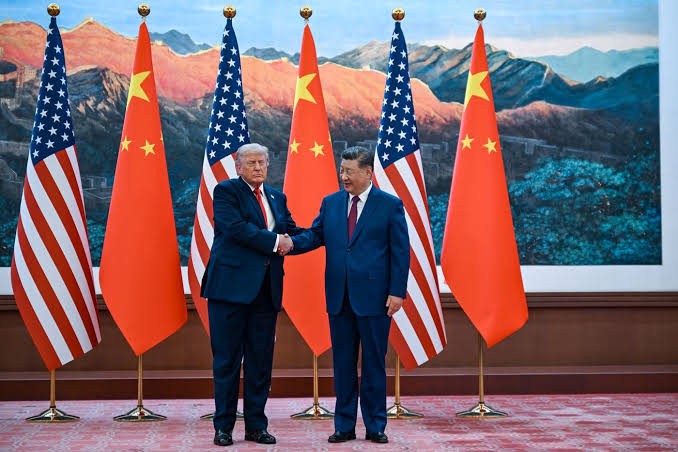
The timing matters because the Asia-Pacific Economic Cooperation summit is due to take place next week in Shenzhen, where Chinese President Xi Jinping and US President Donald Trump are expected to meet. The two leaders have already met twice this year, and the planned encounter could provide an opportunity to discuss trade, tariffs and the conditions governing purchases of US goods. The expected meeting is not a guarantee of a new agreement; its outcome will depend on what each government is prepared to put on the table.
For European and US policymakers, the trade surplus raises questions about whether Chinese exporters are gaining market share at the expense of domestic manufacturers. For Beijing, restrictions on exports would threaten a key source of growth at a time when household demand remains weak. The dispute is therefore not only about the size of the surplus but also about the distribution of industrial capacity, jobs and investment across the global economy.
India has a direct interest in the latest data because Chinese exports are a major source of industrial inputs and finished goods for Indian companies. The Financial Express reported that India’s trade deficit with China widened to $105.93 billion in January-September 2026, even as Indian exports to China rose 40.7% to $19.26 billion. Chinese exports to India reached $125.19 billion, up 23.3%, and total bilateral trade increased to $144.45 billion.
The percentage growth in Indian exports was faster, but it came from a much smaller base. Electronics, machinery, chemicals and intermediate goods remain important parts of India’s imports from China, supporting manufacturing in sectors that also compete with Chinese producers. A continued surge in Chinese exports could therefore benefit Indian businesses that rely on components while increasing pressure on domestic manufacturers seeking to expand production in the same markets.
For policymakers, the issue is not simply whether imports should be reduced. Many factories depend on Chinese inputs that are difficult to replace quickly, and restrictions can raise costs or delay production if alternative suppliers are not ready. The longer-term challenge is to expand domestic capacity in components, machinery and advanced electronics while improving access for Indian exporters in the Chinese market. A large Chinese surplus makes those questions more urgent, but it does not by itself establish which trade measures India should adopt.
For other Asian economies, the export boom presents both an opportunity and a risk. Companies supplying components to Chinese factories may benefit from higher production, while manufacturers in competing countries may face tougher price competition. The effects will differ by sector: some economies are deeply integrated into Chinese supply chains, while others compete directly with Chinese producers in electronics, vehicles, solar equipment and industrial machinery.
The next indicators will show whether the October surge is sustained and whether it is concentrated in AI-related products or spread across a wider range of exports. Detailed customs data by product and destination will be important, as will the November figures and the performance of imports as companies move into the final month of the year. A slowdown in AI infrastructure spending or a new round of trade restrictions could change the outlook quickly.
Investors and policymakers will also watch domestic retail spending, property sales, vehicle purchases and private investment. If those measures remain weak, exports may continue to carry a disproportionate share of economic growth. If domestic demand improves, imports could rise for reasons that reflect stronger household and business activity rather than only changes in commodity prices or inventory cycles.
China’s $1.04 trillion trade surplus is a measure of the scale of its export machine, but it is also a warning about the imbalances that can build when external demand outpaces domestic consumption. October’s 35.2% export growth and 41.6% import increase show that trade flows remain exceptionally strong. Whether that strength can be sustained without provoking more restrictions from trading partners will be one of the central questions for the global economy in 2027.
Also read: China Factory Activity Returns to Growth as AI Demand Lifts September PMI
Also read: China’s GDP Growth Rises to 4.5% in Third Quarter


Comments (0)
Be the first to comment. Comments are published after moderation.