


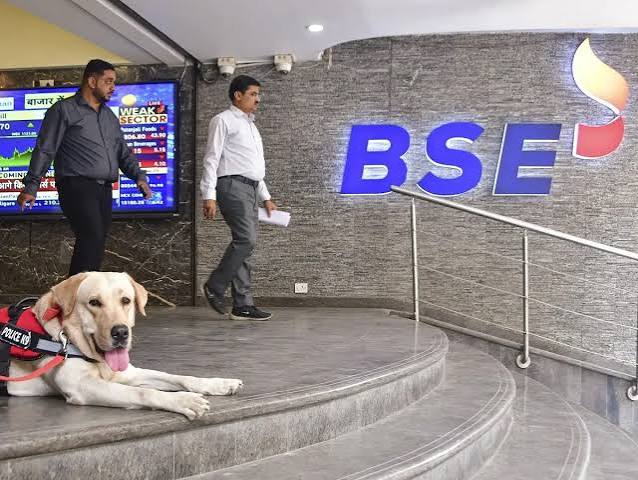
MUMBAI, November 4, 2026 — BSE Ltd reported a 44.9 per cent year-on-year increase in consolidated net profit for the September quarter, supported by growth in its equity derivatives business, even as profit and operating revenue declined from the preceding three months amid softer trading activity.
The exchange posted consolidated net profit of ₹809.15 crore for the second quarter of the 2026-27 financial year, compared with ₹558.43 crore in the same period a year earlier. Revenue from operations rose 34.1 per cent to ₹1,432.66 crore from ₹1,068.39 crore. The figures underline the strength of BSE’s expansion over a year, but the sequential comparison shows that the pace of activity was weaker than in the June quarter.
Compared with the first quarter of FY27, net profit fell 7.4 per cent from ₹874.02 crore, while revenue from operations declined 8.5 per cent from ₹1,566.02 crore. The year-on-year growth rate is therefore only one part of the result. For investors assessing the exchange’s operating trajectory, changes in derivatives volumes, market share and regulatory trading arrangements remain important indicators.
BSE has benefited from a broader increase in its equity derivatives business, including the expansion of index derivatives contracts and greater participation by brokers and foreign investors. Reuters reported that the exchange has gained market share in this segment in recent quarters. A larger derivatives franchise can lift exchange revenue through transaction-related charges and related services, but the income stream is sensitive to changes in market activity and product rules.
Average daily turnover in derivatives, measured by the premiums paid by traders to buy contracts, rose 50 per cent year-on-year during the quarter. It was, however, 24 per cent lower than in the June quarter. That difference between annual and sequential performance is important because a strong comparison with a year earlier can coexist with a recent slowdown in activity.
One factor affecting trading was the introduction of a closing auction session, or CAS, in August. The mechanism was designed to determine final stock prices through a short trading window at the end of the market day and align Indian market practice more closely with global standards. Reuters reported that the session contributed to end-of-day price volatility and led some intraday equity and options traders to reduce activity. The market regulator partially reversed the measure last month.
The regulatory adjustment provides context for the decline in derivatives turnover from the June quarter. It does not, by itself, explain every movement in BSE’s revenue or profit. Trading activity is also influenced by volatility, investor participation, product launches, competition between exchanges and the cost of market access. BSE’s results reflect the combined impact of those conditions rather than a single policy change.
Analysts cited by Reuters said sector-wide index-options premium turnover fell 27 per cent sequentially in the second quarter, largely in connection with the implementation of the closing auction session, although it remained 14 per cent higher than a year earlier. That market-wide context helps explain why the exchange’s annual growth was strong while activity softened against the June quarter.
BSE is the country’s second-largest stock exchange by the measure used in the Reuters report, and its ability to expand derivatives participation has become a major part of its competition with the National Stock Exchange. The launch of additional index contracts and deeper participation can support liquidity, but the durability of those gains will depend on whether traders continue to find the products useful and whether the regulatory environment remains predictable.
Alongside the results, BSE’s board approved a proposal to accept an offer from the Mumbai Metropolitan Region Development Authority for a plot at Bandra Kurla Complex. The exchange said the site would be used to develop additional premises and infrastructure facilities. The decision is a separate corporate development from the quarterly earnings, but it is relevant to the exchange’s longer-term physical and technology infrastructure needs.
The transaction is not complete. Business Standard reported that it remains subject to documentation, applicable conditions and the execution of definitive agreements with the authority. BSE has not disclosed the plot’s size or price, and the detailed terms are expected to be communicated once the agreements are executed. The board’s approval should therefore be treated as a step towards the proposed allotment, not as proof that the property has already been transferred.
The exchange has also discussed expanding its colocation capacity. In its post-results analyst call, management said around 500 racks in its data centre were allocated and that it was in the process of adding roughly 170 to 190 more. Colocation services allow market participants to place trading infrastructure close to an exchange’s systems, potentially reducing network latency. The scale and pace of demand for such facilities can be relevant to the exchange’s broader technology business.
BSE management also referred to risks from global uncertainty, cybersecurity and supply-chain disruptions during the analyst discussion, according to Business Standard. These are not only operational concerns for an exchange. Market infrastructure depends on continuous system availability, data integrity and secure connectivity among brokers, clearing systems and participants. Any expansion in trading volume or colocation capacity increases the importance of resilience and controls.
The company’s proposal to develop additional premises in BKC could support future infrastructure needs, but the benefits will depend on the final project design, capital expenditure, approvals and execution. The exchange has not disclosed a construction timetable or investment figure for the proposed site. It would be premature to infer the scale of the project from the board’s acceptance of the offer alone.
The second-quarter numbers show that BSE’s business is larger than it was a year ago, with revenue and profit benefiting from the deeper equity derivatives market. But the sequential decline is a reminder that exchange earnings can move with trading conditions and regulatory changes. The exchange will need to balance growth in derivatives participation with stable market quality, transparent pricing and reliable technology.
For market participants, the next indicators to watch include the effect of the regulator’s partial reversal of the closing auction session, trends in options premium turnover, BSE’s share of index derivatives and the rollout of new contracts. These developments will help show whether the recent expansion in activity can be sustained without depending on temporary bursts of volatility or policy-driven changes.
The property proposal will also require follow-through. Investors will look for details of the final agreement with the MMRDA, the intended use of the site and any capital commitments associated with development. Until those details are available, the earnings figures remain the clearest measure of the quarter’s operating performance.
BSE’s 45 per cent annual profit increase is a strong headline figure, but the more complete picture is mixed: robust growth compared with last year, weaker results compared with the previous quarter, and a business increasingly influenced by the structure and regulation of derivatives trading. The next reporting periods will show whether the exchange can convert its larger market presence into sustained operating growth.



Comments (0)
Be the first to comment. Comments are published after moderation.