


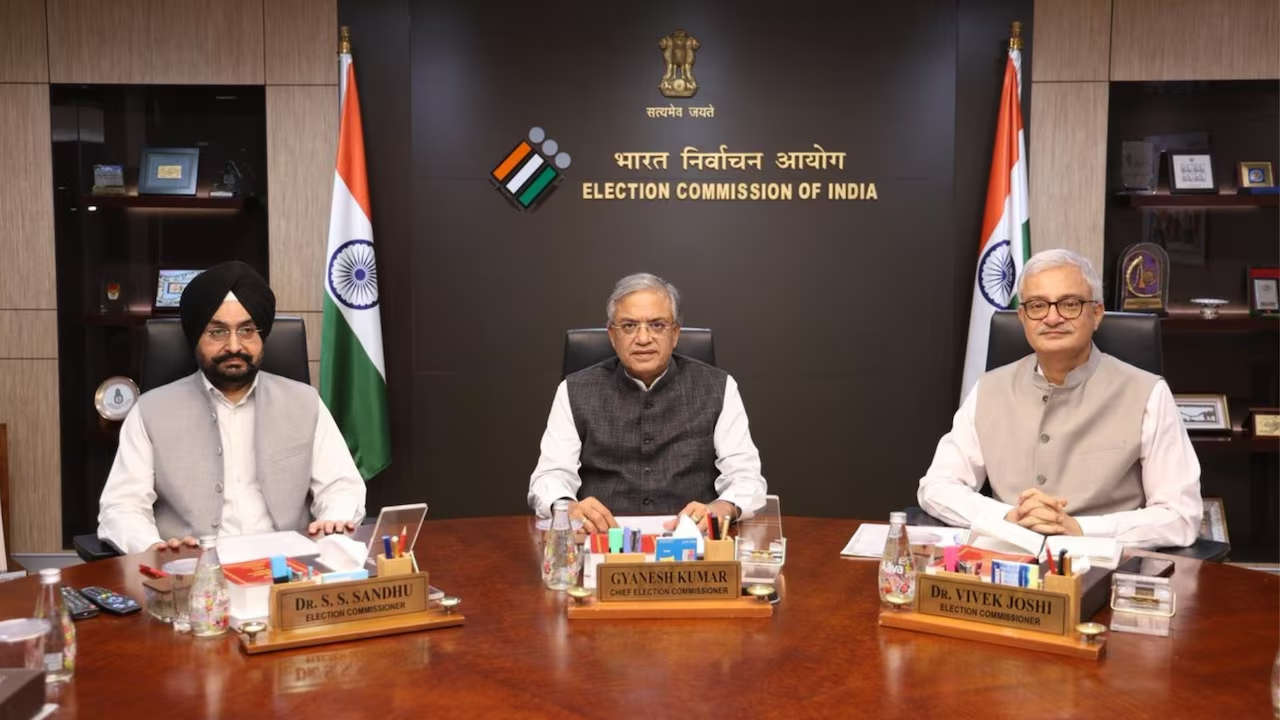
NEW DELHI, November 4, 2026 — The Supreme Court has sought responses from the Union government and the Election Commission of India on a fresh challenge to the legal protection granted to the Chief Election Commissioner and other Election Commissioners for acts connected with the discharge of their official duties.
A bench led by Chief Justice of India Surya Kant, with Justices Joymalya Bagchi and V Mohana, issued notice on a petition filed by lawyer and activist Arun Kumar Agrawal. The plea questions the constitutional validity of Section 16 of the Chief Election Commissioner and Other Election Commissioners (Appointment, Conditions of Service and Term of Office) Act, 2023.
The provision bars courts from entertaining or continuing civil or criminal proceedings against a person who is or was the Chief Election Commissioner or an Election Commissioner for an act, thing or word committed, done or spoken while, or in the course of purporting to act, in the discharge of official duty or function. The petitioner argues that the protection is too broad because the statute does not expressly limit it to conduct undertaken in good faith.
The court’s notice requires the Centre and the Election Commission to respond to the challenge. It does not mean the judges have accepted the petitioner’s arguments, struck down the provision or suspended its operation. The legal protection remains in place unless the court makes a further order.
Agrawal’s petition contends that Section 16 gives election commissioners protection from civil and criminal proceedings without providing an exception for alleged misconduct. The plea argues that this goes beyond the protection needed to allow constitutional functionaries to act independently and could remove legal remedies in cases where citizens claim to have suffered harm from decisions made by the Commission.
One example cited in the petition concerns a voter whose name is wrongly deleted from an electoral roll. It also refers to candidates who believe they have been prejudiced by a mala fide decision and citizens who allege corruption in the functioning of the Commission. These are arguments advanced by the petitioner about the possible consequences of the provision; they are not findings by the Supreme Court that such cases have occurred or that the statute has already prevented a remedy.
The plea says that other constitutional functionaries receive protection for acts done or intended to be done in good faith, while the 2023 law gives the CEC and Election Commissioners a wider shield. It argues that safeguards against frivolous complaints or prior judicial scrutiny could protect officials from vexatious litigation without creating a blanket bar on proceedings. The petitioner has also questioned the legislative process through which the provision was added to the bill.
The challenge turns on a difficult balance. Election commissioners need independence to take decisions without the threat of retaliatory cases from political actors or dissatisfied candidates. At the same time, a legal framework must preserve accountability for conduct that falls outside legitimate official functions. The constitutional question is how far the law can go in protecting decision-making without excluding judicial scrutiny where wrongdoing is alleged.
The wording of Section 16 is central to that debate. It refers to acts, things or words done or spoken when, or in the course of purporting to act in, the discharge of official duties or functions. The phrase “purporting to act” may become important in arguments about whether protection can extend to conduct that is said to be official but is challenged as improper. The court will have to examine the statutory language, the purpose of the provision and the constitutional principles invoked by the petitioners.
The Supreme Court is already dealing with a separate challenge to the provision filed by the NGO Lok Prahari. The Indian Express reported that the court issued notice in that matter in January but declined to stay Section 16 at the time. The latest petition therefore arrives while the provision is already under judicial scrutiny, rather than opening the first case on the issue.
Reports from legal publications also refer to a challenge by RJD MP Manoj Jha. The court has indicated that the petitions raising the same central question may be heard together. Consolidating related cases can help the bench consider common constitutional issues in one proceeding, while still allowing it to examine the distinct arguments and relief sought in each petition.
The 2023 law changed the statutory framework governing the appointment, service conditions and tenure of the CEC and Election Commissioners. Section 16 is one part of that framework, but the present challenge is directed specifically at the immunity provision. It should not be conflated with separate disputes over the composition of the appointment committee or the method of selecting election commissioners.
The Election Commission occupies a central role in administering elections, enforcing the Model Code of Conduct and overseeing electoral rolls and polling processes. Its independence is significant because its decisions can affect political competition and the exercise of voting rights. Legal protection for commissioners is often defended as a way to prevent political pressure through litigation. The counterargument is that an institution’s independence cannot be separated from public confidence that serious misconduct can be examined through lawful processes.
There is also a practical distinction between a challenge to an official decision and a case alleging personal or criminal conduct. The provision’s scope will be tested against the statutory language and the constitutional principles relied upon by the petitioners. A court may have to consider whether the law draws a sufficiently clear boundary between protected official decision-making and conduct that should remain open to legal scrutiny.
Any ruling could have consequences beyond the current office-holders. The law applies to people who are or were CECs or Election Commissioners, meaning the question concerns the legal framework for future as well as former members of the Commission. The outcome may also influence how Parliament frames statutory safeguards for other independent constitutional institutions, although the court will decide the case on the specific provision and arguments before it.
The next stage will depend on the responses filed by the Centre and the Election Commission. The government is likely to be asked to explain the purpose of the provision, why the protection was framed in its present terms and how it is intended to operate alongside existing constitutional and statutory remedies. The Commission’s response may address the institutional need for independence and the risks of repeated litigation against its members.
The bench may then consider whether the matter should be heard with the existing Lok Prahari petition and any related challenge. The January decision not to stay the law is important procedural context: the provision was not put on hold at that stage. The fresh notice does not, by itself, change that position.
For voters, the dispute has direct relevance to confidence in electoral administration. A system that protects commissioners from pressure can strengthen the impartial conduct of elections. A system that appears to deny any remedy for serious wrongdoing can undermine trust in the same institution. The court’s task will be to assess where the law draws that boundary and whether the protection is compatible with constitutional accountability.
The case remains at an early procedural stage. Until the Centre and the Commission respond and the bench hears fuller arguments, the constitutional validity of Section 16 remains undecided. The significance of Wednesday’s order is that the court has agreed to examine a fresh challenge and has formally called for the responses of the two principal respondents.


Comments (0)
Be the first to comment. Comments are published after moderation.