


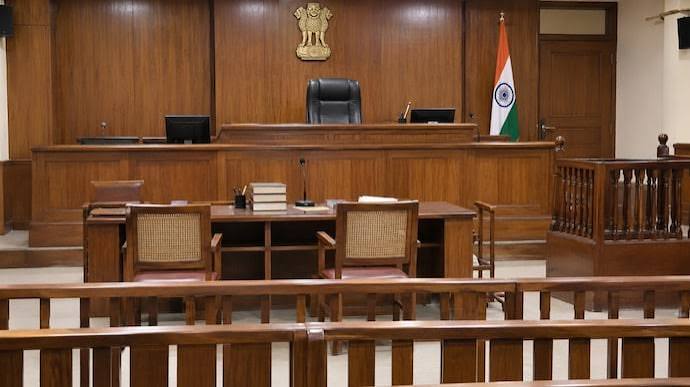
NEW DELHI, November 4, 2026 — The Union Cabinet has approved a further five-year extension of the Fast Track Special Courts scheme for cases involving rape and offences against children, with a total financial outlay of ₹3,788.04 crore and a planned expansion of the network from 779 functional courts to 850.
The centrally sponsored programme, which includes courts dedicated exclusively to offences under the Protection of Children from Sexual Offences Act, will continue from April 1, 2026, to March 31, 2031. The government said each court is to have a dedicated judicial officer, a special public prosecutor and six support staff. The aim is to increase the capacity available for pending cases and provide a more focused court environment for survivors and witnesses.
The financial package consists of a central share of ₹2,353.15 crore and a state and Union Territory share of ₹1,434.89 crore. The central contribution will be met from the Nirbhaya Fund. The Cabinet announcement follows a programme that has operated since October 2019, when fast-track courts were established to address delays in rape and POCSO cases.
The decision is an extension and expansion of an existing scheme, not the creation of a new court system. Government data says 779 Fast Track Special Courts, including 399 exclusive POCSO courts, are currently functional across 29 states and Union Territories. They have disposed of 4,02,457 cases since the scheme began. The new target of 850 is intended to add coverage in districts selected according to case pendency.
The programme is designed around dedicated judicial and prosecution resources. Each Fast Track Special Court is provided for with one judicial officer, one special public prosecutor and six support staff. The staffing model is meant to give cases involving sexual offences a focused channel rather than leaving them to compete for time in a court handling a wider range of matters.
The scheme also supports victim-friendly facilities, including Vulnerable Witness Deposition Centres and child-friendly court spaces. Such arrangements can reduce the distress associated with giving evidence and help protect the privacy and dignity of people who have experienced sexual violence. Their value depends on how they are implemented locally, whether staff are trained and whether survivors can access support throughout the process.
The Department of Justice will coordinate with state governments and Union Territory administrations. The expansion from 779 to 850 courts is to be guided by pendency data, with additional districts identified based on the number of rape and POCSO cases awaiting trial. The scheme is therefore not a promise that every district will receive a new court or that the same number will operate in every state.
Under the funding arrangement, the Centre and participating states share operational costs according to the centrally sponsored scheme’s funding pattern. The Centre’s share will be drawn from the Nirbhaya Fund, while the states and Union Territories will contribute the remaining amount. The ability of states to provide their share and recruit the required judicial and support staff will be important to translating the approved outlay into functioning courts.
Cases involving rape and child sexual abuse can place particular demands on the justice system. They may involve vulnerable witnesses, sensitive evidence, privacy concerns and prolonged proceedings. Delays can increase the burden on survivors and families, while repeated adjournments can make it harder to sustain participation in the legal process. A dedicated court can provide more concentrated attention to such cases, but speed alone is not sufficient: trials must remain fair, evidence must be tested and the rights of both complainants and accused persons must be protected.
The scheme’s record of 4,02,457 disposals since October 2019 shows that the courts have handled a substantial volume of cases. That aggregate figure does not reveal how long individual cases took, how many remain pending, how many resulted in convictions or acquittals, or how results vary across states. Those measures are necessary to evaluate whether the courts are reducing delays and improving the quality of case handling.
It is also important to distinguish between cases disposed of and cases resolved through a particular outcome. A disposal may include a conviction, acquittal, withdrawal or another form of closure under the law. Without a breakdown by case type, elapsed time and outcome, the cumulative number cannot by itself establish that the scheme has achieved its intended results.
The availability of a dedicated public prosecutor is another key part of the design. Prosecutors need manageable caseloads, access to forensic and other evidence, coordination with investigators and the ability to prepare witnesses. If courts are added without sufficient staffing or support services, the new capacity may not translate into faster hearings. The same applies to courtrooms, interpretation, child-friendly facilities and the administrative systems needed to list and track cases.
Survivors’ experience of the process can depend on factors beyond the courtroom. Police investigations, medical examinations, forensic reports, witness protection, legal aid and counselling all influence whether a case reaches trial in a timely and effective manner. A fast-track court cannot compensate for delays or gaps at every earlier stage. The scheme will be most effective when its work is integrated with the broader criminal-justice system.
For child survivors, the POCSO framework places particular emphasis on child-sensitive procedures. Dedicated POCSO courts are intended to reduce the number of cases in which a child must navigate an unfamiliar and intimidating court environment. Training, privacy, safe waiting spaces and careful scheduling can shape whether those protections work in practice.
The extension also raises an accountability question for the government. A scheme that has run for several years should be judged through transparent performance data, including the number of functional courts, vacancies, case inflow, average time to disposal, backlog and outcomes. The government says the Department of Justice will monitor performance through an online dashboard, progress reports and consultations with High Courts and state governments. Regular publication of comparable information would help the public assess whether the additional spending is improving access to justice.
The five-year continuation provides a funding framework for states to maintain the existing courts and expand the network. It may offer additional capacity in districts where rape and POCSO cases are waiting for trial, but the timing will depend on state-level implementation. Courts will need to be staffed and equipped before they can begin handling new cases, and the expansion must be matched to actual pendency rather than announced numbers alone.
The central share being funded from the Nirbhaya Fund ties the programme to the broader public commitment to women’s safety. That funding does not remove the responsibility of state governments to make their contributions, appoint personnel and ensure that the facilities are operating. A shortfall in any part of the arrangement could delay the opening of additional courts.
For people waiting for cases to be heard, the most immediate question is whether the expanded capacity will reduce the time between filing, investigation, charge-sheeting and trial. The Cabinet’s approval sets the policy and financial direction; it does not guarantee a specific hearing date or outcome in any individual case.
The next indicators will be the release of implementation guidelines, the identification of districts for additional courts, staffing levels and the pace at which the number of functional courts moves from 779 towards 850. Transparent performance reporting will be essential. The purpose of a fast-track system is not only to move cases more quickly, but to ensure that survivors can participate in proceedings with dignity and that justice is delivered through a fair and credible process.




Comments (0)
Be the first to comment. Comments are published after moderation.