


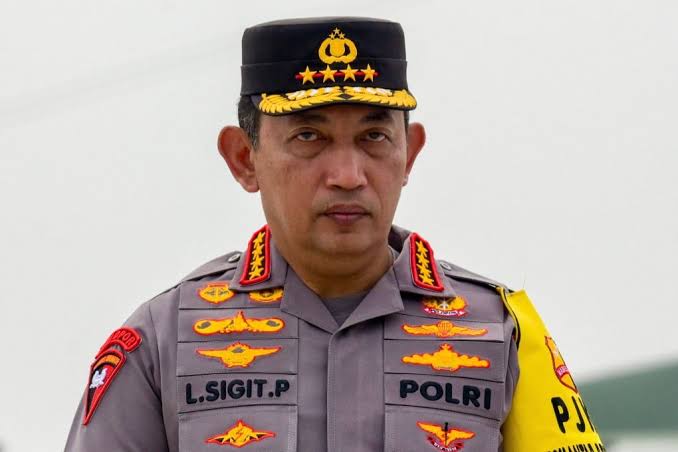
JAKARTA, November 4, 2026 — Indonesian President Prabowo Subianto has dismissed his chief of staff, Listyo Sigit Prabowo, after police named the former national police chief and two serving officers as suspects in an alleged illegal phone-surveillance operation involving senior government figures, journalists, politicians and businesspeople.
The decision followed the detention of the three officers and allegations that telephone numbers were placed into a police interception system without the authorisation or investigative procedures required by law. Investigators have also alleged that electronic records of intercepted communications were deleted in an effort to conceal the operation. The authorities have not publicly established why the alleged surveillance was carried out or identified all the people whose communications may have been intercepted.
Listyo had been appointed presidential chief of staff only last month, after serving for five years as chief of the Indonesian National Police. His removal makes the inquiry a test of the government’s ability to investigate alleged misuse of state surveillance powers within the country’s own security institutions. The presidency appointed Lieutenant General Ariyo Windutomo as acting chief of staff, according to the government’s announcement.
Presidential spokesperson Prasetyo Hadi said the alleged conduct was not a legitimate investigative operation and could fall within the category of acts tending towards treason, while also endangering state interests and the safety of national leadership. That description reflects the government’s assessment of the allegations; it is not a judicial finding that the suspects committed treason.
Police said the suspected surveillance took place from 2025 into 2026, when Listyo was still leading the national police. The alleged targets, as described by officials and reports from the investigation, included President Prabowo, cabinet members, politicians, journalists, civil-society figures and business executives. Authorities have not disclosed a complete list of targets or explained whether every person named in public accounts was actually monitored.
The other two officers identified in reporting on the case include senior personnel connected to the police’s legal and training structures. Police have said the suspected interception involved the use of an internal system without the approvals that would normally be required for a lawful investigation. Investigators are also examining the alleged deletion of files containing intercepted communications. The timing and scope of that deletion, and whether it succeeded in destroying evidence, remain matters for investigators to establish.
The Associated Press reported that investigators had questioned 10 witnesses and three experts and seized mobile phones, a tablet and flash drives. The seizure of electronic devices indicates that the inquiry is examining the technical trail as well as the alleged chain of command. Such evidence may be important in determining who requested surveillance, who authorised access to the interception system, what information was collected and whether records were subsequently altered or destroyed.
The suspects have not been convicted. Reuters reported that it could not immediately reach the suspects or their lawyers for comment. The investigation will need to establish the individual role of each officer rather than treating the allegations against the group as proof of collective responsibility.
Indonesia’s police have powers that can affect criminal investigations, public order and political life. Those powers depend on rules governing when communications may be intercepted, who can authorise access and how records must be handled. Alleged surveillance without a lawful basis raises questions not only about privacy but also about whether state systems designed for investigating crime can be diverted for personal, political or institutional purposes.
There is a distinction between lawful interception and unauthorised monitoring. A state may permit narrowly regulated surveillance for serious investigations, subject to legal thresholds and oversight. That does not create a general licence to monitor officials, reporters or private citizens. If the allegations are substantiated, the central issue will be whether officers bypassed the safeguards that are meant to make surveillance traceable and accountable.
The allegations involving journalists and political figures carry particular implications. Surveillance can expose confidential sources, chill reporting and make public officials or businesses reluctant to communicate openly. But it would be premature to conclude that the alleged operation was intended to suppress dissent or protect a particular political faction. Investigators have not disclosed a motive, and officials have not presented a complete account of who was targeted or what information was sought.
Senior legal-affairs officials have said the motive remains under investigation. That uncertainty matters. A probe into alleged surveillance of the president could involve questions of personal security, political rivalry, internal policing disputes or other motives. None has yet been established by the evidence described publicly.
President Prabowo’s decision to remove Listyo from the chief-of-staff post is an immediate administrative response, but it does not resolve the wider institutional questions. The case may require scrutiny of access controls within police databases, authorisation records, the independence of internal investigators and the procedures for preserving digital evidence. It will also test whether investigators can examine senior personnel without pressure from the institutions to which they belong.
Indonesia’s military announced the deployment of more than 20,000 personnel in Jakarta on Wednesday, with additional troops reportedly placed on standby. Military representatives described the deployment as routine preparation for maintaining national security and territorial integrity. Officials have not established that the movement was connected to the wiretapping investigation, and the deployment should not be presented as evidence of a direct military response to the arrests.
Analysts cited by Reuters have said the case could expose tensions between security institutions, particularly if the investigation becomes entangled in competing loyalties. That is an assessment of a possible risk, not proof of a confrontation between the police and military. Public statements from investigators and the government will be important in clarifying whether the probe is confined to alleged individual misconduct or points to a larger institutional problem.
The case also raises questions about the protection of people whose communications may have been intercepted. Authorities have not yet provided a public account of how potential victims will be notified, whether they will be able to challenge the surveillance or how the government will prevent further access to information obtained unlawfully. Civil-liberties organisations have called for transparency about the targets and the legal basis, if any, for the monitoring.
The next steps are likely to include forensic examination of seized devices, interviews with witnesses and experts, and a reconstruction of the alleged interception and deletion process. Investigators will need to identify the instructions given to personnel, the system credentials used and the records that remain available. Any decision to bring charges will have to specify the conduct attributed to each suspect and the legal provisions relied upon.
Listyo’s dismissal does not amount to a finding of guilt, and the appointment of an acting chief of staff does not substitute for a transparent inquiry. The government will face scrutiny over whether the investigation is allowed to proceed independently, whether evidence is preserved and whether the results are made public without disclosing sensitive operational details that could compromise legitimate security work.
For the public, the most consequential question is whether Indonesia’s surveillance powers are subject to effective controls even when senior officers are involved. A credible investigation would need to explain how access was obtained, who was affected, what safeguards failed and what changes will prevent a repeat. Until those facts are established, the alleged motive and the full scale of the operation remain unknown.


Comments (0)
Be the first to comment. Comments are published after moderation.