


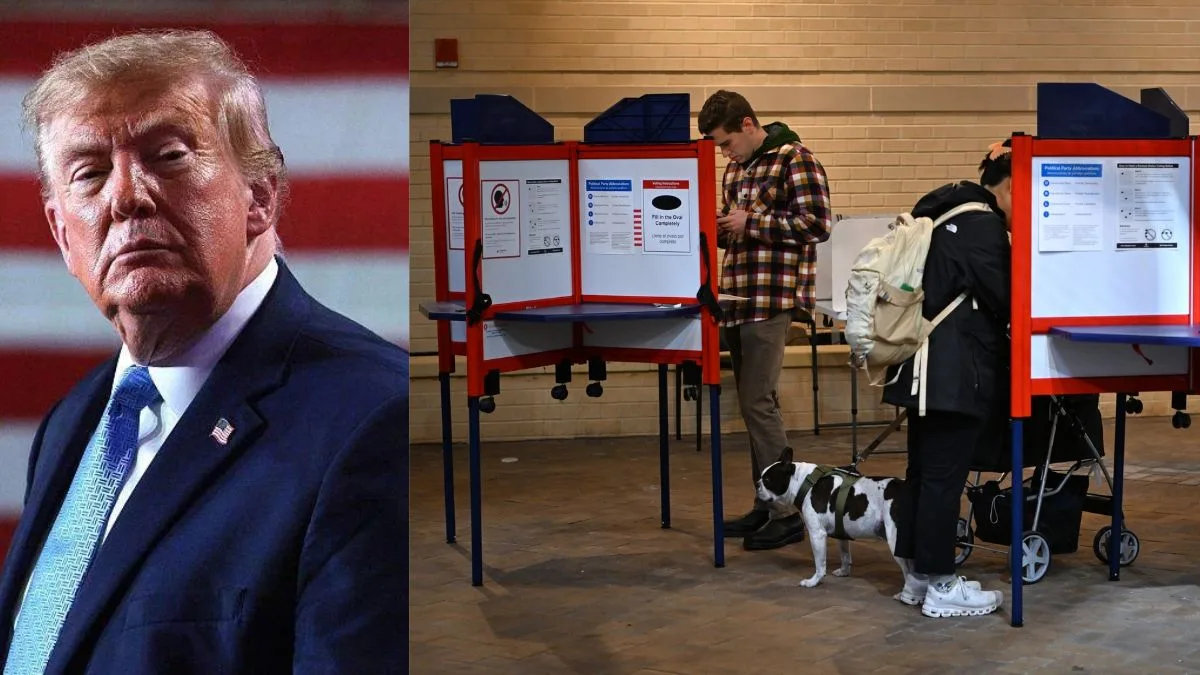
WASHINGTON, November 4, 2026 — The US midterm elections on November 3 gave Democrats control of both chambers of the United States Congress, according to results called by The Associated Press and reported by Reuters, ending the Republican Party’s control of the House and Senate and setting up a divided government for the final two years of President Donald Trump’s term.
The results followed Democratic gains in states that have voted Republican in recent presidential cycles, including Texas and Kansas, as well as South Carolina, Iowa, Ohio and other closely watched contests. The shift gives Democrats control of the House’s legislative agenda and the Senate’s committee and confirmation process when the new Congress takes office in January 2027.
Also read: US Midterm Results Point to Democratic House Gain as Senate Control Remains Uncertain
The change in congressional control is significant, but it does not alter the result of the 2024 presidential election or remove Trump from office. The President will remain in the White House, while Democrats will take control of both chambers of the legislature and gain broader authority to scrutinise the administration.
The Senate map produced several of the election’s most consequential results. Democratic candidates won contests in states where Republicans had expected to retain an advantage, including Texas and Kansas, while the party also captured seats in South Carolina, Iowa, Ohio and North Carolina.
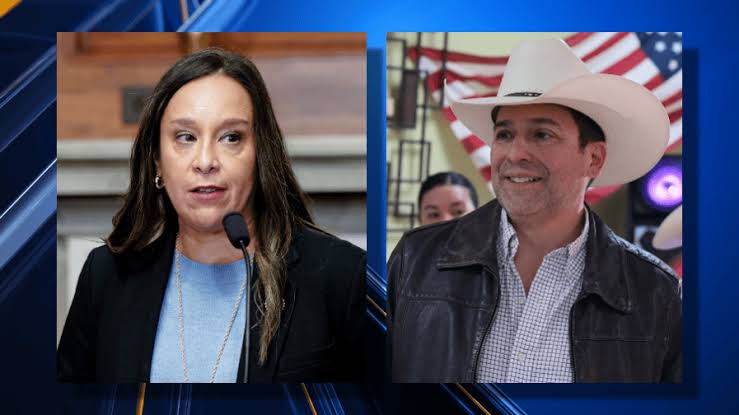
In Texas, state Representative James Talarico defeated Republican Ken Paxton, giving Democrats a Senate victory in a state where the party had not won a statewide federal election in decades. The result was one of the clearest signs that the Republican coalition had weakened in parts of the South and Southwest. Paxton had secured President Trump’s backing during the Republican primary, while incumbent Senator John Cornyn was unsuccessful in his effort to retain the party’s nomination.
Kansas elected Democrat Adam Hamilton, who defeated Republican Senator Roger Marshall. The Associated Press reported that Hamilton’s win made him the state’s first Democratic senator since 1932. The result was notable because Kansas had remained reliably Republican in federal elections for generations.
In South Carolina, Democrat Annie Andrews defeated Darline Graham in a contest that drew national attention. The state had backed Trump by a wide margin in 2024, making the Democratic victory a major change in its recent Senate voting pattern.
Democrats also secured an open Senate seat in North Carolina through former governor Roy Cooper, while Josh Turek defeated Representative Ashley Hinson in Iowa. In Ohio, former senator Sherrod Brown defeated Republican Senator Jon Husted. Michigan elected Democrat Abdul El-Sayed over Republican Mike Rogers, making El-Sayed the first Muslim elected to the US Senate, according to Reuters.
In Maine, Democrat Troy Jackson defeated long-serving Republican Senator Susan Collins. Georgia Senator Jon Ossoff won re-election, and Democrat Chris Pappas won the Senate contest in New Hampshire. The Associated Press and Reuters said some other Senate races, including Alaska and Mississippi, remained uncalled during the early reporting period, even as the overall chamber result had been established.
The gains were spread across states with different political histories and electorates. They reflected a combination of candidate-specific campaigns, local concerns, turnout and broader dissatisfaction with the administration, rather than a single uniform shift in every region.
The House of Representatives also moved to Democratic control after a series of victories in competitive and traditionally Republican areas. The Associated Press reported Democratic gains in Iowa, Texas, Florida and Pennsylvania, along with new Democratic seats in Kentucky, Missouri, Nebraska, Ohio and Utah.
Iowa was among the clearest examples of the change. The state had sent an entirely Republican delegation to the House before the election, but Democrats are set to represent three of its four congressional districts. The result added to the party’s gains in the state’s Senate contest.
Democrats also made advances in districts that had supported Trump by substantial margins in 2024. Reuters reported that Democrats won all 20 of the closely watched House contests that had been decided by the time its election-night report was filed. Republican efforts to redraw congressional boundaries in several states did not prevent Democrats from holding most of the seats targeted in those contests.
Control of the House matters because the majority party chooses the Speaker, leads committees and controls much of the process through which legislation is considered. Democratic committee chairs will also have the authority to call hearings and seek information from federal departments and agencies under congressional oversight rules.
The exact composition of the chamber can continue to change as remaining votes are counted and states complete their canvassing and certification procedures. The overall shift in control, however, has been called by major news organisations.
The election took place against a backdrop of public concern over household costs, the administration’s handling of the war with Iran and questions about government conduct. These issues featured prominently in national polling and in the campaigns, although voters in individual states and districts faced different local questions.
Reuters reported that exit polling conducted by SSRS for a consortium of US media organisations found that about half of voters viewed the midterms as an opportunity to rebuke Trump. Roughly three-quarters said they were angry or dissatisfied with the direction of the country, while 70 per cent said they wanted Congress to provide stronger checks and balances on the President.
The Associated Press also reported that the AP Voter Poll showed movement among younger voters and Latino voters away from Republicans. About one-third of Hispanic voters surveyed said they had supported the Republican candidate in their local House race. The findings describe the survey’s respondents and should not be read as a complete explanation for the outcome in every district.
Affordability was a recurring theme in the campaign. Voters weighed the cost of groceries, housing, energy and other household expenses alongside immigration, foreign policy and concerns about corruption. Republicans campaigned on cultural issues and defended the administration’s record, while Democrats argued that economic pressure and federal policy decisions required a change in congressional oversight.
Trump remained closely involved in the Republican campaign and held rallies in the final weeks before voting. After the results became clear, he said he did not regard the outcome as a personal defeat and blamed some losses on the candidates. He also indicated that he would accept the results, while warning that he would veto legislation he considered unreasonable.
Republican leaders signalled that they would oppose major parts of the Democratic agenda. The new Congress is therefore likely to begin with disagreements over spending, immigration, executive authority, the economy and oversight of the administration.
The immediate institutional change will be felt in both chambers. In the House, Democrats will determine committee leadership and the timetable for much of the chamber’s work. They can use hearings, document requests and other oversight powers to examine administration decisions, federal spending and the operation of government agencies.
In the Senate, the majority will control committee leadership and have greater influence over the consideration of presidential nominees. That includes senior executive appointments and federal judicial nominations, subject to the Senate’s rules and the requirements that apply to each type of confirmation. A Democratic majority could delay or reject nominees it opposes.
Democrats have indicated that they intend to increase scrutiny of the administration and investigate decisions involving federal agencies and the President’s circle. Such investigations can place officials under oath, bring documents into the public record and generate recommendations for changes to policy or law. The scope and pace of those inquiries will depend on committee priorities and the evidence available.
Congressional control does not give Democrats authority to direct the executive branch or automatically reverse decisions made by the President. Trump retains his constitutional powers, including the veto. Legislation must still pass the required process in both chambers, and overriding a veto requires a two-thirds majority in each chamber. The result therefore creates a divided government in which bargaining, oversight disputes and legislative deadlock are all possible.
The change is also likely to affect the confirmation process and the balance of influence over federal policy. The Senate’s role in approving appointments means the administration may face a more difficult path for nominees, while House committees can devote more time to reviewing decisions made by the executive branch.
Democratic leaders will face pressure to demonstrate that the new majorities can address the issues that dominated the campaign. That includes the cost of living, health care, immigration, federal spending and accountability. The party will also have to manage differences within its own caucus, whose members represent states and districts with distinct political priorities.
The election has not removed Trump from office, nor does it settle every outstanding local contest. State authorities still have to complete their counting and certification processes, and the final totals in individual races may be updated. The national result, however, establishes a new balance of power for the 120th Congress.
When the new lawmakers convene in January 2027, Democrats will hold the House and Senate while Republicans retain the presidency. The arrangement will give the opposition party more tools to shape legislation and scrutinise the administration, while requiring both sides to navigate a legislature controlled by a party outside the White House.
The midterms have therefore changed the political conditions for the remainder of Trump’s term. The practical consequences will depend on how Democrats use their congressional majorities, how Republicans respond and whether the two parties can reach agreements on measures requiring cooperation across Washington.




Comments (0)
Be the first to comment. Comments are published after moderation.