


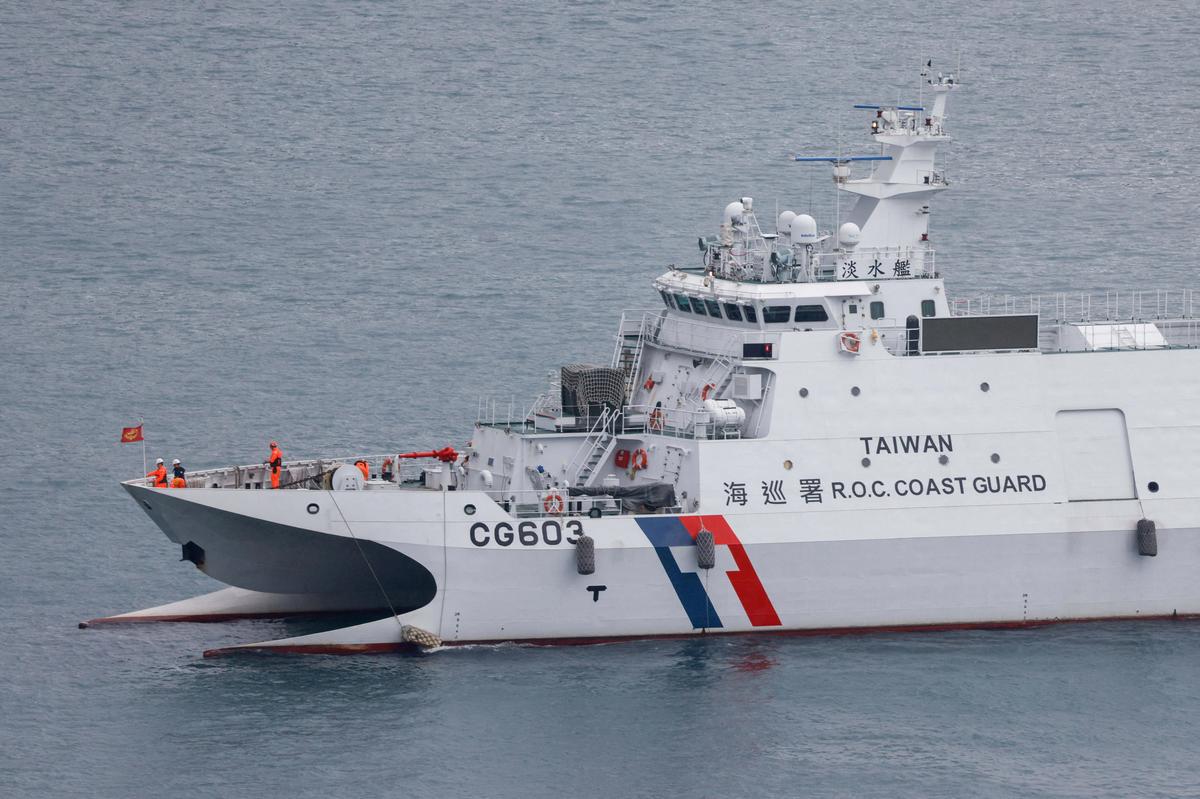
TAIPEI, November 1, 2026 — Taiwan’s coast guard has accused Chinese vessels of using a patrol east of the island to challenge passing ships by radio, while a separate Chinese coast guard vessel approached the Taiwan-administered Pratas Islands in the South China Sea. Taipei said it sent its own vessels to monitor the activity; in the Pratas incident, the two coast guard ships came within one nautical mile of each other, according to the Associated Press.
The two episodes were reported on Saturday and Sunday by Taiwan’s coast guard and Chinese state media. They form part of a broader increase in Chinese coast guard activity around Taiwan that Taipei says could help Beijing test a maritime blockade, although the available evidence does not establish that a blockade operation is imminent. China describes its patrols as routine law-enforcement activity in waters it considers under its jurisdiction.
The distinction between the parties’ accounts matters. Taiwan describes the radio calls as harassment and an attempt to create a false impression of Chinese jurisdiction. Beijing rejects Taiwan’s sovereignty claims and says its coast guard is protecting China’s maritime rights. The latest reports document patrols and competing claims; they do not establish that a commercial vessel was boarded or that shipping was physically stopped.
Two incidents, two maritime settings
In the first incident, Taiwan’s Coast Guard Administration said two Chinese coast guard ships operated east of the island and used radio communications that Taipei interpreted as asserting jurisdiction over passing vessels. Taiwan dispatched its own ships to monitor them. Reuters reported that Chinese state media showed footage of one vessel broadcasting that it was conducting law-enforcement work and offering assistance if needed. The broadcast did not identify the recipient, and the footage showed an unidentified fishing trawler.
Focus Taiwan, citing the Coast Guard Administration, identified the Chinese vessels as the Hushi and Meishan. The agency said the ships were trying to present Chinese jurisdiction as an established fact. China’s public account, carried by state media, described the activity as a routine patrol. Neither side’s statement resolves the underlying sovereignty dispute, and the available reports do not independently establish the intent behind each radio call.
The second incident occurred near the Pratas Islands, also known as Dongsha, which are administered by Taiwan and lie between southern Taiwan and Hong Kong. The Associated Press reported that a Chinese coast guard vessel entered restricted waters early on Saturday and was confronted by a Taiwanese ship. Taiwan said the two vessels came within one nautical mile of one another before the Chinese ship was ordered to leave.
Taiwan’s coast guard said the Pratas encounter was the 13th such intrusion near the islands this year and involved 16 Chinese vessels, according to AP. Reuters separately reported Taiwan’s claim that Chinese coast guard vessels had been expelled from Pratas waters 13 times in 2026. The count reflects Taiwan’s description of the incidents; Beijing does not accept Taipei’s jurisdictional position.
Why the east coast patrol matters
Taiwan’s east coast is important because it faces the Pacific rather than the more closely watched Taiwan Strait. Taipei says those waters are critical to supply routes that could be used by partners and allies in the event of a blockade or conflict. A sustained coast guard presence in that area could force Taiwan to spread its monitoring resources across more of the island’s coastline and surrounding waters.
China has increased coast guard activity east of Taiwan since June, according to Reuters. Taiwan’s officials have argued that the pattern could be part of a broader effort to normalise Chinese patrols and test how the island responds. Their concern is that repeated deployments by coast guard, maritime and civilian vessels could create pressure without the immediate visibility of a large military exercise. That is Taiwan’s assessment of the pattern, not a confirmed statement of Beijing’s operational intent.
The military picture adds context but should not be conflated with the coast guard incidents. Taiwan’s Ministry of National Defense said that, during the 24 hours ending at 6 am local time on November 1, it detected 32 sorties by Chinese military aircraft, seven Chinese naval ships and two official vessels around Taiwan. The ministry said 26 aircraft crossed the median line of the Taiwan Strait or entered Taiwan’s air-defence identification zone. These are the ministry’s reported detections for that period; they do not prove that every movement was coordinated with the coast guard patrols.
Pratas is small but strategically exposed
The Pratas Islands have no permanent civilian population and are more than 400 kilometres from Taiwan’s main island. Their location near the northern end of the South China Sea gives them a strategic position, while their distance makes reinforcement and routine administration more complicated than on Taiwan itself. Security analysts have described the islands as vulnerable in a conflict because of the distance separating them from the main island.
That vulnerability does not mean an attack is expected. It does mean that repeated coast guard approaches can carry significance beyond the immediate encounter: they test response times, create a record of competing jurisdictional claims and require Taiwan to decide when to shadow, challenge or escort a vessel. Each incident also carries a risk of miscalculation if ships operate close together in restricted waters.
The AP report said the Chinese vessel was confronted by a Taiwanese coast guard ship and ordered to leave. Taiwan’s description of the encounter as an intrusion reflects its legal position over the islands and surrounding restricted waters. China, for its part, says the waters it patrols fall under its jurisdiction. The reporting reviewed does not show that the latest encounter led to a collision, injury or boarding.
Law-enforcement language and sovereignty claims
Both sides use the language of law enforcement to support their positions. China says its coast guard is carrying out routine patrols in waters under Chinese jurisdiction. Taiwan says the patrols are an attempt to manufacture a claim of authority through repeated presence and radio calls. The disagreement is not only about the location of a vessel; it is about which government is entitled to direct ships and enforce rules in the waters concerned.
That makes the wording of radio communications important. A ship broadcasting that it is conducting law enforcement may be asserting a claim to authority, but the broadcast alone does not settle the legal status of the water or establish that a merchant vessel complied. Reuters said the Chinese state-media footage did not identify who received the message. It would therefore be inaccurate to state that a particular commercial ship was stopped or searched unless further evidence emerges.
Beijing considers Taiwan part of China and has not ruled out the use of force to bring the island under its control. Taiwan is self-governing and rejects Beijing’s sovereignty claim. The two sides also disagree over maritime jurisdiction around the island. This article reports the competing claims and the observed patrols without treating either government’s account of sovereignty as an independent legal finding.
Regional concern about pressure at sea
The latest incidents come after Britain, France and Germany expressed concern in June about Chinese activity east of Taiwan, saying it threatened regional stability. That earlier statement followed a previous series of coast guard patrols. It showed that the issue is being watched beyond Taipei and Beijing, although the European governments’ comments did not amount to a commitment to intervene in any future encounter.
Commercial shipping depends on predictable routes and clear communication with maritime authorities. Even without a physical blockade, repeated encounters can increase uncertainty for vessel operators, particularly if ships receive conflicting radio instructions from different authorities. The current reports do not show a disruption to trade, but they explain why Taiwan treats the east-coast route as a security concern and why neighbouring governments monitor the pattern.
There is also a difference between a coast guard patrol and a military blockade. A blockade would involve a more sustained effort to restrict access, with major legal, military and economic consequences. Taiwan’s officials say the use of overlapping military, paramilitary and civilian assets could be relevant to rehearsing such an operation. That remains an assessment of the pattern; the current patrols alone are not proof that Beijing has decided to impose a blockade.
What to watch next
The next useful evidence will be whether Chinese vessels continue to approach Pratas or conduct radio calls to commercial ships east of Taiwan, whether Taiwan publishes additional patrol records and whether Beijing provides a more detailed account of its operations. Any new encounter should be assessed separately: the location, vessels involved, communications and response matter more than broad labels applied by either side.
It will also be important to distinguish routine patrol announcements from incidents that involve entry into restricted waters, threats to merchant shipping or physical interference. Those are different levels of activity and carry different implications. The available reports describe competing claims and close encounters, but do not report that commercial traffic was halted or that a vessel was boarded in the latest east-coast patrol.
For now, the clearest conclusion is that Taiwan has publicly challenged two related but separate Chinese coast guard activities: radio communications during a patrol east of the island and an approach near the Pratas Islands. China says its patrols are lawful. The immediate risk is not established to be a planned blockade, but repeated encounters can deepen mistrust and increase the chance of an incident at sea.
Also read: India Indo-Pacific Strategy 2025: SAGAR, Quad & Regional Power
Also read: Qatari LNG Carrier Al Mayeda Hit by Unidentified Objects in Gulf
Sources
- Reuters — Taiwan says China harassing shipping with east coast patrol, November 1, 2026
- Associated Press — Taiwan accuses China of harassment after standoff between coast guard ships, November 1, 2026
- Focus Taiwan / Central News Agency — Taiwan says China has no jurisdiction after coast guard patrol claims, November 1, 2026
- Taiwan Ministry of National Defense — PLA activities around Taiwan, November 1, 2026
- Reuters — China’s coast guard says it conducted patrols east of Taiwan, October 31, 2026




Comments (0)
Be the first to comment. Comments are published after moderation.