



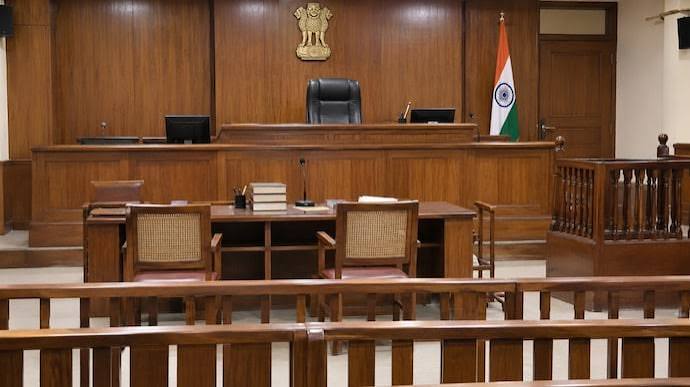
NEW DELHI, November 4, 2026: The Supreme Court has rejected a plea seeking mandatory rotation of constituencies reserved for Scheduled Castes and Scheduled Tribes in the Lok Sabha and state assemblies, holding that any change to the system must be made by Parliament rather than directed by the judiciary.
A bench led by Chief Justice of India Surya Kant, with Justices Joymalya Bagchi and V. Mohana, declined to interfere with an Allahabad High Court judgment that upheld Section 9(1)(c) of the Delimitation Act, 2002. The provision requires reserved constituencies to be identified in areas where the proportion of Scheduled Caste or Scheduled Tribe residents is comparatively high. It does not require those constituencies to rotate after a fixed period.
The petition was filed by Jagdish Singh, an elector of the Kadipur assembly constituency in Uttar Pradesh’s Sultanpur district. The seat has remained reserved for Scheduled Caste candidates for nearly seven decades. Singh argued that the absence of rotation restricted voters’ choice and perpetuated the concentration of political opportunity in the same constituencies. The court said the remedy he sought lay with elected representatives and lawmakers.
Singh’s case challenged the continued reservation of the Kadipur seat and the statutory method used to identify reserved constituencies. He argued that a constituency should not remain reserved indefinitely when the same arrangement can limit the range of candidates eligible to contest from that seat. His plea relied on the principle of rotation used in local-government elections and said a similar mechanism should apply to Parliament and state assemblies.
The Constitution expressly provides for rotation in certain local-body elections. Article 243D deals with reservation of seats in panchayats, while Article 243T covers municipalities. Those provisions require reserved seats to be allotted by rotation in the manner prescribed by law. The petitioner argued that a comparable approach would prevent the same assembly constituency from remaining reserved across successive delimitation cycles.
The legal framework for Parliament and state assemblies is different. Articles 330 and 332 provide for reservation of seats for Scheduled Castes and Scheduled Tribes in the Lok Sabha and state legislative assemblies, with the number of seats linked to population. They do not themselves prescribe a rotational method for deciding which specific constituencies should be reserved. Parliament addressed that question through the Delimitation Act, 2002.
Section 9(1)(c) directs the Delimitation Commission to identify constituencies in areas where the proportion of SC or ST population is comparatively large. The Allahabad High Court had upheld the provision and said the court could not compel Parliament to introduce a rotation system. The Supreme Court declined to take a different view.
The bench said the Constitution and the Delimitation Act do not contain a requirement for periodic rotation of reserved seats in Parliament or state assemblies. The court could not add such a requirement by interpreting provisions that do not contain it. A change would require legislative action, not a judicial direction to rewrite the statute.
The judges also questioned the argument that reserving constituencies in areas with a larger SC or ST population necessarily entrenches caste divisions. In a multiparty democracy, the bench observed, voters may choose candidates on the basis of political ideology and party programmes rather than caste or religion. It distinguished the right to vote from a claimed right to contest from a particular constituency, noting that candidates from general categories remain able to contest seats that are not reserved.
During the hearing, the Chief Justice told the petitioner that he was “dialling the wrong number”, signalling that the issue should be raised with Parliament. The bench also suggested that public representatives could be approached to build consensus for a change. The remarks were made in the context of the court’s conclusion that the existing law did not give it authority to impose the requested rotation system.
The court’s order did not abolish reservation for SC or ST candidates, change any constituency boundary or direct the Election Commission to alter the present allocation of reserved seats. It rejected the specific demand for a mandatory rotation principle under the current constitutional and statutory framework. That distinction is important because the case was about the method of identifying constituencies, not the constitutional validity of legislative reservation itself.
The ruling also leaves intact the difference between local-body reservation and representation in Parliament and state assemblies. The Constitution includes express rotation provisions for panchayats and municipalities. No equivalent provision currently applies to Lok Sabha and assembly constituencies. The court said it could not transfer the local-body mechanism into the national and state legislative framework through a judicial order.
For the petitioner, the immediate outcome is that Kadipur remains reserved under the existing delimitation arrangement. For other constituencies, the ruling means there is no court-ordered timetable under which an SC- or ST-reserved seat must become unreserved or be reassigned to another constituency. Any such change would have to come through the legal process governing delimitation and reservation.
The debate that prompted the petition is likely to continue outside the courtroom. Critics of permanent or long-standing reservation arrangements argue that the same communities and local political networks can dominate a seat over many election cycles. Supporters of the current population-based method point to the purpose of reservation: ensuring representation for communities whose population share might otherwise not translate into elected seats in a first-past-the-post system.
Those arguments involve questions of political representation, electoral geography and social justice that Parliament may choose to examine. The court did not decide whether rotation would be a better policy. It said that even if the petitioner’s preferred arrangement were considered desirable, the judiciary could not direct the legislature to enact it.
The case also highlights the limits of judicial review in electoral design. Courts can examine whether a law violates constitutional provisions or fundamental rights, but they do not generally write new electoral rules simply because a petitioner proposes a different policy. The bench found no ground to invalidate Section 9(1)(c) or to order the legislature to insert a rotation mechanism.
The next step, if the petitioner or other advocates of rotation wish to pursue the issue, is political and legislative. They can seek support from elected representatives and press for a proposal to amend the law. Whether Parliament takes up such a proposal will depend on political agreement, constitutional considerations and the broader delimitation process.
The immediate legal position is therefore unchanged: SC and ST seats in Parliament and state assemblies continue to be identified under the existing population-based framework, and the Supreme Court has declined to impose mandatory rotation. The question of whether that framework should change now rests with lawmakers.



Comments (0)
Be the first to comment. Comments are published after moderation.