


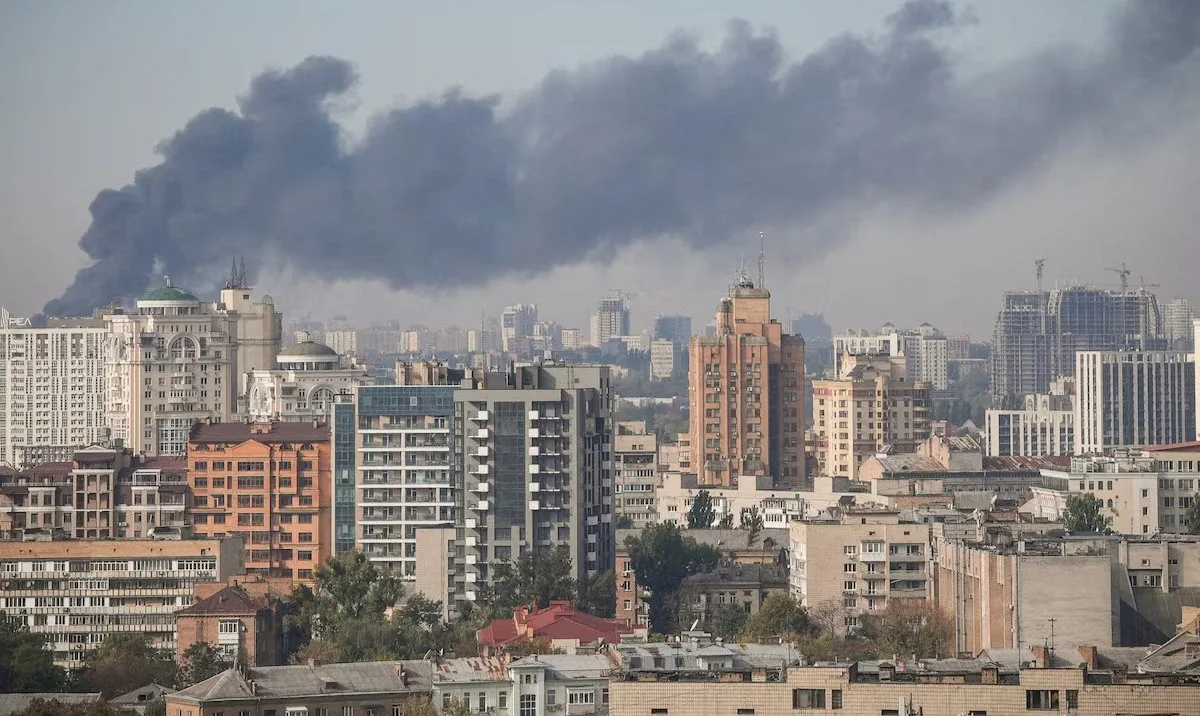
KYIV/MOSCOW, November 2, 2026 — Public alert app hacks in Russia and Ukraine involved separate cyber incidents, with officials reporting false information reaching users as the two countries remain at war. Russia’s Emergencies Ministry app was attacked early Monday and spread false information, according to state news agency TASS as cited by Reuters. In Ukraine, the Air Alert application briefly displayed false nuclear, chemical and other emergency warnings late on Sunday. Officials have not said the incidents are connected, and the available information does not establish who was responsible for either attack.
The incidents highlight a particular risk for digital public-safety systems: a compromised alert channel can confuse people at the moment they need to distinguish a genuine warning from a false one. Ukrainian officials said there was no radiation threat after the abnormal messages appeared. Russia’s ministry was working to restore its application, but no technical details or recovery timetable had been released in the initial report.
Ukraine’s Air Force said late on November 1 that the country’s public air-raid alert application appeared to have been subjected to hostile interference. Users briefly received warnings that included radiation and chemical hazards affecting Kyiv, as well as messages about street fighting. One false message claimed that Russia had deployed an Oreshnik hypersonic missile. The Air Force said there was no radiation threat and directed the public to follow its verified updates.
The Kyiv Independent reported that its journalists received notifications from the officially supported application and that alerts also sounded in streets in several areas. Regional officials warned residents not to treat the false messages as evidence of a nuclear or chemical emergency. The app’s press service later confirmed unauthorised interference, suspended the service and disabled push notifications while the incident was addressed.
Ukraine’s Ministry for Digital Transformation said the application was temporarily not operating, while other public warning channels and air-raid sirens remained available. That distinction matters: an outage or compromised app does not automatically mean every warning system has failed. Residents should use the official channels still operating in their area and follow instructions from local authorities.
The public information released so far does not identify the method used to interfere with the app, whether user data were accessed or how many people received the false notifications. Officials also have not published a complete technical account of the incident. Those questions should remain open until investigators or the service operator provide verifiable findings.
Russia reports a separate attack on its emergencies app
Russia’s Emergencies Ministry mobile application was hit by what TASS described, citing the ministry, as a major cyberattack early on Monday. Reuters reported that the incident resulted in false information being spread to the public. TASS said the ministry was working to restore the app but provided no further details about the messages, the number of affected users or the disruption’s duration.
The limited disclosure means it is not yet possible to establish whether the Russian incident involved stolen credentials, a compromise of the app’s infrastructure, misuse of a notification service or another technique. No responsible attribution has been announced in the reporting reviewed for this article. The ministry’s statement, as relayed by TASS, also does not establish that personal information was taken or that other emergency services were disabled.
The Russian and Ukrainian incidents occurred in the same broad period, but that timing is not evidence of a shared operation. The two applications serve different authorities and operate in different national systems. A conclusion about common attackers, coordination or motive would require technical evidence that has not been made public.
Also read: RBI Steps Up Scrutiny of Banks’ Cybersecurity Controls
Alert applications are designed to move urgent information quickly to people who may be deciding whether to shelter, evacuate, avoid a road or remain indoors. Their usefulness depends on the accuracy and timeliness of messages, but also on public confidence that an alert has come from a legitimate source. False notifications can consume attention, prompt unnecessary movement or make people hesitate when a genuine warning arrives later.
Those risks are especially acute in places where missile, drone and other attack warnings are part of daily life. Residents may receive messages through an app, a government website, official social-media channels, local authorities and sirens. If one channel is compromised, a clear public explanation can help prevent the false information from spreading further. Authorities also need to say which channels remain reliable rather than leaving users to guess.
Emergency systems are not only software products. They depend on government agencies, telecom networks, cloud or hosting providers, notification services, mobile operating systems and procedures for verifying who can send a message. A weakness in one part can affect the public-facing service even if other systems remain available. Security planning therefore needs to include access controls, incident detection, tested recovery procedures and a way to communicate through backup channels.
There is a further information risk during a crisis. A fabricated message may be copied into group chats or screenshots after the original alert has been removed. A corrected notification may not reach everyone who saw the first one. Authorities need to provide clear corrections, timestamp them and explain whether users should disregard particular messages or temporarily stop using a service.
People who receive an unexpected emergency notification should check whether the relevant government or emergency authority has confirmed it. They should not rely on a forwarded screenshot, an unfamiliar account or a link embedded in a message. If an app’s operator says the service is compromised or suspended, users should follow the replacement channels named by the responsible authority.
Residents should not dismiss every alert merely because one application has been attacked. A genuine warning may still be issued through sirens, local government channels or other official systems. The safer response is to verify the specific information through trusted sources and follow local instructions, not to assume that all warnings are false or that every message is authentic.
Users should also avoid clicking links that appear alongside an alarming message, particularly if the link asks them to log in, install software or disclose personal information. The Kyiv Independent reported that Ukrainian regional officials warned about the possibility of phishing connected with the incident. That warning does not prove that the app attack was a phishing operation, but it is a reason to treat unsolicited links cautiously until the investigation clarifies what occurred.
For organisations that operate emergency services, the incidents reinforce the need for a fallback communications plan. That can include an independently managed website, verified social channels, local broadcast partners and a procedure for announcing service interruptions. Redundancy is useful only if the public knows where to find the backup and if the backup is protected by separate access controls.
Also read: Project Glasswing: Anthropic’s AI Cybersecurity Initiative Explained
For Ukraine, the next useful information would include the application operator’s technical findings, the length of the service interruption, the number and type of false notifications delivered and the safeguards being added before normal operation resumes. For Russia, the ministry’s restoration notice and any subsequent technical statement would help clarify whether the false information was confined to the app or affected related systems.
Neither country’s initial public account provides enough evidence to attribute the incidents to a particular state, group or individual. The fact that both events involved public-warning systems during an ongoing conflict may make them strategically important, but it does not prove coordination. The distinction between confirmed facts and attribution claims is essential in cyber reporting, where early technical information is often incomplete.
The immediate priority is to restore trustworthy communication and tell residents which channels they should use. A later investigation may establish how the applications were accessed and whether the incidents share any technical indicators. Until then, the confirmed picture is narrower: Ukraine’s app issued false warnings and was temporarily suspended, while Russia’s emergencies app suffered an attack that spread false information and was being restored.






Comments (0)
Be the first to comment. Comments are published after moderation.