


WELLINGTON, November 7, 2026 — New Zealand election results 2026 show Labour fractionally ahead of the governing National Party in the preliminary party vote, but the latest official count still gives a National-led grouping a narrow parliamentary majority. With 98.3% of results counted, Labour had 29.28% and National 29.27%, a difference of just 189 votes. The preliminary seat projection put National on 42 seats, ACT New Zealand on 13 and New Zealand First on 12, giving the three parties 67 seats in a House currently projected to have 131 members.
The arithmetic matters more than the tiny party-vote margin for the immediate question of who can form a government. A majority in a 131-seat Parliament requires 66 seats, leaving the National-ACT-New Zealand First grouping one seat above that threshold on the current count. The result is not final: special votes and the remaining count can still alter party totals and the distribution of list seats. Elections New Zealand says the formal result is expected on November 27.
The official preliminary count shows Labour with 702,878 party votes and National with 702,689. The margin is so narrow that a small movement in the remaining ballots could change which party finishes first in the nationwide vote. The Guardian’s live election coverage had National slightly ahead in an earlier snapshot, when a smaller share of results had been counted. The later Electoral Commission update, at 98.3%, put Labour ahead by 0.01 percentage points. Neither figure is a final declaration.
The seat projection is more decisive, though still tight. National is listed with 42 seats, Labour with 36, the Green Party with 16, ACT with 13, New Zealand First with 12, the Opportunity Party with seven and Te Pāti Māori with five. The current totals add up to 131. National, ACT and New Zealand First together reach 67; Labour, the Greens and Te Pāti Māori together have 57. Opportunity’s seven seats sit outside either grouping in the current arithmetic.
New Zealand’s mixed-member proportional system helps explain why the party with the largest share of the nationwide vote does not automatically lead the seat count. Voters cast one ballot for a local electorate candidate and another for a political party. The party vote is the main determinant of each party’s overall share of seats, while electorate victories decide which candidates enter Parliament directly. The final allocation also depends on the number of parties that qualify for list seats and the outcome of close electorate contests.
The figures show two different measures of political support. Labour is marginally ahead in the nationwide party vote, but National has won more electorate seats and has a larger projected parliamentary group. The distinction is central to the result: a party can finish first in the party vote and still be unable to assemble a majority, while a party with a slightly smaller vote share can lead a coalition if its partners collectively command enough seats.
The remaining special votes include ballots cast overseas and votes submitted by people who voted outside their registered electorate. They are counted after the preliminary results and can affect both party totals and the allocation of list seats. Reuters has noted that special votes in previous New Zealand elections have tended to favour left-leaning parties, but that historical pattern does not guarantee the same outcome this time. The size and distribution of the remaining vote will determine whether the current one-seat cushion survives.
The Opportunity Party’s projected 5.97% party vote gives it seven seats in the current count. Under the MMP system, parties generally need at least 5% of the party vote or an electorate seat to qualify for list representation. Opportunity is therefore above the threshold on the present figures. Its members may not be needed if the National-ACT-New Zealand First bloc retains 67 seats, but the party’s position could become more consequential if the final count reduces that bloc’s majority or if coalition negotiations expose differences between the larger partners.
Te Pāti Māori illustrates the other route into Parliament. Its nationwide party vote is projected at 0.56%, but the party is listed with five seats because of its electorate victories. The result gives it a parliamentary presence despite a small national vote share. That distinction is a feature of the electoral system rather than an inconsistency in the count.
The current projections do not establish that coalition talks are complete or that a government has been formally formed. National, ACT and New Zealand First would still need to settle the terms of any agreement, including policy priorities and how the parties would manage disagreements during the parliamentary term. A one-seat margin can make every vote important, particularly on budgets, confidence motions and legislation that divides coalition partners.
The election was fought against a difficult economic backdrop. Reuters reported that unemployment had reached 5.7% in the third quarter, its highest level in 11 years, while households continued to face pressure from living costs and housing. Health services, infrastructure investment and the government’s approach to public spending were also prominent campaign issues. The close party-vote result suggests that neither major party secured a commanding mandate on its economic programme.
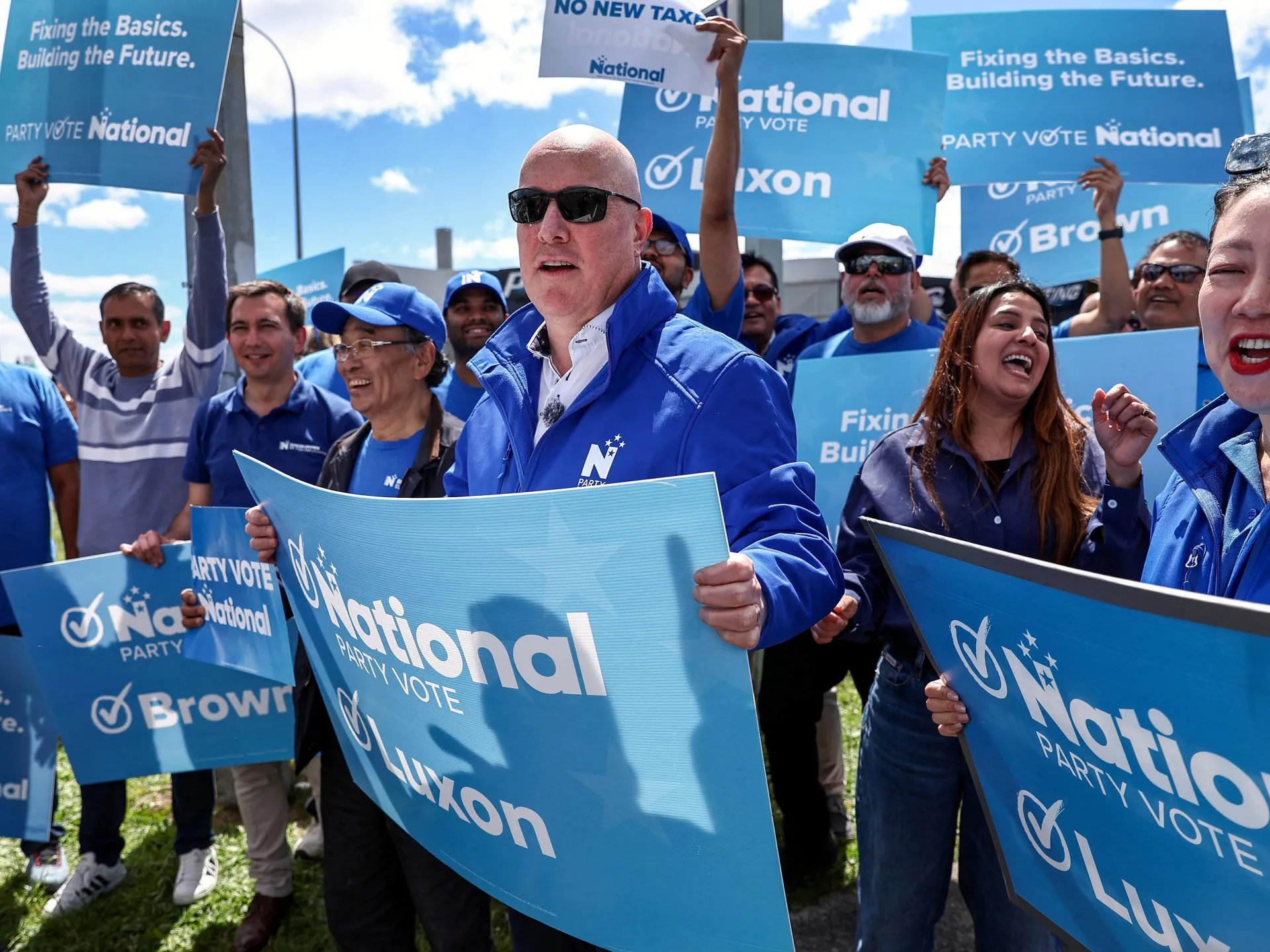
National campaigned on its record in office and its promise to focus on economic recovery. Labour argued that the government had not done enough to ease the pressures facing households and public services. With both parties below 30% in the preliminary party vote, smaller parties remain important to the composition of Parliament and to the policy choices a future government can make.
Māori policy was another point of disagreement. Reuters reported that Māori voters were concerned about government efforts to reverse or revise policies connected with the Treaty of Waitangi. Those debates reach beyond the language of the campaign: they affect the relationship between the state and Māori communities, the delivery of public services and the role of Treaty principles in government decision-making. Te Pāti Māori’s electorate wins ensure that those issues will have a parliamentary voice in the next term.
The result will also shape the government’s room to manoeuvre on housing, health, transport and infrastructure. A narrow majority can give smaller coalition partners considerable leverage, particularly when the governing parties have different priorities on spending, regulation and the role of the state. If National returns to office with ACT and New Zealand First, the coalition agreement will determine which campaign commitments are carried into legislation and which are postponed or diluted.
The next milestone is the completion of the special-vote count and the Electoral Commission’s formal declaration. Elections New Zealand says the official result is expected on November 27. Until then, the 67-seat projection is provisional, and any account of the next government must be framed as a reading of the current numbers rather than a settled outcome.
The main questions are whether Labour’s tiny party-vote lead widens or disappears, whether the National-led grouping keeps its one-seat cushion, and whether the final electorate and list allocations change the balance. The parties will also have to decide how quickly to move from campaign statements to coalition discussions. The current count gives National, ACT and New Zealand First a path to a majority, but it does not remove the need for negotiation or guarantee that the same arithmetic will remain when the official result is published.
For Labour, the party-vote lead is a narrow sign of support, not a route to government on the current seat projection. For National, the larger parliamentary group is an advantage, but the margin is small enough that the final count will matter. The election has produced a close national vote and a clearer, though still provisional, seat advantage for the current governing bloc. The outcome will remain open until the special votes are processed and the Electoral Commission declares the result.





Comments (0)
Be the first to comment. Comments are published after moderation.