


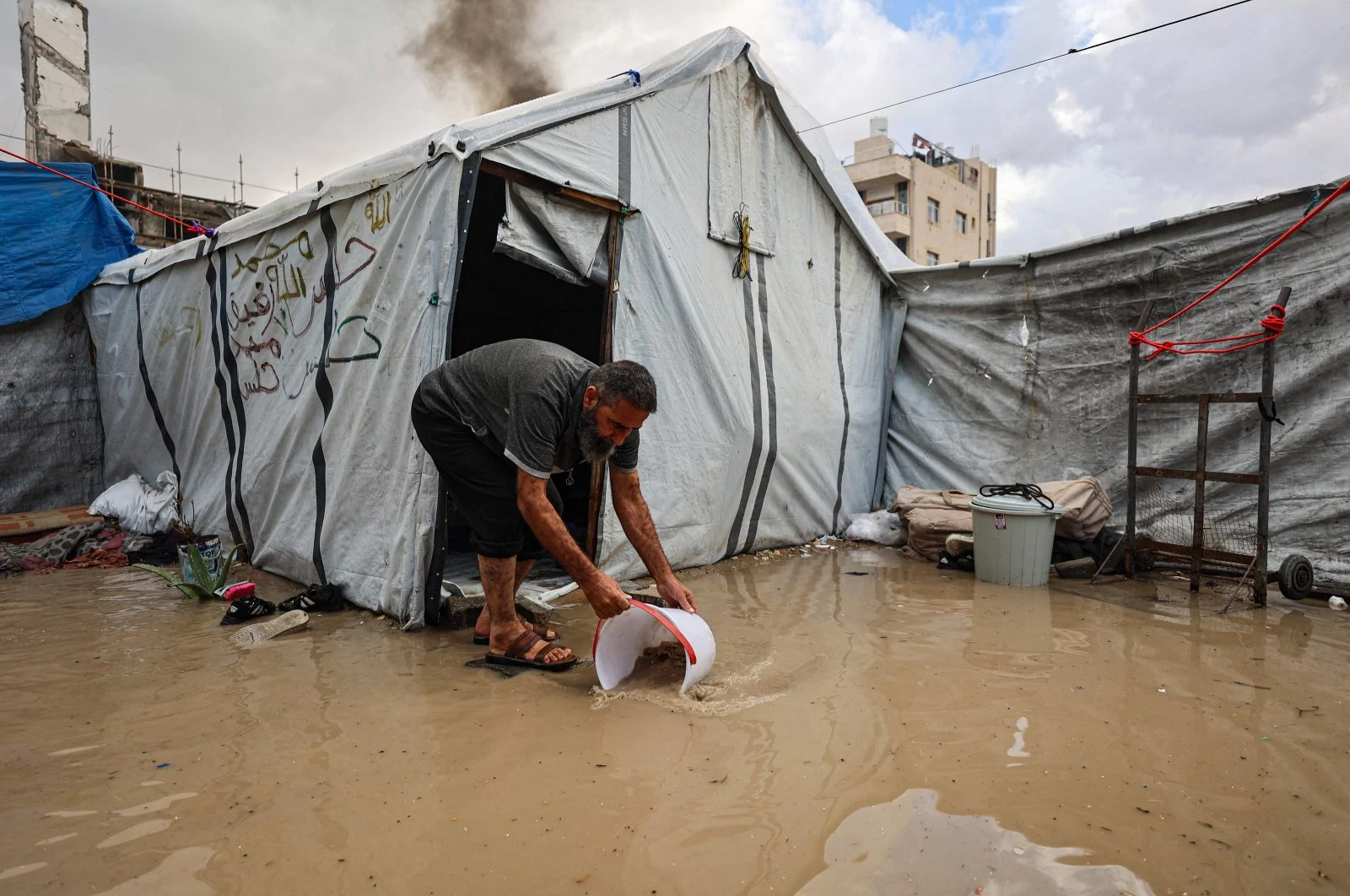
GAZA, November 7, 2026 — Gaza flooding after a winter storm affected tents and makeshift shelters housing displaced Palestinians across the Strip, with the Hamas-run government media office saying at least 70,000 tents were affected within 12 hours. Civil Defence officials said they received about 1,500 distress calls, while emergency crews faced shortages of fuel and equipment needed to pump water and reach damaged camps.
The reported figure of 70,000 comes from Gaza’s government media office and has not been independently verified as a count of individual tents inspected by an outside agency. Reuters reported that the flooding soaked bedding, damaged shelters and caused injuries, although no deaths had been reported in its account. Three abandoned houses also collapsed, without reported injuries. Al Jazeera separately reported that Civil Defence received approximately 1,500 calls in 10 hours and that water levels at some shelter sites rose by 30 to 40 centimetres.
The immediate effects are particularly severe for families who have already been displaced by the war and are living in temporary structures with limited protection from wind and rain. When water enters a tent, families can lose mattresses, blankets, clothing and other basic belongings. Wet bedding and overcrowded living conditions can also make it harder to maintain hygiene and protect children, older people and those with existing health needs from cold and illness.
Municipal and emergency services said they were struggling to respond because fuel shortages and damaged equipment had reduced their ability to pump standing water and move through affected areas. Reuters reported that water-pumping vehicles and other equipment had been destroyed or were unavailable. Civil Defence teams were receiving calls from people seeking help, but the number of requests and the condition of roads and camps made it difficult to respond to every location quickly.
The flooding has also exposed the limits of shelter arrangements in a territory where large parts of the housing stock and public infrastructure have been damaged. Many families rely on tents, tarpaulins or makeshift structures rather than permanent buildings. Even a short period of heavy rain can create a serious emergency where drainage is damaged, shelters are on low ground and families have little dry space to move their belongings.
The Gaza government media office blamed restrictions on shelter materials and construction equipment for worsening the situation. Israel’s agency responsible for coordinating aid said it had coordinated sanitation preparations and that additional vacuum trucks had entered Gaza, according to Reuters. The two accounts reflect competing positions over access and responsibility. The immediate humanitarian needs — pumping water, repairing shelters and supplying dry bedding — remain distinct from the wider political dispute.
The United Nations has warned that hundreds of thousands of families require support ahead of the rainy season. The Associated Press cited a UN assessment that 294,250 families needed rainy-season shelter assistance, while supplies available at the time could meet only part of the need for about 18% of them. The estimate underlines the scale of the gap between the number of people who need protection and the material available to provide it.
Most of Gaza’s population has been displaced during the conflict, and many people continue to live in temporary shelter. Reuters described more than two million residents as displaced, while AP reported that more than 1.6 million people were living in tents or makeshift shelters. The figures reflect different reporting estimates and time references, but both point to a population heavily dependent on emergency accommodation.
Humanitarian agencies face practical constraints beyond the delivery of tents. Families need waterproof coverings, wooden or raised flooring where possible, blankets, mattresses, clothing, sanitation facilities and safe access to clean water. Shelters also need to be placed and maintained in locations where rainwater can drain. A supply of tents alone cannot resolve the problem if there is no suitable land, equipment or material to prepare the sites.
Floodwater can create additional risks for sanitation and public health. Where sewage systems and drainage networks are damaged, water can mix with waste and leave standing pools around shelters. Children may be exposed while families attempt to salvage belongings. Health workers also need access to temporary camps to identify and treat people who are ill or injured. The reported distress calls suggest that residents were seeking urgent assistance, but the public accounts do not provide a complete breakdown of medical cases or the number of people rescued.
The winter emergency is unfolding while reconstruction and broader political negotiations remain difficult. A US-brokered ceasefire framework envisaged a path towards rebuilding, but major differences remain over Hamas disarmament, the withdrawal of Israeli forces and arrangements for Gaza’s future governance. The flooding does not resolve those disputes, but it increases the pressure for immediate humanitarian access and practical measures to protect people before further storms arrive.
Israel has said it restricts some equipment because it could be used for military purposes and has also accused Hamas of diverting humanitarian supplies. Palestinian officials and aid groups have repeatedly said restrictions and delays have limited the entry of materials needed for shelter and reconstruction. Each allegation needs to be attributed to the party making it; the available reporting does not independently settle every dispute about the entry of specific equipment.
For families in flooded camps, the urgent requirements are more immediate than the negotiations: dry shelter, clean bedding, safe drinking water, sanitation and reliable emergency response. The extent to which aid agencies can deliver those supplies will depend on access, funding, available stocks and the ability of local services to distribute them quickly.
The reported 70,000-tent figure should be treated as an estimate provided by Gaza’s government media office, not as a fully independent survey. The distress calls and reports of flooded camps nevertheless point to an acute humanitarian problem as winter begins. Further updates from Civil Defence, UN agencies and aid organisations will be necessary to establish how many families require replacement shelters and what assistance has reached them. Al Jazeera reported that Gaza’s Emergency Committee said the territory needed about 200,000 tents and heating supplies, while a Palestinian NGO Network representative said 50,000 tents were waiting on the Egyptian side of the border. Those are estimates and claims from local organisations, not an independently audited inventory. The same report said some shelter sites saw water levels rise by 30 to 40 centimetres. Reuters reported that COGAT said four additional vacuum trucks entered Gaza through the International Committee of the Red Cross this week, joining eight brought in during the previous month for sewage pumping, waste removal and water-system repairs. The Israeli agency’s account addresses sanitation preparations; it does not settle the separate dispute over entry of shelter materials.


Comments (0)
Be the first to comment. Comments are published after moderation.