


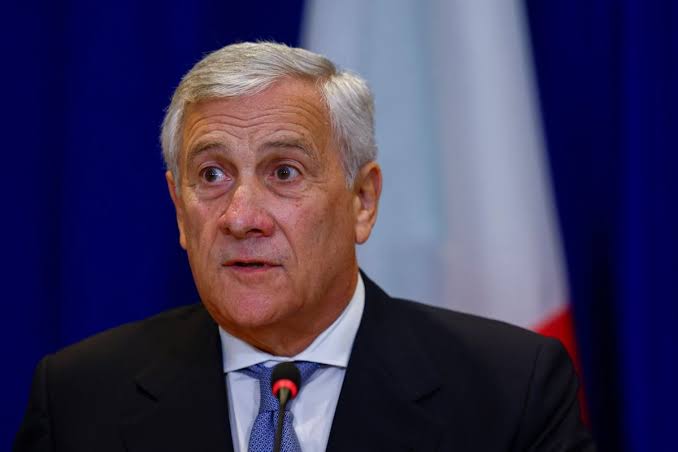
ROME, November 7, 2026 — The Tajani dark web data leak is under investigation after Foreign Minister Antonio Tajani said personal information about him and members of his family had been published online, exposing them to threats and intimidation. Prime Minister Giorgia Meloni blamed pro-Russian hackers for the incident, while Italian authorities continued examining the material and how it was circulated. The public information released so far does not establish who obtained the data or independently prove the identity of those responsible.
Tajani announced the exposure in a social media post on Saturday. He said the information had been disseminated online and that those behind the activity were seeking further details about him and his family. Reuters, citing a person close to the minister, reported that cybersecurity authorities found material on a section of the dark web accessible through the Tor network. Screenshots seen by Reuters showed Tajani’s photograph among a list of 18 people described as “citizens hostile to the Russian Federation”.
The wording of the list and the minister’s public account indicate a possible political motive, but they do not by themselves prove who created it or who accessed the information. Meloni publicly attributed the incident to pro-Russian hackers and expressed support for Tajani. Russia had not commented on the specific allegation in the Reuters report. Moscow has generally denied responsibility for cyberattacks abroad, but that broader position does not resolve the facts of this case.
Also read: Public Alert App Hacks Hit Russia and Ukraine, Trigger False Warnings
Tajani said the publication of his information was accompanied by threats and intimidation. Reuters reported that the material was identified during monitoring activities by cybersecurity authorities and that further investigations were under way. The public account does not provide a complete inventory of the information exposed, whether it included financial credentials, identity documents, contact details or private communications, or how long the material had been accessible.
That distinction matters because “personal data leak” can cover very different levels of risk. The publication of a photograph and a name may create reputational or physical-security concerns, while the release of home addresses, phone numbers, identity documents or family information can enable harassment, impersonation, fraud or targeted intimidation. Investigators will need to establish what information was exposed and whether it was obtained through a breach of a government system, an account compromise, a third-party source or another method.
The screenshots reviewed by Reuters are evidence of material appearing on a dark-web forum or list, but they do not independently reveal the full path by which the information was obtained. A listing may contain information gathered from public sources, previously leaked databases or direct intrusion. The method of acquisition can only be determined through forensic work, analysis of timestamps and comparison with records held by the relevant institutions.
The incident comes amid a wider series of cyber and security concerns in Europe. The Associated Press reported that Italy has also faced hoax bomb threats that caused disruption, as well as threats against broadcasters, attacks on supermarket refrigeration systems and drone incursions. Those events form part of the security context but should not be assumed to be connected to the Tajani data exposure without evidence of a common operation.
Meloni’s government has been a strong supporter of Ukraine, and Tajani linked the incident to Italy’s backing for the sovereignty and independence of a country under attack. The suggestion of a political motive is central to the government’s response. However, attribution in cyber investigations is difficult: attackers may use false identities, stolen infrastructure or copied material to make an operation appear to originate from a particular country or group.
For public officials, the exposure of private information can have consequences beyond digital security. It can create risks for family members, reveal patterns of movement or provide material that can be used in targeted harassment. Authorities may need to review access to personal information, strengthen protective measures and warn other officials who may be named in the same list. The report that Tajani appeared among 18 people suggests the incident may extend beyond one individual, although the circumstances of each listed person have not been fully disclosed.
Government agencies and political organisations typically hold personal information across multiple systems, including travel, communications, administrative and security records. A compromise can occur through a poorly protected account or an external service rather than through a central government database. Forensic investigators will need to trace where the exposed details came from before making claims about the systems affected.
The next questions are whether the material was newly obtained or drawn from an older source, whether any government or private systems were accessed, and whether threats were sent directly to Tajani or his family. Investigators will also need to examine the online accounts and infrastructure used to publish or circulate the information. Public attribution should wait until technical evidence and intelligence assessments support it.
Individuals whose information appears in a leak can face heightened risks even when passwords or financial details are not involved. Security teams may recommend changes to account credentials, stronger authentication, review of linked devices, privacy checks and additional precautions for personal addresses and contact details. The appropriate response depends on what was exposed; the Italian government has not published a full list of affected data in the reporting reviewed for this article.
The case illustrates how cyber operations can target people as well as institutions. Personal information can be used to intimidate, embarrass or pressure public figures, particularly during periods of international tension. But the distinction between a politically motivated leak and a confirmed state-directed cyber operation must be maintained. At this stage, the leak and the government’s allegation have been reported; the identity of the perpetrators remains unverified. In a later development, Tajani asked G7 foreign ministers to put hybrid warfare and cyberattacks targeting critical infrastructure on the agenda of their next meeting, scheduled for Monday in Paris, Reuters reported. ANSA also quoted him describing the incident as part of a wider hybrid threat. The request is not a collective G7 finding or proof that a particular state directed the leak; it is Italy’s proposal for a coordinated discussion of cyber threats.


Comments (0)
Be the first to comment. Comments are published after moderation.