


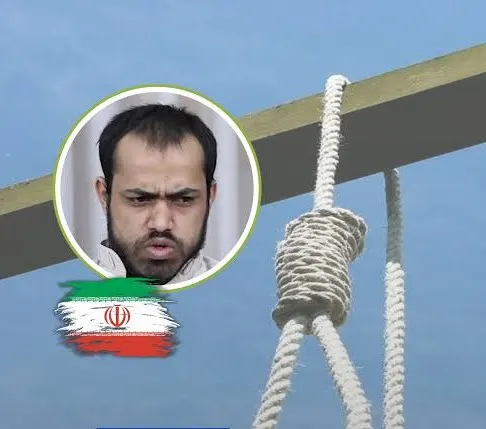
TEHRAN, November 7, 2026 — Iran has executed Mohammad Aref Shahbakhsh, a Baloch man accused by the authorities of involvement in an armed attack on a police post in the southeastern province of Sistan and Baluchestan. The judiciary said the sentence was carried out on Saturday after his conviction in connection with an assault on the Qaleh Bid police post in Khash County. It did not disclose when the attack took place or provide details of the trial.
The Mohammad Aref Shahbakhsh execution was reported by Reuters, Agence France-Presse and Iran International, which cited the judiciary’s Mizan news agency. Iranian authorities said Shahbakhsh had links to the Sunni Baloch armed group Jaish al-Adl and had been convicted of “armed rebellion” and “waging war against God”. The public account did not specify how many officers were killed or injured, what evidence was presented in court or whether the defendant had exhausted an appeal.
According to the account attributed to Mizan, Shahbakhsh was connected to an attack on the Qaleh Bid police post in Khash. The judiciary’s description of the case used the charges of baghi, commonly translated as armed rebellion, and moharebeh, a term often rendered as waging war against God. Both are among the most serious security-related offences under Iranian law and can carry the death penalty.
The statement did not give a date for the alleged attack. It also did not identify the officers who were killed or wounded, describe the weapons used, or explain what role Shahbakhsh was alleged to have played. Reuters said Iranian media had not specified the number of police casualties. Iran International reported that Mizan said the case had been opened in Iranshahr and transferred to Zahedan, the provincial capital, with provincial intelligence agencies requesting further inquiries.
Those omissions leave major questions about the prosecution unanswered. The information made public does not include a trial date, the court’s reasoning, details of the evidence, the identity of defence lawyers or whether Shahbakhsh was able to challenge the allegations. The reports also do not provide an account from his family or legal representatives. Without those records, the circumstances of the conviction cannot be independently assessed.
The judiciary’s account is an official allegation and description of its own proceedings; it is not an independent reconstruction of the attack. Reuters reported the execution based on Iranian media, while Iran International provided additional details attributed to Mizan. Neither report supplied court documents or independent evidence establishing the defendant’s role. The distinction between what the authorities say and what has been independently verified is important in a case that ended in an irreversible punishment.
Sistan and Baluchestan lies in southeastern Iran along the borders with Pakistan and Afghanistan. The province has long experienced attacks on security forces, armed clashes and operations against groups that oppose the Islamic Republic. Jaish al-Adl, the group named by Iranian authorities in Shahbakhsh’s case, has carried out attacks against Iranian security personnel in the region, according to Reuters and Iran International.
Iran International reported that the judiciary described Shahbakhsh as linked to Jaish al-Adl, which it referred to by the name Jaish al-Zolm. The outlet said the group had been associated with a wider pattern of attacks in the southeast. It also cited figures from the Human Rights Activists News Agency, or HRANA, which documented 63 armed incidents in Sistan and Baluchestan and neighbouring Kerman between March 31 and October 10, with at least 94 people killed. Those figures cover more than one province and include incidents with different perpetrators and circumstances; they should not be read as a count of attacks by a single organisation.
The security environment has become more difficult to assess as armed groups, state forces and local communities operate in an area where independent access can be limited. Official statements often describe suspects as members of militant organisations, while rights groups have raised concerns about the transparency of prosecutions and the treatment of detainees. The available reporting does not establish whether Shahbakhsh was involved in any of the other incidents recorded by HRANA.
The authorities have a responsibility to investigate attacks on police and civilians, but security concerns do not remove the requirement to disclose the legal basis for a death sentence. Information about the alleged offence, the evidence relied on and the defendant’s access to legal representation is essential to evaluating whether a prosecution meets basic fair-trial standards. In this case, the public statement did not provide enough detail for that assessment.
The execution comes amid a sharp rise in the number of people recorded as put to death in Iran. Iran Human Rights, an independent organisation that monitors executions, said on November 3 that it had documented at least 691 executions between January 1 and October 31, 2026. The group recorded 77 executions in October alone, including at least 10 Baloch people. Its figures included 64 Baloch among those executed in the first ten months of the year.
Iran Human Rights said only 100 of the 691 executions recorded in 2026 had been announced by official sources. The remaining 591 cases were verified through two independent sources, according to the organisation. It said it had received reports of more than 500 additional executions that were not included because they had not been sufficiently verified. The figures are therefore a documented minimum, not a complete official total.
The organisation recorded 81 executions on security-related charges during the first ten months of the year. That category included people accused of espionage or collaboration with foreign states, protesters, political prisoners and others convicted of national-security offences. Iran Human Rights said the group of 64 Baloch people represented a disproportionate share of the executions it had recorded, given the community’s relatively small share of Iran’s population.
The organisation has argued that the death penalty is used in cases involving national-security charges and that defendants in such cases face serious due-process risks. Those are the group’s findings and assessments; they do not establish what happened in Shahbakhsh’s individual trial. But the absence of publicly available court details in his case makes independent scrutiny particularly difficult at a time when rights monitors are reporting a high number of executions.
The central unanswered issue is not whether Iranian authorities have announced an execution; multiple outlets reported that the judiciary said the sentence had been carried out. It is whether the public can examine the proceedings that led to the sentence. The available account does not show what evidence connected Shahbakhsh to the attack, whether witnesses were heard, whether the defence could challenge the prosecution’s case or whether the court considered alternatives to capital punishment.
A fair assessment would require access to the judgment, the charge sheet, the evidence presented in court and information about the defendant’s legal representation and appeals. Statements from the family or lawyers could also clarify whether they were notified of the execution and whether they had an opportunity to seek a final review. None of those details was included in the reports available on Saturday.
The execution is likely to draw further attention from human-rights organisations because it involves a member of an ethnic minority from a province where security tensions and state operations have continued. The figures published by Iran Human Rights suggest that Baloch prisoners have been represented in execution records at a level that the organisation considers disproportionate. The group’s methodology and the limits of its data should remain clear, but its findings provide context for why the case is being monitored beyond the immediate allegation against Shahbakhsh.
Further information from the judiciary, the court that issued the sentence or Shahbakhsh’s legal representatives would be needed to establish the chronology of the case and the basis for the conviction. Until such records are available, the confirmed public account is narrow: Iranian authorities say he was executed over an attack on a police post in Khash, they allege links to Jaish al-Adl, and they have not disclosed the trial details needed for independent scrutiny.


Comments (0)
Be the first to comment. Comments are published after moderation.