


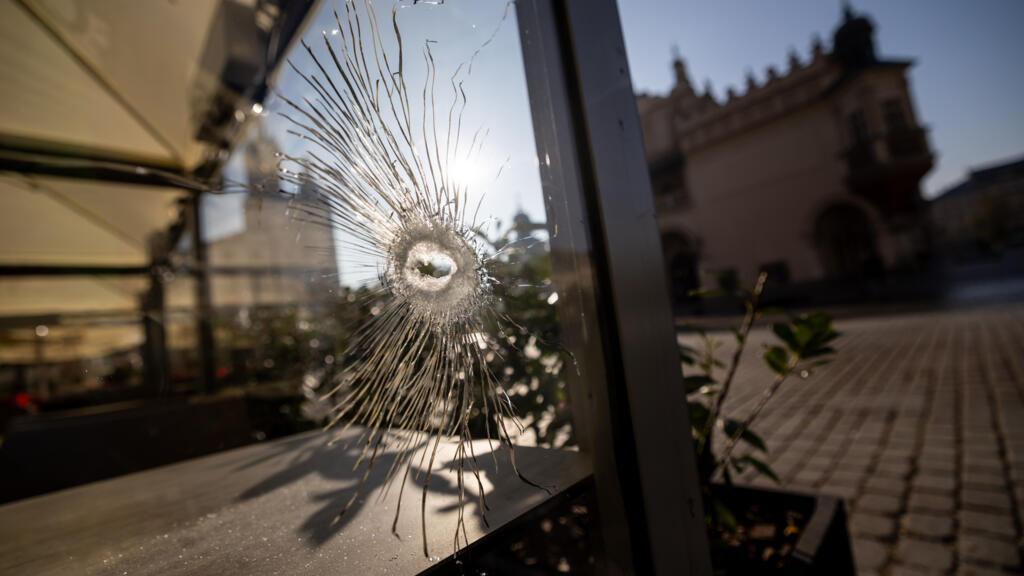
KRAKÓW, November 9, 2026: The 24-year-old suspect in Saturday’s mass shooting in Krakow died in hospital on Monday morning, but prosecutors said his death would not end the investigation and that they had not established a motive or an ideological link. The National Prosecutor’s Office said the inquiry covers six killings and attempted murders in the city’s Main Market Square, as well as the deaths of three members of the suspect’s family at a home in Ostrowiec Świętokrzyski.
The prosecutor’s office identified the suspected attacker as Michał Oksiński and said he died before formal charges could be presented. Investigators said the evidence gathered so far indicated he was responsible for both incidents, but they had not determined why he acted or whether anyone else encouraged, assisted or otherwise contributed to the crimes.
The latest statements also qualify early suggestions that the shooting was driven by far-right ideology. Interior Minister Marcin Kierwiński had described the suspect as fascinated by far-right ideas and holding radical nationalist views. Prosecutors now say they have not found evidence that would allow them to identify a particular political movement or ideology as the motive. The investigation remains open.
Polish police said the suspect died at about 4.30 a.m. on Monday in a Krakow hospital. He had been critically wounded when officers intervened during the attack on Saturday, November 7, and was taken to hospital under guard. The National Prosecutor’s Office said he died before prosecutors could present charges against him, but the criminal inquiry would continue because investigators still need to reconstruct the events and determine whether anyone else was involved.
The attack unfolded in and around Krakow’s Main Market Square, one of the city’s busiest public spaces and a major tourist destination. Officials said the suspect drove a car into the area and opened fire on people. Six people were killed in the square. The regional police briefing said 15 injured people remained in six hospitals, including two officers; 14 were stable and one officer was in serious condition. AFP also reported 15 wounded, while The Guardian’s later updates carried higher totals of 16 and 17. Authorities have not issued a single reconciled figure across the updates.
The National Prosecutor’s Office said the investigation opened on November 8 covers the killings in Krakow and the deaths of three people at the suspect’s family home in Ostrowiec Świętokrzyski. The victims at the home were identified as his parents and his 21-year-old sister. Prosecutors believe the family members were killed before the attack in the city, but the full sequence of events is still being reconstructed. The two locations are being investigated together, although the six deaths in the square and the three at the home remain separate crimes.
The suspect’s death removes the possibility of questioning him directly about his movements, preparations or motive. Investigators can still examine forensic evidence, digital records, firearms, ammunition, surveillance footage and witness accounts. Prosecutors said the inquiry would continue to establish whether other people had incited, assisted or otherwise contributed to the crimes. No accomplice has been publicly identified.
The gap between the early political assessment and the prosecutor’s latest position is important. Kierwiński said the suspect appeared to be fascinated by far-right ideas and held radical nationalist views. Those comments came soon after the attack, when officials were still securing scenes and collecting evidence. They were an initial assessment, not a completed finding about the suspect’s motivation or links to an organisation.
National Prosecutor’s Office spokesperson Przemysław Nowak said investigators had not found evidence that would allow them to state responsibly that the suspect was inspired by a particular ideology. AFP reported that prosecutors also said they had not identified obvious symbols associated with a specific political movement, whether far right or far left. Emblems and patches found on the suspect’s clothing are being examined as part of the inquiry.
The distinction matters because a terrorism investigation does not automatically establish a political motive. Prosecutors have classified the attack as a terrorist offence for the purposes of the criminal investigation, but they still have to establish what motivated the suspect, whether he acted alone and whether anyone else helped plan or carry out the violence. A legal classification describes the nature of the alleged crime; it is not proof that a particular ideology or group directed it.
Authorities are also examining the deaths of the three relatives found at the family home. The prosecutor’s statement says investigators believe Oksiński killed his parents and sister before travelling to Krakow. The exact timeline, the circumstances of the deaths and any communications that could explain the sequence remain part of the inquiry. Prosecutors have said the investigation covers both sets of killings, not only the public attack.
The family deaths add a second line of inquiry that cannot be explained solely by the events in the square. Investigators will need to determine whether the killings at home were planned separately, whether there were warning signs known to relatives or authorities, and whether any communications connect the two scenes. The prosecutor’s office has not released a full timeline or a final account of the sequence.
The National Prosecutor’s Office said Oksiński had held a firearms permit since January 2026 and bought his first firearm in March. During searches, investigators found seven additional firearms in the family apartment. Four mobile phones were secured from the suspect’s car, and prosecutors said steps were under way to obtain access to the data stored on them. Those details are now central to questions about how the weapons were acquired, what the suspect was planning and whether he had contact with anyone else.
The existence of a firearms permit does not by itself establish whether every weapon recovered was legally owned, properly stored or covered by the relevant authorisation. Investigators will have to trace each firearm, check registration and purchase records, establish how ammunition was obtained and determine whether any legal conditions were breached. The discovery of several weapons at the home also raises questions about how the suspect assembled and stored them, but prosecutors have not said that licensing failures caused the attack.
After the attack, the Interior Ministry announced a review of firearms-permit conditions, including how often permit-holders’ medical records are updated. The review signals a broader public-safety response, but it does not establish that the licensing system failed in this case. Prosecutors have not said whether any rule was breached or whether the permit should have been withheld.
The four phones could help investigators reconstruct the suspect’s communications and movements in the days before the shooting. Accessing their contents may require technical examination and legal procedures, and prosecutors have not said what information has been recovered. The devices could help establish whether the suspect acted alone, whether he had contact with other people or whether any online activity provides evidence about his motivation. Until the data is examined, claims about an organised network or ideological direction remain unproven.
The authorities have also said they will question identified witnesses and analyse the evidence from both locations. That work includes forensic examination of the weapons, vehicle and family apartment, as well as medical and post-mortem findings. The prosecutor’s office said the investigation would continue despite the suspect’s death, with further steps focused on reconstructing the events and determining whether other people contributed to the crimes.
The shooting has shaken Poland, where mass shootings are rare. The Main Market Square is a historic centre used by residents, visitors and businesses, and the attack took place in a space normally crowded with pedestrians. The government declared two days of national mourning, while local authorities and emergency services focused on supporting victims, identifying the dead and restoring normal access to the area.
The official count of six people killed in the square is separate from the three relatives found dead at the family home. The distinction is important when describing the scale of the attack and the investigation. Police and the prosecutor’s office have confirmed the six deaths in Krakow and the three deaths in Ostrowiec Świętokrzyski; the circumstances of the family killings are being examined as part of the same broader case.
The number of injured people has varied between public updates. The Małopolska Police briefing said 15 people were in hospitals, including two officers, with one officer in serious condition. The Guardian reported 16 injured in its latest account. The difference may reflect updates from different points in the emergency response, and the police figure remains the official count cited in the regional briefing.
The suspect’s death also changes the legal path of the case. Prosecutors cannot question him or bring him to trial, but they can continue investigating the deaths, examine evidence and determine whether anyone else may face charges. The National Prosecutor’s Office said it was looking into possible incitement or assistance. That does not mean investigators have identified another suspect; it means they are testing whether the evidence points beyond the man who died in hospital.
For now, the most important unanswered questions concern motive, the timeline of the family killings, the source and legal status of the weapons, and whether the suspect had any help. The early suggestion of far-right inspiration remains an investigative lead, not an established conclusion. Prosecutors have explicitly cautioned that they do not yet have evidence to attribute the attack to a particular ideology or movement.
The next reliable updates are likely to come from the National Prosecutor’s Office and police as they complete forensic examinations, review the phones and question witnesses. Officials have not announced a final motive or a complete account of the suspect’s preparations. The case should therefore be reported on the basis of confirmed evidence, with early political assessments kept separate from conclusions reached by investigators.
Also read: Six Killed, More Than a Dozen Wounded in Shooting at Poland’s Krakow Main Square
Also read: Krakow Shooting Investigation Widens After Three More Bodies Found at Suspect’s Home
Also read: Polish Prosecutors Open Terrorism Probe After Kraków Shooting That Killed Six

Comments (0)
Be the first to comment. Comments are published after moderation.