


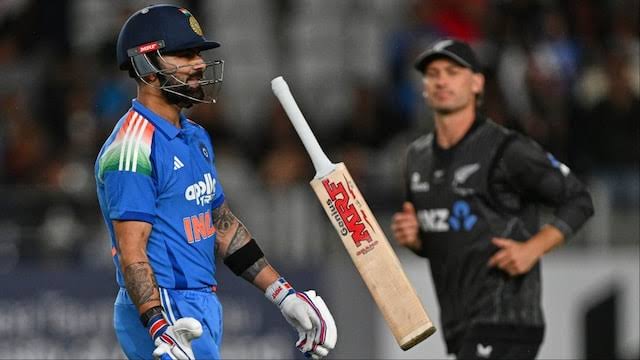
WELLINGTON, November 7, 2026 — The India vs New Zealand 2nd ODI ended in a four-run victory for India under the Duckworth-Lewis-Stern (DLS) method after rain stopped the chase at 113/7 in 26 overs at Hnry Stadium. New Zealand had been bowled out for 134 in 41 overs in a match reduced to 47 overs per side. India were four runs above the DLS par score of 109 when rain prevented further play, giving the visitors a 2-0 lead in the five-match series.
The Board of Control for Cricket in India’s match-details page recorded the result as a four-run victory for India by the DLS method. The match did not resume after the second interruption. The decision turned on the score at the moment play stopped: India had lost seven wickets, but had made enough runs to remain ahead of the par figure for that stage of the revised innings.
The result followed a match that had already been shortened by weather. Rain delayed the start in Wellington and reduced the contest from 50 overs to 47 per side. India won the toss and chose to field, then used the conditions to restrict New Zealand to a total that left the hosts with little margin for error. The chase was far from straightforward, however, as New Zealand’s bowlers took wickets at regular intervals before the rain returned.
New Zealand were dismissed for 134 in 41 overs, with Daryl Mitchell’s 55 the main contribution in an innings that struggled to build sustained partnerships. Mitchell Santner made 31, but the rest of the batting order could not provide the support needed to turn the start into a competitive total. The Times of India reported that the score was New Zealand’s lowest all-out total at home against India in ODI cricket and noted that the innings contained 176 dot balls.
Gurnoor Brar was the leading wicket-taker, claiming four wickets and earning the Player of the Match award. Auqib Nabi, Anshul Kamboj and Axar Patel took two wickets each as India’s attack kept New Zealand under pressure through the middle and lower order. The bowlers were able to use the conditions without allowing Mitchell’s innings to develop into a match-changing partnership.
New Zealand’s total was modest even by the standards of a shortened match. The hosts needed a stronger contribution from their top order after the early damage, but India continued to take wickets and kept the scoring rate in check. Mitchell’s half-century and Santner’s resistance prevented the innings from ending much earlier, yet the final total left New Zealand dependent on early breakthroughs in the chase.
India’s reply began under pressure. Shubman Gill was dismissed for a golden duck and Virat Kohli made seven, leaving the middle order to rebuild while the revised target remained within reach. The regular loss of wickets made the chase more difficult than the required run rate alone suggested. New Zealand’s bowlers kept attacking, and the visitors could not settle into a partnership that would have made the finish routine.
KL Rahul was unbeaten on 26 when the rain stopped play, with Auqib Nabi on one. India had reached 113/7 after 26 overs. A live update from Rediff placed the DLS par score at 109 at that point, meaning India were four runs ahead. That margin was enough for the result to go in the visitors’ favour when the match could not continue.
DLS is used in limited-overs cricket when weather or another interruption reduces the overs available. It adjusts the target by taking account of the resources still available to the batting side, including both overs and wickets. A team’s position at an interruption is therefore measured against the par score for that point in the innings, rather than simply against the original target. India had lost seven wickets, but its 113 runs were above the reported par figure of 109.
The difference between being ahead of par and being officially declared the winner matters in a rain-affected match. The par score is a calculation used by the match officials; the result is confirmed only after they apply the competition’s playing conditions and determine that no further play is possible. In Wellington, the chase remained at 113/7 and the teams did not return to the field. The BCCI’s match-details record subsequently listed India as winners by four runs under DLS.
New Zealand had a chance to keep the contest alive because India were seven wickets down, but the weather removed the opportunity to take the remaining wickets. For India, the narrow margin reflected the importance of staying above the par score while protecting the wickets that remained. The match was not decided by a completed chase; it was settled by the position reached before the interruption and the rules that govern a rain-affected ODI.
The win puts India two matches ahead in a five-match series, after the visitors also won the rain-affected opener in Auckland. India now have three matches remaining to complete a series victory, while New Zealand need a response in Hamilton to keep the contest alive. The next ODI is scheduled for November 10, followed by two matches at Mount Maunganui on November 13 and 15.
The two opening matches have both been affected by rain, but the results have come through different phases of the game. In Auckland, India completed a shortened chase to win by five wickets. In Wellington, the bowlers set up a low target and the DLS calculation decided the result before the chase could be completed. The repeated interruptions have made the series difficult to assess through conventional batting and bowling totals alone.
For New Zealand, the immediate task is to improve the batting performance. Mitchell’s 55 and Santner’s 31 were not enough to protect a total of 134, and the side will need more substantial contributions if it is to challenge India in the remaining games. The bowling effort in the chase showed that the hosts could create pressure, but the team needed the chance to finish the innings and take the last three wickets.
India will take confidence from Brar’s four-wicket haul and the discipline shown by the attack. The visitors also have to manage their batting response more carefully after losing early wickets in Wellington. Rahul’s unbeaten stay gave the side a route to the target, but the match was close enough that another wicket or a different DLS position could have changed the calculation. The result gives India a strong series advantage, not a reason to assume the remaining fixtures will be straightforward.
The official result is clear: India won by four runs on the DLS method after making 113/7 in 26 overs against New Zealand’s 134. The score at the interruption was enough to put India ahead of the par mark, and no further play was possible. The teams now move to Hamilton with India leading 2-0 and New Zealand needing to win to prevent the series from moving beyond their reach.
Also read: India’s New Zealand ODI Tour Puts World Cup Planning and Player Roles to the Test
Also read: Devon Conway Ruled Out of Remaining India ODIs After Concussion; Nick Kelly Called Up






Comments (0)
Be the first to comment. Comments are published after moderation.