


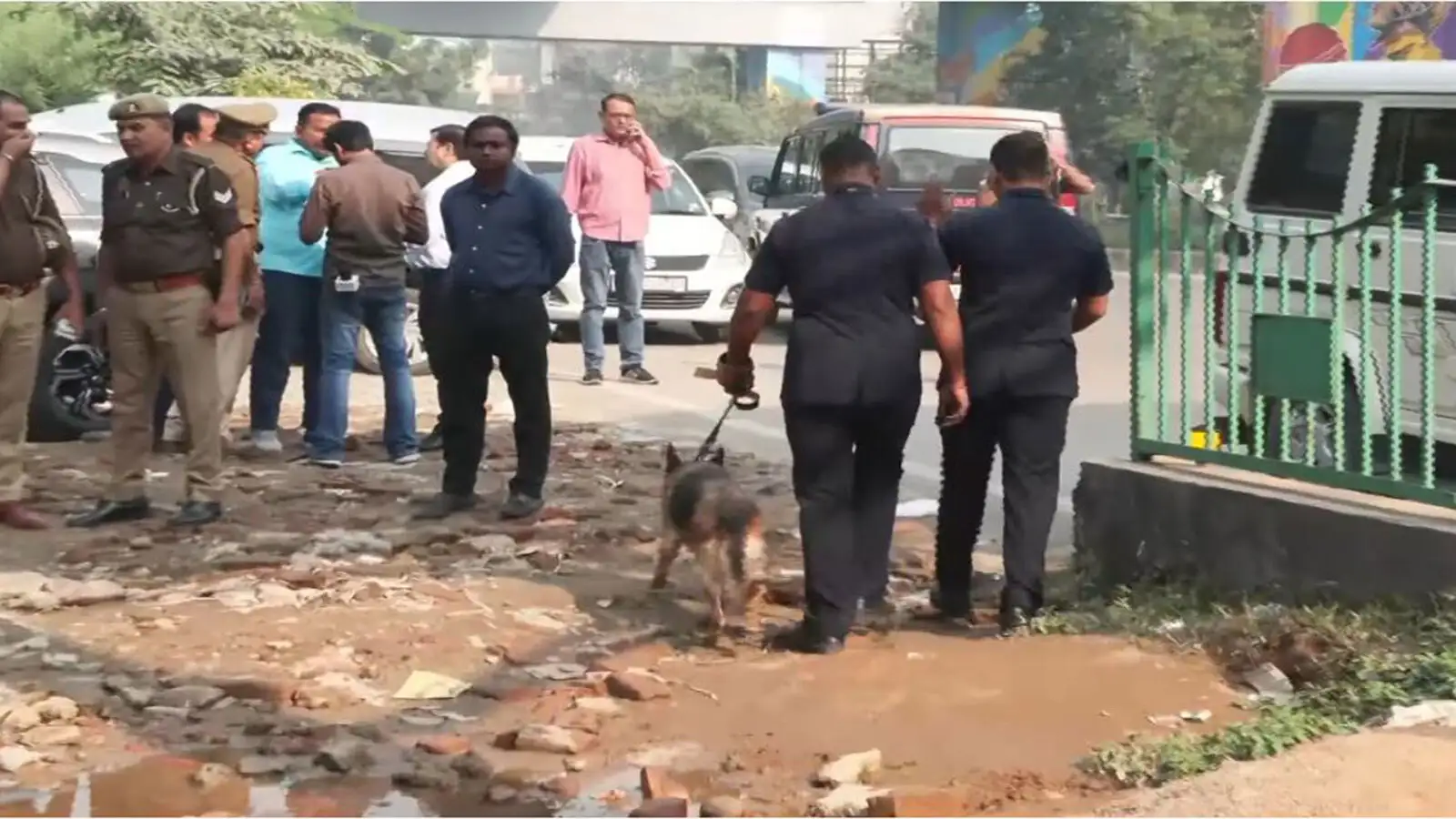
GHAZIABAD, November 7, 2026 — The Ghaziabad police outpost blast is under investigation after preliminary checks at the Vasundhara facility found no traces of explosive material, gunpowder or chemical residue, Deputy Commissioner of Police Rizul Kumar said on Saturday. Police said the explosion shattered two windowpanes and cracked part of a wall at about 9 pm on Friday. A delivery worker was injured by flying glass and taken to hospital; officials said he had recovered and no police personnel were hurt.
The outpost falls under the Indirapuram police station area of Uttar Pradesh’s Ghaziabad district. A sub-inspector and the delivery worker were present inside when the incident occurred, according to Assistant Commissioner of Police Suryabali Maurya. The delivery worker sustained injuries after glass from the damaged windows struck him. The building did not catch fire, and the police have not announced a confirmed cause for the explosion.
The preliminary finding about the absence of explosive traces is important, but it is not a final forensic conclusion. DCP Kumar told ANI that investigators had not found explosive material, gunpowder or chemical residue in the initial examination. Forensic teams collected samples and sent them for laboratory analysis. The Uttar Pradesh Anti-Terrorism Squad also inspected the site. Until the laboratory work and the wider inquiry are complete, police have said the exact nature and cause of the blast remain to be established.
The incident drew attention after social-media posts circulated claiming responsibility in the name of a group calling itself Tehreek-e-Mujahideen. Kumar said those claims were being investigated. Police have not confirmed that the account or claim is authentic, nor have they established a link between the posts and the damage at the outpost. An online statement, particularly one posted under an unverified name, is not evidence that a group carried out an attack.
The damage reported by police was limited to two windowpanes and a crack in the structure. No officer was injured. The delivery worker was treated after being struck by broken glass, and officials described his condition as recovered or stable. The outpost was inspected by forensic personnel and the ATS, while local police secured the area and began examining the circumstances that led to the blast.
Police have not publicly identified a specific device or explosive mechanism. Hindustan Times reported that an air-conditioning unit was suspected as a possible source, based on the initial account from the DCP. That is a line of investigation, not a confirmed cause. NDTV reported that investigators were also considering the possibility that a firecracker may have landed in or near the AC unit. The reports also described checks on nearby sewer or gas pipelines. None of those possibilities should be presented as the established explanation until the forensic findings are available.
The difference between an explosion and a bomb attack matters in this case. A pressure failure in an appliance, a firecracker, a gas leak or an intentionally placed explosive can produce damage that may initially appear similar. Investigators need to examine the blast pattern, fragments, electrical and mechanical equipment, the building’s wiring and any nearby gas or sewer connections. Samples sent for analysis may help determine whether explosive compounds or other residues are present, but the conclusion will depend on the full set of evidence rather than one preliminary observation.
The DCP’s statement that no explosive material was detected in the initial check reduces the basis for treating the episode as a confirmed bomb attack. It does not rule out every possible cause, and it does not mean the inquiry is complete. The forensic report, inspection of the AC unit and any relevant electrical or pipeline systems, and accounts from the people present will be needed before police can state what happened.
The authorities have also not confirmed any motive. The social-media claim of responsibility is being examined as part of the investigation, but there is no verified evidence in the public statements that the named group carried out the incident. The claim should therefore be treated as unverified and not as an attribution. Sharing it as fact could amplify misinformation and create unnecessary alarm before investigators have established whether it has any connection to the event.
A police facility is a public building where personnel and members of the public may be present at different times. Even a limited explosion can injure people through broken glass and damage the structure. The fact that one delivery worker was hurt and no police personnel were injured is reassuring, but the incident still requires a careful safety assessment. Officials will need to determine whether the building can be used safely, whether damaged windows and the cracked wall require repair, and whether any neighbouring area needs inspection.
The episode also illustrates how the first hours of an investigation can be shaped by competing explanations. A damaged AC unit may suggest an appliance failure; a firecracker could create a similar sound and scatter debris; claims circulating online may suggest a deliberate attack. Each possibility requires evidence. The role of the police and forensic teams is to test the explanations, not to adopt the most dramatic one before the results are known.
For residents of Vasundhara and nearby parts of Indirapuram, the most useful public information is what the authorities have actually confirmed: the incident occurred at about 9 pm on Friday, two windows were damaged, a wall was cracked, one delivery worker was injured by glass and the initial check found no traces of explosive material. The cause remains under investigation. There is no official confirmation of a wider threat to police stations or public facilities in the district.
Any assessment of a possible security threat will depend on the forensic report and the verification of the online claims. Investigators may examine the accounts that published the posts, their origin, whether they were created before or after the blast and whether they contain details that could only have been known to someone involved. But the existence of a claim on social media does not prove the claimant had foreknowledge or responsibility. Police have not announced arrests or named suspects in connection with the incident.
The next update should clarify whether the laboratory has found any chemical or explosive residue, what the inspection of the AC unit and nearby utilities shows, and whether police consider the event accidental or deliberate. Authorities should also confirm whether the outpost has been cleared for normal use. Until then, the most accurate description is an unexplained explosion under investigation, with no explosive traces found in the preliminary check.
The investigation has two tasks that should remain separate: determining the physical cause of the blast and checking whether the online claim of responsibility is genuine. The first requires forensic and engineering evidence. The second requires digital verification and corroboration. Neither can be settled by speculation. The early findings offer an important correction to rumours of a confirmed bomb attack, but they do not yet provide a final explanation for the damage at the Vasundhara outpost.




Comments (0)
Be the first to comment. Comments are published after moderation.