


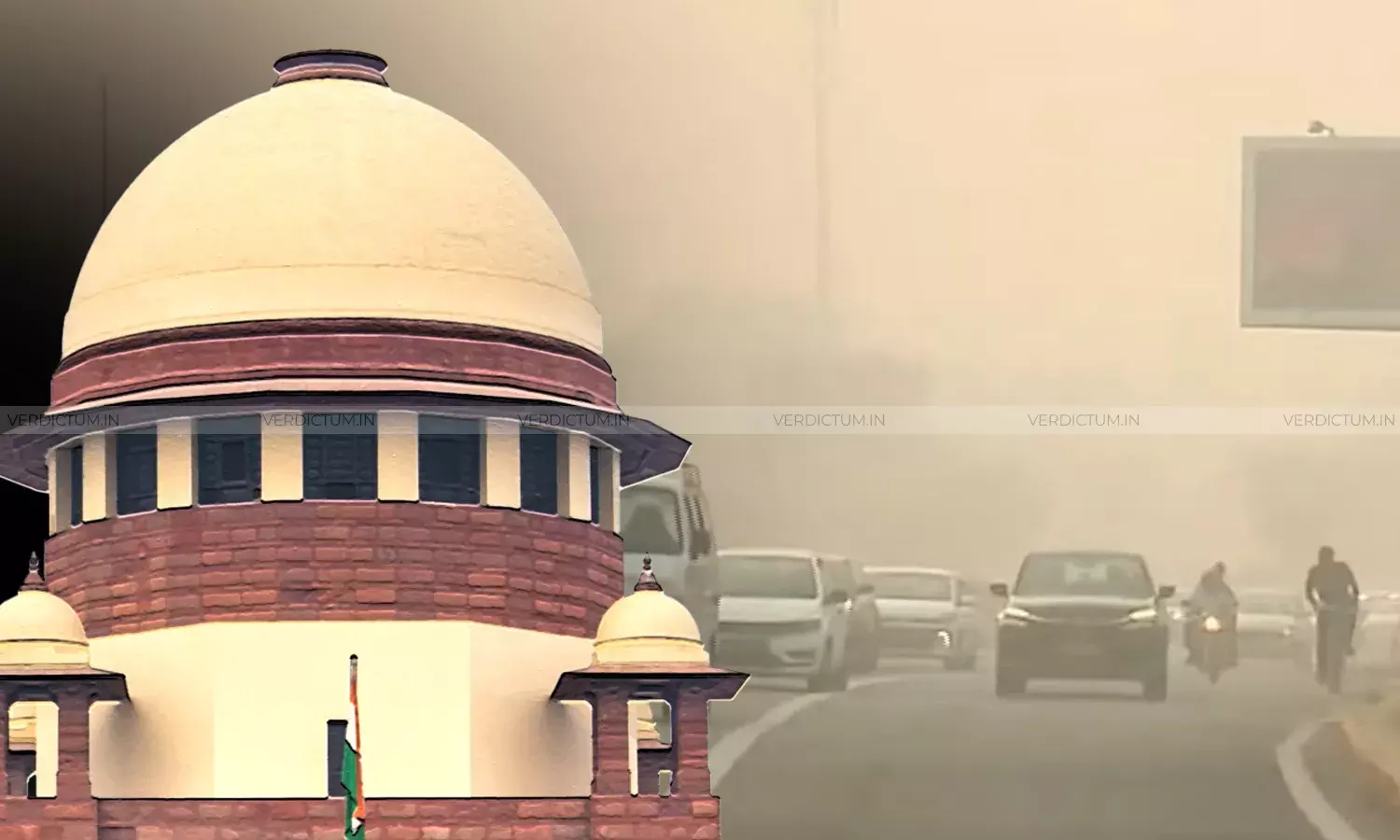
NEW DELHI, November 10, 2026 — The Supreme Court has asked Delhi and three neighbouring states to set out how they will tackle Delhi-NCR vehicular pollution, detailing controls on vehicles entering and moving through the region, enforcement of emission standards and checks on Pollution Under Control certificates. In an order dated November 6 and uploaded to the court’s website on November 8, a bench led by Chief Justice Surya Kant gave the states two weeks to place submissions on record and directed the Delhi government, the Municipal Corporation of Delhi, Delhi Police’s traffic department, Haryana, Rajasthan and Uttar Pradesh to file detailed responses on vehicle regulation before the next hearing on November 23.
The intervention follows data placed before the judges showing a substantial decline in stubble-burning incidents across Delhi and neighbouring states between October 21 and November 3, alongside what the bench described as a sharp increase in concerns linked to vehicular emissions. The order does not impose a new blanket vehicle ban or amend the rules governing pollution certificates. It asks authorities to show what they are enforcing, how consistently they are doing it and what further measures they propose.
The directions were issued in the Supreme Court’s continuing suo motu proceedings on air quality in the National Capital Region. The larger case was reorganised in March into separate proceedings dealing with different sources of pollution and aspects of environmental governance. The November 6 order was passed in the lead matter, Suo Motu Writ Petition (Civil) No. 11 of 2026, after the court heard submissions from the Union government, the Commission for Air Quality Management and lawyers assisting the bench as amici curiae.
The amici placed before the judges a graphic showing compliance with the Graded Response Action Plan between October 21 and November 3. The data indicated that stubble-burning incidents had fallen substantially across Delhi, Haryana, Uttar Pradesh and Rajasthan. The same presentation, however, pointed to a rise in problems linked to vehicles. The bench recorded both findings and said the increase in vehicular-emission concerns required urgent attention.
The order does not say that stubble burning has stopped contributing to pollution, or that vehicles are the only source of the capital’s deteriorating air. It records a change in the pattern shown by the material presented to the court. The judges were concerned that a reduction in one seasonal source could be offset if other sources, particularly road transport, were not controlled with equal seriousness.
Delhi’s traffic cannot be managed as if the city were an isolated administrative unit. The court noted that the capital and the wider NCR are economically and geographically connected. Commercial and private vehicles enter Delhi from neighbouring states throughout the day, while vehicles registered in Delhi travel across state borders. A restriction enforced at one checkpoint can be weakened if the same vehicle can move through another route or operate in a neighbouring district without comparable checks.
The bench specifically referred to vehicles originating in Uttar Pradesh, Haryana and Rajasthan. That places responsibility on several governments and enforcement agencies rather than treating the problem as one that Delhi can solve alone. It also reflects a basic feature of air pollution: emissions move across administrative boundaries, while the rules used to regulate vehicles are implemented by different departments and states.
The court has asked authorities to describe the regulatory framework governing the entry and movement of commercial and non-commercial vehicles in Delhi and the NCR, with particular attention to vehicles coming from neighbouring states. Their responses must explain how the rules are enforced in practice, not simply list the laws or notifications already on the books.
A central part of the exercise concerns vehicles that do not meet prescribed emission standards. The bench wants details of the systems used to identify and monitor such vehicles, including enforcement of Pollution Under Control certification requirements. A valid certificate is intended to show that a vehicle meets applicable emission limits at the time of testing. The court’s questions make clear that the existence of a certification system is not enough: authorities must explain how vehicles are tested, how non-compliance is detected and what happens when a vehicle fails.
The judges also asked for information about action against over-age, end-of-life and otherwise non-compliant vehicles. Authorities must state how many vehicles were inspected, how many were challaned, how many were denied entry and what other proceedings were initiated during the relevant period. Those figures will help the court assess whether enforcement is occurring at a meaningful scale or depends mainly on occasional drives and temporary checkpoints.
The order also seeks an account of coordination between Delhi and the neighbouring states. That is important for vehicles that cross borders for work, freight, public transport and private travel. If one state checks a vehicle but another does not recognise the result, or if enforcement records cannot be shared across agencies, the system can leave gaps. The court has asked the authorities to explain the arrangements already in place and the changes they propose.
Finally, the bench wants a time-bound roadmap for strengthening enforcement. Authorities have been asked to set out immediate and longer-term measures. The order therefore goes beyond a request for statistics: it seeks a plan that identifies what needs to change, which agency will be responsible and when the changes are expected to be implemented.
The November 6 order gave all states two weeks to place broader submissions on record. Those filings must cover steps already taken, responses to recommendations made by the Commission for Air Quality Management and the amici, and any additional action the states propose. The more specific vehicle-related directions name the Delhi government, MCD, Delhi Police’s traffic department and the governments of Haryana, Rajasthan and Uttar Pradesh.
The order arrives during the post-Diwali period, when Delhi’s air quality has again deteriorated. The citywide AQI was reported at 370 at 9 am on November 9, within the very poor category, while several monitoring stations recorded readings above 400 in the severe band. The Commission for Air Quality Management had also invoked Stage III of the Graded Response Action Plan across the NCR on November 6. These measures are intended to reduce exposure during a pollution episode, but they do not replace the year-round enforcement that the Supreme Court is now seeking.
The Commission for Air Quality Management has identified vehicular emissions as the single-largest source of pollution in the NCR, estimating their contribution at about 23 per cent in winter and 19 per cent in summer. These are source-apportionment estimates, not direct measurements of the share produced by every vehicle on a particular day; the contribution varies with season, weather and the modelling method. The figures nevertheless show why road transport remains central to the region’s air-quality problem.
Vehicle emissions are also linked to congestion. Cars, buses and goods vehicles moving slowly or idling in queues can release pollutants for longer periods, while traffic bottlenecks increase the time people spend close to exhaust. The effect is especially difficult to manage at busy entry points, toll plazas, freight corridors and roads connecting Delhi with Gurugram, Noida, Ghaziabad and Faridabad. Better traffic flow can reduce some emissions, but it cannot compensate for vehicles that fail to meet standards or for gaps in inspection and enforcement.
Also read: Delhi Metro Adds 20 Weekday Trips as GRAP-II Curbs Take Effect
Delhi-NCR has used several overlapping policy tools: vehicle-age restrictions, emission standards, PUC certification, restrictions under GRAP, public-transport expansion and action against visibly polluting vehicles. Each addresses a different part of the problem. Age-based rules can remove older vehicles from circulation, while emission testing is intended to identify vehicles whose output is above the prescribed limit. Public transport can reduce private-vehicle use if services are frequent, reliable and accessible.
But a rule is effective only when the public can understand it and enforcement agencies can apply it consistently. Drivers need clear information about which vehicles may enter particular areas, what documents they must carry and how a failed test can be corrected. Authorities need reliable inspection equipment, trained personnel, connected databases and a way to prevent vehicles barred in one district from simply shifting their operations to another part of the NCR.
The court’s request for numbers on inspections, challans and denied entry is therefore significant. Without comparable data, it is difficult to judge whether enforcement has improved, whether the same vehicles are repeatedly violating rules or whether checks are concentrated at a small number of locations. A time-bound plan can also make it easier to identify which department is responsible when a measure is not implemented.
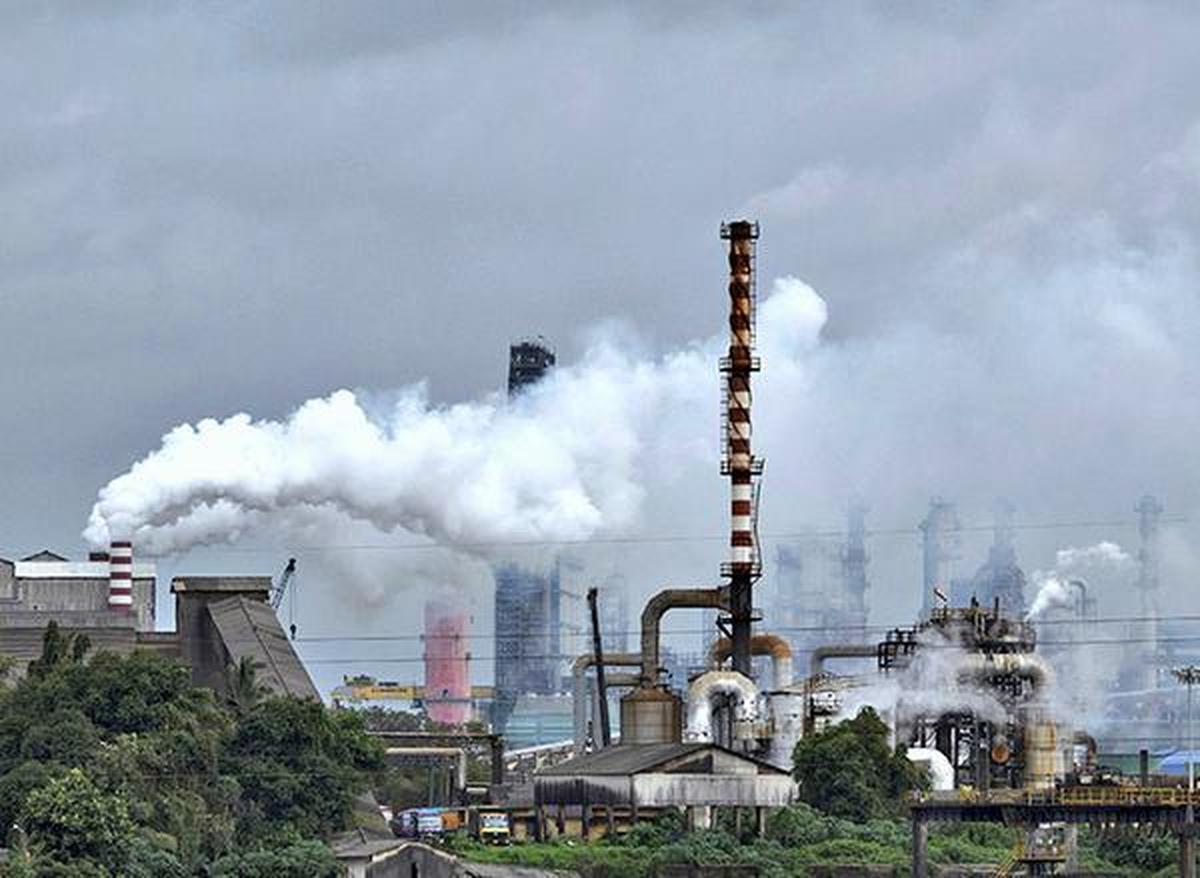
There are limits to what vehicle controls can achieve on their own. Road dust, construction activity, industrial emissions, waste burning, power generation and seasonal agricultural fires also affect the region. The Supreme Court’s wider proceedings are addressing these sources in separate tracks. The vehicle order should be read as one part of a broader effort to make the NCR’s pollution response more accountable, not as a finding that traffic alone explains the capital’s air quality.
Also read: Delhi Air Pollution: City Tops IQAir Ranking Ahead of Diwali
The vehicle-emissions matter is listed for November 23. Before then, the Delhi government, MCD, Delhi Police’s traffic department and the three neighbouring state governments are expected to place their detailed responses before the court. The filings should give the bench a clearer picture of the rules in force, the scale of enforcement and the practical difficulties that arise when vehicles move across state boundaries.
The larger pollution case will continue through separate hearings on other sources. The court has listed the proceedings concerning solid waste, crop-residue burning and firecrackers for November 25; construction, power plants and industries for November 26; and conservation and enhancement of green cover for November 30. The sequence allows the bench to examine distinct sources while keeping them within a wider framework of air-quality governance.
The November 23 hearing will not, by itself, settle the region’s pollution problem. The immediate test is whether authorities provide specific, comparable information and a practical implementation schedule. The longer test will be whether those commitments lead to fewer high-emitting vehicles on the roads, more consistent PUC enforcement and better coordination at the NCR’s borders.
For residents, the order is a reminder that emergency restrictions during a severe pollution episode are only one layer of protection. Cleaner air depends on routine decisions about transport, vehicle maintenance, freight movement, road design and enforcement. The Supreme Court has asked the agencies responsible for those decisions to show what they are doing and how they intend to improve it. Whether the next filings produce a measurable change will become clearer when the case returns to court later this month.

Comments (0)
Be the first to comment. Comments are published after moderation.