


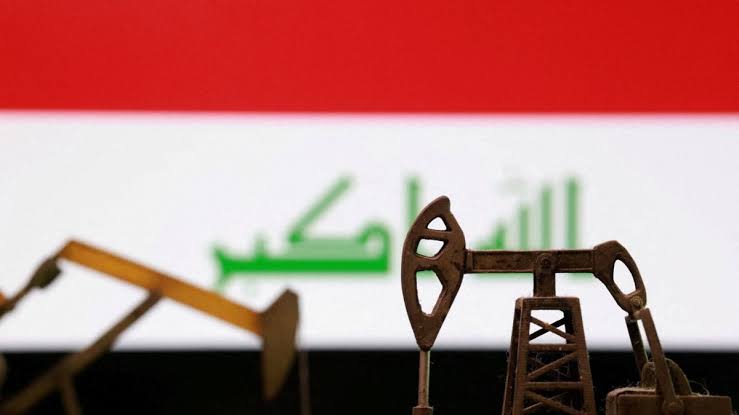
BAGHDAD, November 9, 2026 — Iraq oil exports could move through a designated shipping lane near Oman in the Strait of Hormuz under an understanding with the United States, the country’s foreign minister says, even as Washington presses Baghdad to close all but two of its border crossings with Iran. The two developments expose the difficult position of a country trying to protect its main source of income while avoiding a deeper confrontation with either neighbour or its most powerful international partner.
Foreign Minister Fuad Hussein described the proposed maritime arrangement and the American demand in separate parts of an interview with Al Jazeera. Reuters reported both accounts on Sunday. Hussein said the US Treasury had asked Iraq to shut all crossings with Iran except two, one of which would remain in the Kurdistan Region. He also said Baghdad and Washington had reached an understanding over a route for Iraqi oil shipments through Hormuz, using a lane closer to Oman’s coast.
The minister’s account is important, but it does not amount to a published bilateral agreement or a confirmed return to normal shipping. No detailed text, operating schedule or security protocol for the route was made public in the reporting reviewed. The understanding should therefore be treated as a diplomatic arrangement described by Baghdad, not proof that every Iraqi cargo can now move without restriction.
Hussein said Iraq had lost about $60 billion because of the war involving Iran and the disruption to oil exports. He also cited a recovery in shipments during October: exports rose to roughly 3.5 million barrels per day, compared with about 2.65 million barrels per day in September, according to Iraqi energy officials. Those figures indicate a partial rebound, but they do not remove the country’s exposure to a waterway whose security remains contested.
Also read: Iran Says Hormuz Could Reopen Within Two Days Under Qatar-Mediated Proposal
Also read: Qatar’s Hormuz Proposal Links Shipping Reopening to Iran Nuclear Inspections
The American request would be far-reaching if implemented in full. Iraq has a long land boundary with Iran and a network of formal crossings, smaller commercial routes and informal passage points used by traders and residents. Hussein told Al Jazeera that closing all but two would be difficult and would affect the Iraqi economy. He said Washington was still demanding the closures and that discussions were continuing.
One of the two crossings that would remain open is in the Kurdistan Region, Reuters reported. The minister did not identify the other crossing in the account published by the news agency, and the Iraqi government had not released a public list of facilities that would close. It would be premature to assume that a final decision has been taken or that a timetable has been agreed.
The border is not only a security line. It is also a commercial and social corridor for communities on both sides. Traders move food, building materials, consumer goods and industrial inputs through the crossings. Families, workers and transport operators rely on access that can be disrupted when governments tighten controls. A broad closure would therefore create costs beyond the direct loss of customs revenue, particularly for businesses that cannot quickly replace suppliers or routes.
Iraq has already taken narrower action. Hussein said the busy Sheeb crossing was closed last month for a security review and the installation of detection equipment intended to prevent smuggling. That step shows Baghdad can tighten controls at a specific point without shutting the wider border network. A much broader restriction would be a different political and economic decision, and would require the government to explain how trade, local travel and security screening would be handled.
The US request also places Baghdad in a sensitive diplomatic position. Iran is a neighbour with which Iraq has deep economic, religious and political ties. Washington, meanwhile, remains a major security and financial partner and has used sanctions to restrict Iranian access to international markets. Iraq has repeatedly tried to avoid becoming a staging ground for attacks or a route through which sanctions can be evaded. The latest request would test how far it can align with American pressure without provoking economic disruption or retaliation.
Hussein’s comments do not establish that the United States has threatened Iraq with a specific penalty if the crossings remain open. Nor do they show that Tehran has accepted any new restriction. The public information points to an ongoing negotiation, with Baghdad weighing the practical consequences rather than announcing a completed closure plan.
The separate understanding over oil exports is equally consequential. Iraq is heavily dependent on crude sales to finance public spending, salaries, subsidies and investment. When exports are interrupted, the effect can travel quickly from the oil sector into government finances and the wider economy. A prolonged loss of shipments can leave the state with less room to pay contractors, support public services or fund reconstruction.
The Strait of Hormuz is the narrow maritime gateway between the Persian Gulf and the Gulf of Oman. It carries large volumes of oil and liquefied natural gas from Gulf producers to buyers in Asia and elsewhere. Iraq’s southern export terminals depend on access to the Gulf, so insecurity around the strait can affect both the volume of crude that reaches tankers and the cost of moving it. Even when a vessel is technically able to transit, insurers, shipowners and buyers need confidence that the route is safe and that cargoes will not be delayed or intercepted.
Hussein’s reference to a lane near Oman suggests an effort to establish a workable passage for Iraqi shipments within a dangerous maritime environment. It does not, by itself, explain how the lane would be monitored, whether it would apply to all vessels or only to specified cargoes, or which authorities would provide security. Those details matter to commercial operators. A political understanding can reduce uncertainty, but the shipping industry will look for clear instructions from maritime authorities and evidence that vessels can make the passage without unacceptable risk.
Reuters reported that the foreign minister put Iraq’s losses from the war and export disruption at about $60 billion. That is a figure attributed to Hussein, not an independently audited calculation published with a breakdown of lost production, delayed shipments, price effects or damage to infrastructure. The scale of the claim nevertheless illustrates the pressure on Baghdad to find a route that can sustain revenue while the conflict continues.
The October export recovery, from about 2.65 million barrels per day in September to roughly 3.5 million in October, offers a sign that some shipments have resumed or increased. But monthly averages do not show how cargoes were distributed across ports, routes or buyers, and they cannot guarantee that the same level will continue. Iraq’s ability to maintain exports will depend on the security of Hormuz, the availability of tankers, the terms of any transit arrangement and the decisions of buyers and insurers.
Baghdad has examined alternatives to its southern export route, including pipeline connections and possible access to ports beyond the Gulf. Those options can provide resilience, but they require infrastructure, commercial agreements and time. They are not immediate substitutes for the scale of seaborne exports that Iraq normally needs. The Al Jazeera reporting on Iraq’s export alternatives has previously highlighted the limits of routes that cannot carry the same volumes as the southern terminals.
For Asian importers, including India, the issue extends beyond Iraq’s own budget. A disruption to one supplier can tighten the market if it coincides with reduced flows elsewhere in the Gulf. Buyers may seek replacement cargoes, but that can increase competition for available oil and raise freight and insurance costs. The final effect on domestic fuel prices depends on global benchmarks, exchange rates, taxes, refinery margins and government policy; it cannot be inferred from the Iraqi minister’s comments alone.
The immediate questions are practical. Iraq needs to establish which border crossings, if any, will be restricted, how long the controls would last and what exemptions would apply to essential trade. It also needs to explain how customs checks and anti-smuggling measures will work at the crossings that remain open. Without those details, traders and local communities cannot assess the likely disruption.
On oil, the government and its state marketing authorities will need to clarify the terms of the shipping arrangement, including the vessels covered, the designated route, the role of maritime-security agencies and the process for handling an incident. A statement from the Iraqi Oil Ministry or the State Oil Marketing Organization would help establish whether the understanding has moved from diplomatic discussion to an operational plan. Buyers and shipping companies will also want to know whether the arrangement has been communicated to insurers and port operators.
The wider diplomatic test is whether Iraq can satisfy American concerns about sanctions and security without severing commercial ties that matter to its own economy. A sweeping border closure could create new pressure inside Iraq at a time when the government is already coping with lost export revenue. At the same time, leaving all routes untouched could expose Baghdad to further demands from Washington and scrutiny over whether goods or sanctioned materials are moving across the frontier.
Hussein’s remarks show that Iraq is trying to manage those pressures through negotiation rather than announcing a decisive break with either side. The oil-export understanding, if implemented, would provide a measure of relief. The border demand, if enforced broadly, could create a new economic strain. Both remain subject to decisions that have not yet been fully explained in public.
For now, the safest reading is that Baghdad says it has secured an understanding on a route for Iraqi oil exports through Hormuz while continuing talks with Washington over restrictions on crossings with Iran. The next meaningful evidence will be official operating guidance, actual tanker movements and a clear decision on the border. Until then, neither the shipping arrangement nor the proposed closures should be treated as fully implemented.






Comments (0)
Be the first to comment. Comments are published after moderation.