


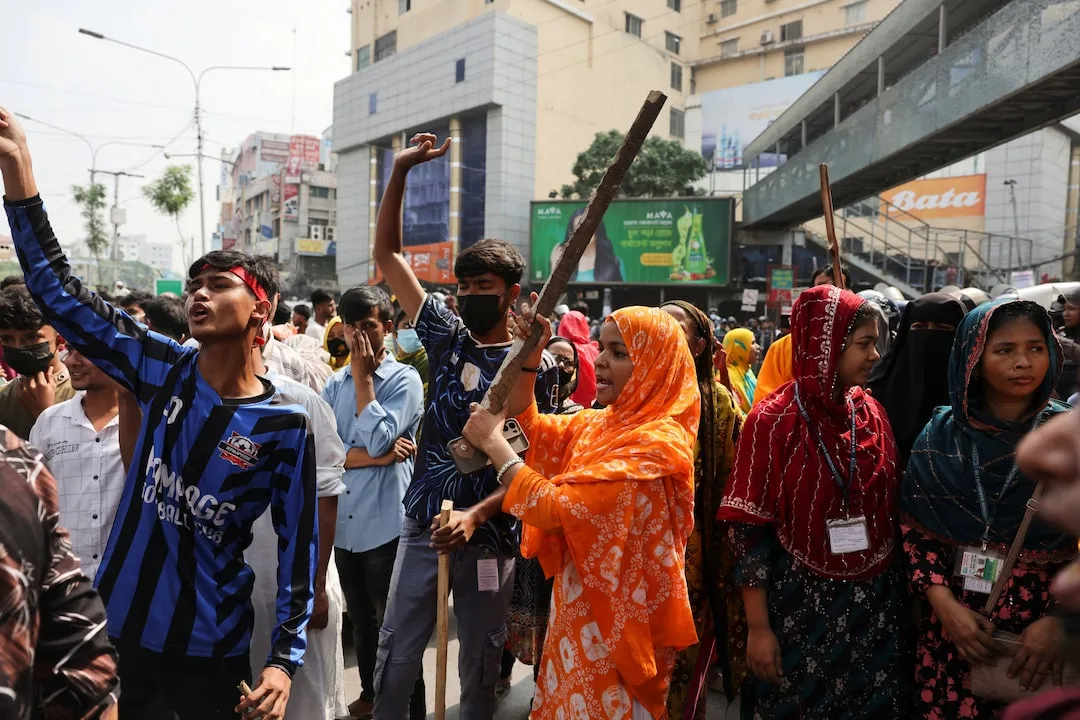
DHAKA, November 2, 2026 — Many garment factories in Bangladesh reopened on Monday after wage protests disrupted production across major industrial zones a day earlier, but the return to work has not resolved the dispute over pay. Workers are seeking a minimum monthly wage of 30,000 taka, more than double the current 12,500-taka floor, while manufacturers and the government face pressure to prevent renewed shutdowns in a sector central to the country’s export economy.
The latest update is a partial return to operations rather than a settled labour dispute. Reuters reported that factories resumed work on Monday after widespread closures and production interruptions on Sunday, while manufacturers remained concerned about further unrest. The Daily Star reported that ten platoons of Border Guard Bangladesh personnel had been deployed in Gazipur, accompanied by 21 executive magistrates, as authorities sought to contain the situation around a major manufacturing hub.
The protests intensified on Sunday in Dhaka, Gazipur and surrounding industrial areas, with road blockades, clashes and reports of arson disrupting movement and factory operations. The Bangladesh Garment Manufacturers and Exporters Association said the unrest affected 529 factories and left nearly one million workers away from their workplaces. Those figures describe the scale of the disruption on Sunday; they should not be read as a count of factories still closed on Monday, when operations began to resume.
The central demand is a new minimum monthly wage of 30,000 taka, compared with the existing minimum of 12,500 taka. Workers say rising food, housing, transport and healthcare costs have eroded the value of their earnings. The demand is roughly 2.4 times the current floor, but it is a negotiating position, not an approved pay rate. The final minimum wage will depend on the process now being undertaken by the government-appointed wage board.
Labour and Employment Minister Ariful Haque Chowdhury announced on Sunday that a six-member minimum wage board had been formed under the country’s labour law. The minister said the board’s work would begin promptly and that it would discuss and decide the sector’s minimum wage. The formation of the board meets one of the workers’ immediate procedural demands, but it does not determine the amount of any increase or the date on which a revised wage would take effect.
Workers have also raised grievances beyond the headline wage figure, including alleged blacklisting, dismissal and outstanding wages or benefits. Those issues matter because a wage settlement alone may not end the dispute if workers believe they can lose employment for taking part in demonstrations or cannot obtain payment already owed. Employers and worker representatives will need to address the different claims through the board and any relevant labour-law processes rather than treating the wage figure as the only issue.
The government has signalled that it wants factories to remain open while the wage review proceeds. The Daily Star reported that Prime Minister Tarique Rahman directed authorities to protect lives and property and keep production running, while Home Minister Salahuddin Ahmed said law-enforcement agencies had been instructed to act against violence, vandalism and attempts to create unrest. The deployment of additional security personnel in Gazipur shows that officials remain concerned about the possibility of renewed road blockades or clashes even after Monday’s reopening.
For factory owners, the immediate priority is keeping production lines operating and meeting delivery schedules. A closure can affect not only the factory where a protest takes place but also transporters, packaging suppliers, washing and finishing units, subcontractors and port-bound shipments. If orders are delayed, manufacturers may face penalties or payment delays from buyers. Those risks help explain why industry representatives have pressed for stability, though they do not by themselves settle whether current wages adequately cover workers’ living costs.
Bangladesh’s ready-made garment industry has an unusually large role in the national economy. It employs about four million people and generates more than 80% of export earnings, according to Reuters. The sector contributes roughly a tenth of gross domestic product. Its products supply international clothing brands and retailers, making labour unrest a domestic wage issue as well as a concern for buyers that rely on production schedules and predictable shipment windows.
The industry’s dependence on overseas orders also limits the room manufacturers say they have to absorb a large cost increase quickly. Owners have cited rising production expenses, energy-market uncertainty and competitive pressure from other manufacturing countries. Workers counter that the current wage floor has not kept pace with the cost of basic necessities. Both arguments will be part of the wage-board debate, but a company’s cost constraints do not automatically demonstrate that a worker’s household can meet essential expenses on the existing minimum.
The size and timing of any increase will shape how the sector adjusts. A substantial rise could improve workers’ purchasing power and reduce the gap between wages and living costs, but manufacturers may seek time to implement it or argue that buyers should share some of the additional cost through higher prices. A phased change, productivity improvements and clearer enforcement of wage and employment rules are among the approaches that could be discussed; none should be treated as an agreed outcome until the board issues its recommendation and the government completes the required process.
International buyers also have a stake in how the dispute is resolved. Delayed orders can create shortages in retail supply chains, while sustained unrest can lead brands to review delivery schedules or sourcing risks. At the same time, pressure to keep orders moving without addressing pay concerns can leave the underlying conflict unresolved. A durable settlement would need to make the wage decision credible to workers, workable for manufacturers and transparent enough that future disputes do not repeatedly interrupt production.
The reopening on Monday is therefore a useful but limited sign of de-escalation. It indicates that production has resumed in many places, not that every factory is operating normally or that protests have ended. Security deployments, local reporting and the wage board’s first decisions will help show whether the dispute is moving towards negotiation or another round of shutdowns. The latest factory status may vary by industrial area, so broad claims that all units are operating should be treated cautiously.
The next substantive milestone is the wage board’s work: who represents workers and employers, how it assesses living costs and production conditions, and when it expects to make a recommendation. Until that process produces a decision, the 30,000-taka demand remains a demand and the current 12,500-taka minimum remains the existing wage floor. For workers, the outcome will affect household budgets; for employers, it will shape labour costs; and for Bangladesh’s export economy, it will test whether industrial stability can be maintained alongside a credible response to wage concerns.
SOURCE: Bangladesh Garment Manufacturers and Exporters Association; Reuters

Comments (0)
Be the first to comment. Comments are published after moderation.