


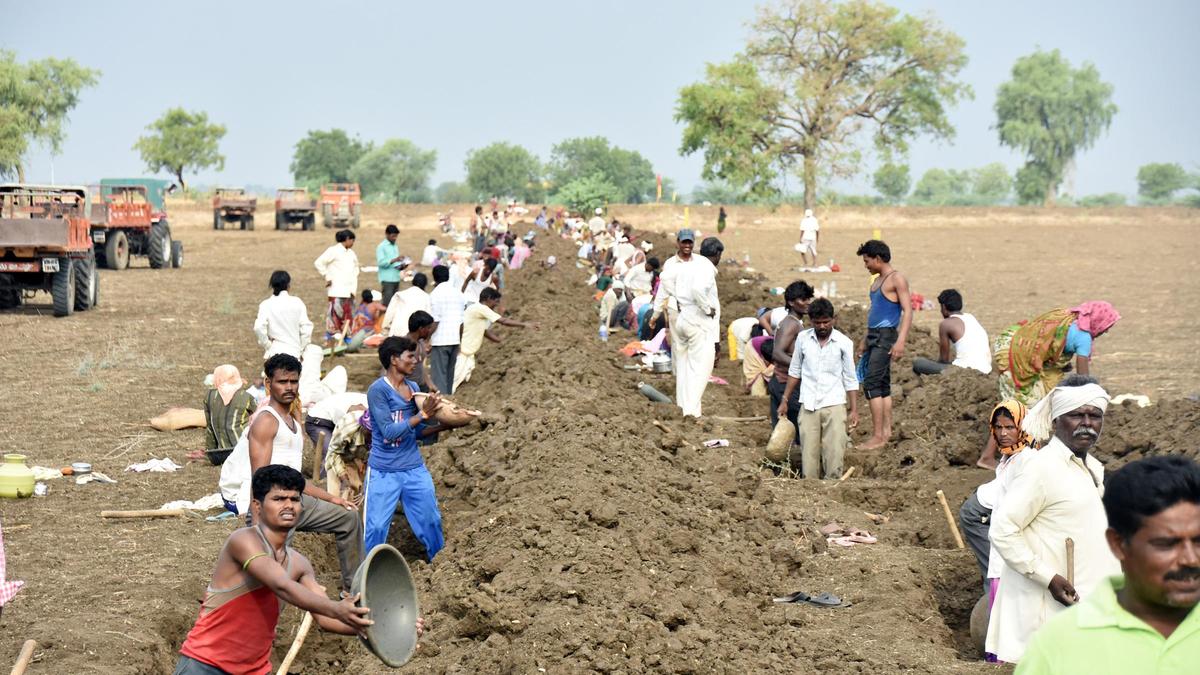
The Ministry of Rural Development has notified the VB-G RAM G Grievance Redressal Rules, 2026, establishing a multi-tier process for complaints about implementation of the Viksit Bharat – Guarantee for Rozgar and Ajeevika Mission (Gramin). The Ministry’s Press Information Bureau release, issued at 11:16 am IST on November 2, says enquiries must be completed within seven working days and grievances resolved within 15 days of receipt.
The rules require state governments to establish grievance mechanisms at Gram Panchayat, block and district levels. Designated grievance redressal officers will receive, register, examine and dispose of complaints. The District Programme Coordinator will oversee the process at district level and ensure that unresolved cases move through the prescribed mechanism.
The Ministry says any person may submit a grievance about a matter arising out of or connected with implementation of the scheme. The listed channels include submitting a complaint in person to the designated officer, sending it by speed post with proof of delivery, using the digital public infrastructure designated by the Central Government, or contacting a telephone helpline or another channel decided by the state government.
A complaint received in physical form at the Gram Panchayat, block or district level must be entered into the designated digital system on the day it is received or, if that is not feasible, by the next working day. The complainant must receive an acknowledgement showing the registration number, date of receipt and designation of the authority that received it.
Also read: Gujarat Declares Four Districts Drought-Affected, Announces Relief
The rules state that a complaint cannot be refused registration because of its format, language, manner of submission or a procedural deficiency. This provision is intended to prevent administrative formalities from blocking access to the grievance process.
The designated officer must examine each registered grievance and complete the enquiry within seven working days from the date of receipt. The officer may call for relevant registers, records, documents, reports, electronic data or other information from the authorities concerned. Where necessary, the complainant must be given a reasonable opportunity to be heard in person or electronically.
The rules require the grievance to be resolved within 15 days from the date it was received. The officer must record the findings and any corrective or remedial action, place the information on the designated digital platform and communicate the outcome to the complainant. Where a complaint was made physically, the result must also be communicated in physical form.
Also read: Cabinet Extends Social Assistance Scheme With ₹53,428 Crore
If a grievance remains unresolved within 15 days, it must be escalated to the next higher level under the state’s grievance redressal mechanism. The escalated case will continue to be monitored electronically until it is resolved. The rules also provide for appeals against orders under the mechanism, to be filed and disposed of in accordance with Schedule I to the VB-G RAM G Act, 2025.
The 15-day period is a deadline for resolving a registered grievance; it is not a separate guarantee that every wage, work allocation or benefit will be paid within 15 days. The rules establish a process for examining complaints and recording action. The outcome of an individual case will depend on the facts, records and applicable provisions of the scheme.
The PIB release does not identify the name or launch date of the central digital platform, nor does it list state-specific helpline numbers. Those operational details will need to be confirmed through notifications from the Central and state governments. People making a complaint should retain the acknowledgement number and copies of any documents submitted.
The Ministry says the rules are intended to make the scheme’s grievance process more accessible and accountable. Their practical effect will depend on whether states designate officers, make complaint channels usable in local languages and ensure that unresolved cases are escalated rather than simply marked as pending.
Sources: Ministry of Rural Development, Press Information Bureau, Release ID 2331390

Comments (0)
Be the first to comment. Comments are published after moderation.