


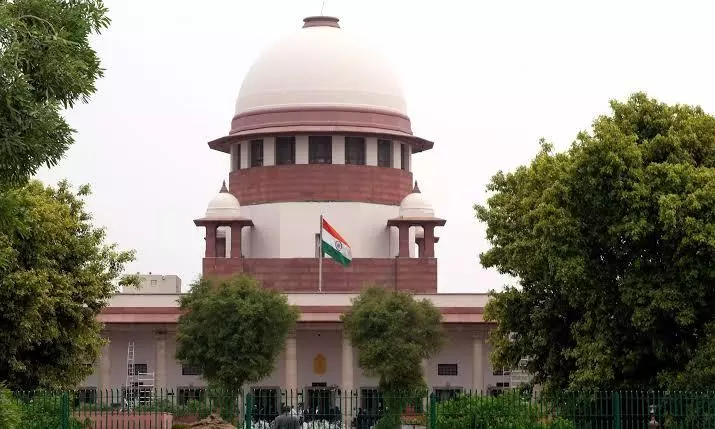
NEW DELHI, November 2, 2026: The Supreme Court oral mentioning restriction on Senior Counsel takes effect on Monday, with the Registry encouraging young and junior advocates to undertake the brief requests that seek urgent attention from a court. The direction was issued through a circular dated October 27 and applies from November 2.
The one-page circular, numbered F. No. 25/Judl./2026, says that no Senior Counsel shall be permitted to make oral mentioning before any Court from the effective date. It adds that young and junior counsel may instead be encouraged to make such mentions. The document was signed by three Registrars (Judicial) and circulated to the Supreme Court Bar Association, the Supreme Court Advocates-on-Record Association and the court’s notice boards.
The wording is important. The circular concerns oral mentioning, a procedural request made to draw a court’s attention to a matter that needs urgent listing or an earlier hearing. It does not say that Senior Counsel are barred from appearing in cases, addressing a bench during a scheduled hearing, or representing clients in the Supreme Court.
Under the October 27 direction, a Senior Counsel will not be permitted to make an oral mention before a Supreme Court bench. The Registry may instead encourage a young or junior advocate to make the request. The circular does not define an age limit for a “young” counsel, specify a minimum or maximum number of years in practice for a “junior” counsel, or prescribe a separate application process for deciding who qualifies.
The document also does not set out a penalty, an exemption list or a new timetable. It is a short administrative direction rather than a detailed rewrite of the Court’s procedures for urgent matters. Those details should not be inferred from the circular or from informal descriptions of the change.
Oral mentioning is distinct from the arguments made after a case has been listed. In practice, lawyers may seek the Court’s permission to take up a matter urgently, request an earlier listing, or bring an exceptionally time-sensitive issue to the attention of the bench. The Court retains control over whether to accept the request and what direction, if any, to issue.
The Supreme Court’s latest circular uses the word “reiterated”. That is significant because the Registry had included a similar restriction in a circular dated November 29, 2025, which took effect on December 1 of that year. The earlier document stated that Senior Counsel would not be permitted to make oral mentions and that young or junior counsel could be encouraged to do so.
The 2025 circular also set out a more detailed process for mentioning different categories of matters, including fresh cases, after-notice matters and regular hearing matters. The October 2026 document does not replace those provisions or announce new deadlines for filing urgency letters. SCC Times, in its report on the latest circular, noted that the October direction focuses on the restriction and encouragement of junior counsel rather than revising the category-wise procedure.
This distinction prevents two different questions from being confused: who may make an oral mention, and how a request for urgent listing must be submitted. The latest circular addresses the first. The earlier procedural framework continues to govern the second, subject to any further directions issued by the Court or Registry.
Also read: CJP Leaders Ask Delhi High Court for Urgent Hearing on Custody Challenge
The November 2025 circular distinguishes between fresh matters, cases in which notice has already been issued, and regular hearing matters. It requires lawyers to use a Mentioning Proforma and, where urgency is claimed, a letter explaining why the matter cannot wait for its scheduled listing. The documents are routed through the Mentioning Officer and the Registry rather than treated as an automatic entitlement to a hearing.
For fresh matters seeking urgent interim relief or an earlier date, the earlier circular generally required the case to have been registered and verified and defects to have been cured before a request was entertained. The proforma and urgency letter were to be submitted by 3 p.m. on the preceding working day from Monday to Friday, or by 11.30 a.m. on Saturday.
It also specified an earlier deadline for exceptionally urgent categories, including anticipatory bail, death penalty, habeas corpus, eviction or dispossession and demolition matters that could not wait for the scheduled date. For these cases, the documents had to reach the Mentioning Officer before 10.30 a.m., with an explanation of why the matter could not await its ordinary listing.
After-notice matters have a separate process. The proforma and urgency letter are submitted by 3 p.m. on the day before the proposed mention. The Mentioning Officer checks the matter and prepares a list for the Registrar (Judicial Listing), who seeks instructions from the Chief Justice of India. The earlier circular also says a case should not be mentioned if it does not appear in the list published on the preceding day.
For regular hearing matters, a request merely to secure a place on the list is not permitted. An application seeking urgent relief or an earlier hearing may still be placed through the prescribed process. These timelines and categories come from the 2025 procedural circular; the October 2026 direction does not state that they have changed.
The latest direction should not be described as a ban on Senior Counsel in the Supreme Court. A Senior Counsel may continue to appear and argue in a matter that is listed, subject to the Court’s normal rules and directions. The new restriction is limited to making oral mentions. It is also a Supreme Court Registry direction; it should not be reported as a rule automatically governing every High Court, tribunal or subordinate court in India.
Nor does the document state that every urgent request must be made by a junior advocate or that a junior advocate’s request will automatically be accepted. Its wording says junior counsel may be encouraged to make oral mentions. The authority to decide whether a matter is taken up remains with the Court, operating through its established listing and mentioning arrangements.
The circular gives no detailed explanation for the decision. It does not set out a finding that Senior Counsel have misused the process, nor does it state a policy objective beyond the encouragement of young and junior counsel. Any explanation framed as the Registry’s formal rationale would therefore go beyond what the document records.
For advocates-on-record and other lawyers preparing urgent matters, the immediate task is to follow the existing filing and mentioning procedure while ensuring that the person making the oral request is not a Senior Counsel. The Registry’s published lists and notices remain important because a request cannot be treated as accepted until the Court or the authorised process gives the relevant direction.
For litigants, the change does not alter the substantive merits of a case, the relief available under law or the normal hearing rights of parties. It concerns how a request for urgent attention is presented to the bench. A person with an urgent case should continue to take procedural advice from the advocate-on-record and follow the Supreme Court Registry’s current requirements rather than assuming that the circular itself changes the date or outcome of a matter.
The Supreme Court’s official website listed matters for oral mentioning before its courts on November 2, the date on which the new circular takes effect. That daily list is a listing notice; it does not, on its own, demonstrate how the restriction was implemented in individual cases. Further Registry notices or directions may clarify administrative practice, but the October circular itself remains brief.
The immediate effect is therefore procedural and limited: Senior Counsel are not to make oral mentions before Supreme Court benches from November 2, while young and junior counsel may be encouraged to do so. The framework for urgency requests remains the one set out in the earlier circular unless the Court issues a further instruction.






Comments (0)
Be the first to comment. Comments are published after moderation.