


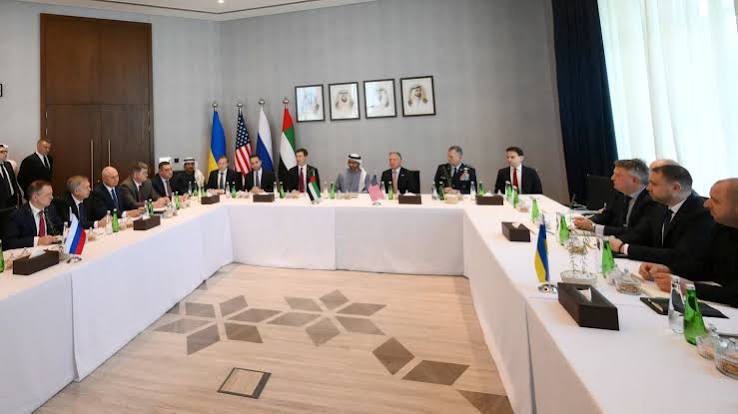
ABU DHABI, November 10, 2026 — The Russia-Ukraine Abu Dhabi talks ended their first day after a four-hour session, reopening a US-mediated channel that had not brought the two sides together in this format since February. US Secretary of State Marco Rubio called the meeting productive, while Ukrainian President Volodymyr Zelenskyy described it as constructive. Neither side announced a ceasefire, a territorial compromise or a settlement. Negotiators were due to resume on Wednesday.
The meeting brought together officials from Moscow and Kyiv with US envoys Jared Kushner and Steve Witkoff. It was the first three-way round since the earlier US-mediated discussions in February, and it took place as Russian attacks on Ukraine’s energy network continued and winter preparations became more urgent. The session was held in Abu Dhabi, with separate contacts involving European representatives taking place alongside the main trilateral format.
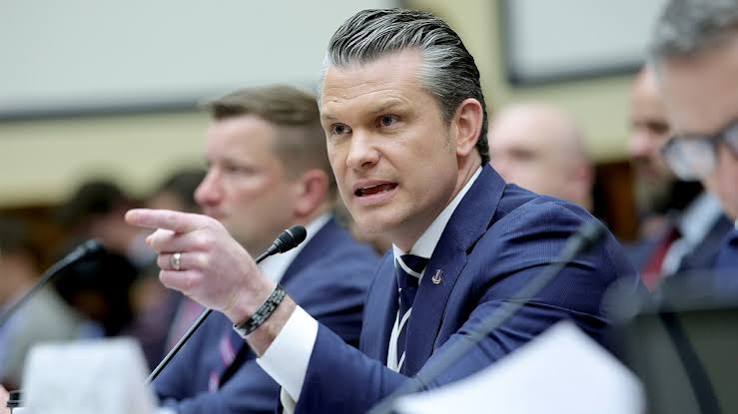
Neither Rubio nor Zelenskyy sat in the negotiating room. Rubio spoke about the talks after meeting other foreign ministers in Paris, while Zelenskyy gave his assessment after receiving a briefing from Ukraine’s team. That distinction matters because the public comments were political readouts, not a joint statement agreed by the negotiators. No shared document describing the proposals, areas of agreement or points of disagreement had been released by the end of the first day.
In a statement issued by the Ukrainian presidency on Tuesday, Zelenskyy said the trilateral negotiations had begun and that he expected a detailed account from his delegation. He said the agenda included steps towards de-escalation and security guarantees. In later remarks, he said the discussion had covered humanitarian questions, including the release of prisoners of war and the return of Ukrainian civilians and children held in captivity. Kyiv has made those issues a priority in previous diplomatic contacts.
A senior Ukrainian official told The Associated Press that the delegations had discussed the possibility of a large-scale prisoner exchange, but that details would be worked through in the coming days. That is not the same as an agreement to exchange a specified number of people. No list, timetable or verification procedure was made public. Until the parties confirm the terms, the discussion should be treated as an item on the negotiating agenda rather than a completed humanitarian deal.
Humanitarian measures can sometimes be separated from the most difficult political questions. Prisoner exchanges, the return of civilians and arrangements for children taken from occupied areas require identification, access, transport and monitoring, but they do not necessarily settle the future status of territory or the wider security order. Even limited agreements can require sustained coordination between military authorities, intelligence services, humanitarian organisations and the governments responsible for implementing them. The first day’s discussion showed that these issues are being considered, not that they have been resolved.
Security guarantees remain one of the central tests for any eventual settlement. Ukraine wants arrangements that would make another Russian attack harder and ensure that outside support does not disappear once a ceasefire is signed. Such guarantees could involve continued military assistance, air-defence supplies, intelligence cooperation, training, long-term financing or commitments by partner governments to respond if fighting resumes. The strength of any arrangement would depend on who makes the promise, what action it requires and whether it has the political and legal backing to endure.
For Kyiv, the concern is not only how to stop the present fighting but how to prevent a pause from becoming an opportunity for Russia to rebuild its forces and attack again. Ukrainian officials have repeatedly argued that a settlement without credible safeguards would leave the country exposed. Zelenskyy has also said that a future leaders-level meeting would be needed to take the process beyond technical discussions. The first session in Abu Dhabi did not produce a public commitment on when such a meeting might happen.
Also read: France Confirms European Participation in Ukraine Talks in Abu Dhabi
Moscow’s position is different. Russian Foreign Minister Sergei Lavrov said a broader European security framework should be defined before the parties move to resolve the Russia-Ukraine conflict itself. He has argued that the future security architecture of Europe must be considered first. European leaders have resisted that sequence. The European Commission’s Ursula von der Leyen has said wider security talks should follow a ceasefire, while Ukraine wants its own security and sovereignty addressed directly rather than folded into a general bargain between larger powers.
The territorial dispute remains a major obstacle. Russian forces control about a fifth of Ukraine, according to Reuters, and Moscow has continued to demand terms that Kyiv regards as unacceptable. Russia has pressed Ukraine to accept a neutral status and abandon its ambition to join NATO. The Kremlin’s wider demands include recognition of territorial changes made during the war. Ukraine has rejected surrendering territory as the price of an agreement. Nothing in the public readouts from Tuesday suggested that either side had changed those positions.
Those differences explain why descriptions such as “productive” should be read cautiously. A meeting can be useful if it clarifies what each side will discuss, identifies possible humanitarian steps or establishes a process for further talks. It can also expose the distance between the parties more clearly. Rubio said there was substantial work left and cautioned against expecting the conflict to be settled within a day. The absence of a breakthrough after four hours does not mean the channel has failed, but it does mean the immediate result is limited.
European involvement is another unresolved question. Zelenskyy said European representatives had met separately in Abu Dhabi, consistent with his earlier statement that Ukraine wanted partners from Europe present in parallel discussions. The main trilateral session, however, was conducted by Russia, Ukraine and the United States. European governments have argued that decisions about Ukraine’s future security cannot be made without them because any arrangement would affect NATO planning, sanctions, defence budgets, reconstruction and the security of the continent.
Also read: Russian Strikes Hit Kyiv Energy Facilities Ahead of New US-Brokered Talks
Washington has indicated that it wants to bring more European voices into the process at a later stage. Kushner told participants at the start of the talks that recent contacts had narrowed some differences and that the US side had ideas for moving forward. Those comments reflect the administration’s effort to present the renewed negotiations as a serious attempt to find a route out of the war. They do not show that Moscow or Kyiv has accepted the other side’s conditions, or that European governments have endorsed a common framework.
The talks are taking place against a worsening military and humanitarian backdrop. Ukrainian officials said Russian forces attacked 10 regions overnight and damaged five major electricity substations that transmit power between regions. Reuters reported deaths in the Vinnytsia region, while other reporting described outages in several parts of the country. The scale of damage and the number of people affected can change as local authorities assess the consequences, but the attacks underline how exposed the power system remains.
Damage to the grid has consequences beyond the loss of electricity at home. Substations and transmission links help move power from generating plants to cities, hospitals, water systems, transport networks and factories. If one part of that chain is damaged, supply can be interrupted far from the point of impact. Emergency repairs are also harder when crews must work under the threat of further attacks. Households may face uncertain schedules, while businesses have to plan around outages that affect production, refrigeration, communications and heating.
Winter adds urgency to those risks. Electricity is needed to operate heating equipment, pump water and keep medical services functioning. Hospitals and other critical facilities may rely on backup generators, but those systems require fuel, maintenance and secure supply routes. Families living in damaged buildings or areas with repeated outages face a different set of pressures from communities closer to the front line, yet both are affected by the same infrastructure campaign. A diplomatic process that does not address attacks on civilian infrastructure will struggle to demonstrate immediate benefits to the public.
The conflict also has consequences beyond Ukraine. Continued disruption to energy infrastructure and Black Sea shipping affects grain exports, insurance costs, freight routes and the calculations of companies considering investment in reconstruction. European governments must weigh the cost of supporting Ukraine against their own defence requirements and the risk of a wider confrontation. For countries importing food, fuel or industrial goods from the region, instability can feed into prices and delivery times. A negotiated pause could reduce some risks, but it would not automatically restore damaged infrastructure or normal trade.
The previous rounds of US-mediated discussions earlier in the year did not produce a major breakthrough. The new meeting therefore begins with a record of failed attempts as well as a changed political and economic setting. Russia and Ukraine have continued fighting while Washington has tried to press both sides towards a deal. The war has also reshaped Europe’s security debate, with governments arguing over the level of support Ukraine needs and the guarantees that would be required after a ceasefire.
The next session on Wednesday will be an early test of whether the first day produced enough common ground to continue. The most useful indicators will be an official account from the delegations, any concrete steps on prisoners or civilians, and whether the parties agree to keep discussing security guarantees. A statement that talks will continue would be a procedural gain, not proof that a settlement is close. A humanitarian arrangement would be meaningful, but it would not settle the territorial and security questions at the centre of the war.
For now, the confirmed outcome is that the three delegations met for four hours and are due to return to the table. Kyiv has signalled that it wants practical de-escalation measures and guarantees that can last. Moscow continues to press for a wider European security framework and terms that Ukraine has rejected. Washington is trying to bridge those positions while keeping the process moving. The first day opened a channel; the second will show whether it can produce anything more concrete.




Comments (0)
Be the first to comment. Comments are published after moderation.