


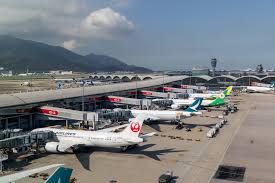
ANTALYA, November 10, 2026 — A CORSIA credit shortfall is emerging as a serious test for the global aviation industry, with eligible carbon units expected to cover no more than a fraction of the demand airlines face when they settle emissions from the scheme’s first compliance period. Reuters reported that only 11 countries were currently positioned to supply credits under the United Nations-backed system, even as airlines may need offsets for up to 200 million metric tonnes of carbon dioxide.
The Carbon Offsetting and Reduction Scheme for International Aviation, known as CORSIA, is designed to make international airlines compensate for growth in emissions above an agreed baseline. Around 130 countries have joined its first phase, which covers 2024–2026 emissions. Airlines under participating states must buy and cancel eligible units by January 31, 2028, or face penalties under national rules. The deadline is close enough for carriers and project developers to be making purchasing decisions now, but the pool of credits that meet the scheme’s rules remains limited.
The issue is not a shortage of carbon credits in the broad voluntary market. It is a shortage of units that satisfy CORSIA’s tighter requirements, including approval by the scheme’s technical process and authorisation by the country where the emissions-reduction project operates. Those conditions are intended to protect the environmental integrity of the programme and prevent the same emissions reduction from being counted towards both a company’s claim and a government’s national climate target.
Reuters’ reporting from the COP31 climate talks in Antalya found that the supply of eligible credits could meet, at most, about a quarter of the demand for the first phase. The agency said that assessment drew on data from the International Civil Aviation Organization and interviews with more than two dozen people familiar with the sector. An ICAO spokesperson said implementation by member states was on track and that the organisation would continue helping governments increase credit availability, while declining to comment on speculative scenarios.
Under CORSIA, a credit is not automatically eligible simply because a project has reduced emissions or because a unit has been issued by a recognised carbon programme. The project must meet the applicable standards, the unit must fall within the rules accepted by ICAO, and the host government must authorise its use for international compliance. That government also has to account for the transfer so the same reduction is not counted twice against its own emissions target.
Those authorisations are a critical bottleneck. A country may have large forestry, clean-cooking or renewable-energy projects but still be unable to supply CORSIA units if it has not completed the rules, accounting systems and approval procedures needed for international transfers. The process requires government agencies to coordinate carbon-market policy with national climate commitments, a task that can be slow where institutions are understaffed or the rules are still being written.
Brazil, which has substantial forest resources and could become an important source of credits, told Reuters it had not yet begun authorising CORSIA projects and was still finalising the rules. Japan, a major buyer of eligible units, said administrative capacity constraints were slowing approvals in some potential supplier countries. The result is a market in which credits may exist on paper but cannot yet be used by airlines to meet their obligations.
The supply picture is also complicated by the way different organisations count units. The International Air Transport Association said in September that airlines could need more than 200 million eligible emissions units by January 2028, and that 200 million to 250 million units might be required. It reported that about 72 million units were covered by 42 CORSIA-compatible letters of authorisation as of August 2026, leaving a gap of roughly 150 million units to be filled over the following 15 months. Reuters’ estimate of supply covering no more than a quarter of demand uses a different assessment of what is available for the first phase; the figures should not be treated as a single reconciled market balance.
The difference between an issued credit and an authorised CORSIA unit is central to the problem. Projects may have generated reductions, and buyers may have signed contracts, but the credits cannot be used for airline compliance until the relevant approvals and corresponding adjustments are in place. The same restrictions that make the scheme more credible than a loosely regulated offset market also narrow the pool of credits that can be purchased in time.
Also read: Global Carbon Budget 2026: Fossil Emissions Edge Down, India Rises
Airlines have not all begun buying at the same pace. United Airlines told Reuters that the availability of eligible offsets was constrained. American Airlines pointed to uncertainty over both supply and price. Singapore Airlines said it had started securing eligible units but did not disclose the volume, while Air France-KLM said it had not yet purchased credits. The different positions show how carriers are weighing the risk of buying early at uncertain prices against the danger of waiting until the remaining supply becomes more expensive.
Prices for eligible credits were around $12 to $13 a tonne at the time of Reuters’ report. Analysts expect them to rise as the deadline approaches and airlines resolve outstanding questions about how many units they need. If buyers wait for clearer rules or for more supply to be authorised, they may end up competing for a smaller pool of credits. If they buy too early, they risk committing capital before the final compliance position and penalty framework are fully settled.
Consultancy Roland Berger estimated that, at prices of $20 to $50 for each credit, compliance could cost airlines between $3.6 billion and $9 billion. That would amount to roughly 5% to 12% of projected industry profits for 2026. The final bill will vary by airline, the amount of emissions growth it must offset, the credits it has already secured and the price at which it buys the remaining units. The estimate is a scenario, not a confirmed industry-wide invoice.
Penalty rules are another source of hesitation. Britain has proposed a charge of £100 for each tonne of carbon that remains non-compliant and is seeking views on the measure. Other governments are still developing their own rules. Until airlines know how penalties will be applied and whether there will be transitional arrangements, some may be reluctant to lock in purchases at a price they cannot yet compare with the cost of non-compliance.
There is a practical risk in waiting. Airlines that need large volumes of units may find that other carriers have already secured the most suitable credits. Carbon markets are not as liquid as oil or foreign-exchange markets, and the number of projects that can meet the full set of CORSIA requirements is limited. A rapid rise in demand could push prices higher or leave some airlines with fewer options near the deadline.
The burden will not be identical across the industry. Carriers with extensive international networks and faster growth in emissions may have larger obligations than airlines whose traffic or route mix has changed less. Airlines can reduce the emissions they generate through fleet renewal, operational efficiency and sustainable aviation fuels, but those measures do not automatically replace the need for eligible units under the scheme’s accounting rules. Fuel availability, aircraft delivery schedules and infrastructure constraints also limit how quickly operational changes can reduce emissions.
Also read: UNEP Says Deep Emissions Cuts Needed to Return to 1.5°C by 2100
The credit shortage has consequences beyond airline balance sheets. CORSIA is intended to direct money from international aviation towards projects that reduce or remove greenhouse-gas emissions, including cleaner cooking, forest protection and other activities in developing countries. For governments seeking climate finance, the scheme could provide a source of funding at a time when adaptation budgets and development aid are under pressure. That benefit depends on credits being authorised, purchased and paid for rather than simply promised.
A project in Zimbabwe illustrates how the approval process can affect communities as well as traders. Cookstove developer Cicada said it had buyers lined up for around one million credits, but the scheme had not accepted its units after ICAO’s technical advisory body raised concerns. The company’s commercial director told Reuters that some prospective buyers were no longer willing to proceed, leaving the developer to consider selling in the voluntary market, where prices are lower. The company said households that were expected to receive cleaner stoves were still waiting.
The case does not establish that CORSIA’s technical checks are unnecessary. Carbon markets have been damaged by projects that overstated reductions, failed to demonstrate additionality or allowed the same benefit to be claimed more than once. A programme that accepts weak credits could allow airlines to meet formal targets without delivering the climate benefit that the scheme is supposed to finance. The challenge is to keep those safeguards while making the approval process predictable enough for legitimate projects to plan investment and deliver benefits.
That balance is particularly important for poorer countries. A government that authorises too many credits for export may have fewer reductions available to help meet its own national climate pledge. A government that delays every authorisation can prevent local projects from attracting buyers and investment. The corresponding-adjustment rules are designed to protect the accounting system, but they also require governments to decide how much of their own climate ambition they are prepared to transfer to international buyers.
The environmental value of CORSIA will ultimately depend on the quality of the units and the emissions the scheme actually covers. It applies to international aviation rather than domestic flights, and the first phase focuses on emissions growth above the programme’s baseline. That makes it a market-based complement to measures such as more efficient aircraft and cleaner fuels, not a substitute for reducing the sector’s underlying fuel use.
Critics have long argued that offsetting can become a way for companies to delay direct emissions cuts if credits are cheap or poorly verified. The strict eligibility rules are intended to reduce that risk, but a severe shortage could create pressure to relax standards or accept units that have not completed all the required checks. Any such change would need close scrutiny because it could undermine confidence in the programme just as airlines begin making large purchases.
The next stage will be measured in government authorisations, technical approvals and actual transactions. Airlines will need clearer estimates of their obligations, while suppliers will need to show that credits can be transferred without double counting. ICAO’s eligible-unit decisions and national rules in countries such as Brazil will be closely watched. The market will also need transparent information on how many credits airlines have secured, rather than relying on partial disclosures.
For the aviation industry, the immediate test is whether the first compliance period can be settled without a rush for scarce credits or a last-minute weakening of safeguards. For project developers, the question is whether an approved unit can be delivered and paid for in time to sustain operations on the ground. For governments, the challenge is to balance their own emissions targets with the opportunity to attract climate finance. A credible outcome would require both a functioning market and evidence that the projects it funds are delivering real reductions.
The shortage is therefore more than a procurement problem. CORSIA is one of the few mechanisms designed to put an international price on the growth of aviation emissions, a sector that is difficult to decarbonise quickly. If eligible supply remains too small, airlines may face higher costs and developing-country projects may lose a source of finance. If standards are weakened to increase supply, the scheme risks losing the environmental credibility that makes its credits valuable in the first place.





Comments (0)
Be the first to comment. Comments are published after moderation.