


STUTTGART, November 10, 2026 — The Porsche SE loss for the first nine months of 2026 reached €2.8 billion after a large impairment on the value of its Volkswagen investment, while the adjusted result after tax fell to €930 million from €1.59 billion a year earlier. The figures show how the weakness of the German car industry is reaching the holding company that controls a large share of Volkswagen’s voting rights, even as its separate portfolio investments and a legal ruling provided some offsets.
The company’s third-quarter statement, published on November 10, reported group net debt of €5.1 billion, almost unchanged from the end of 2025. The gap between the adjusted result and the reported loss is central to understanding the figures: the adjusted measure reflects the recurring contribution of its investments, while the statutory result includes a non-cash impairment linked to the value assigned to its Volkswagen holding.
Porsche SE is an investment holding company, not the manufacturer of Porsche sports cars. Its core assets are stakes in Volkswagen AG and Dr. Ing. h.c. F. Porsche AG. Reuters reported that Porsche SE holds 31.9% of Volkswagen’s share capital and 53.3% of its voting rights, as well as 12.5% of Porsche AG. Because the holding company accounts for those investments using the equity method, the earnings and valuation of the two automotive groups have a direct effect on its own financial statements.
The adjusted group result after tax was €930 million for January through September, compared with €1.594 billion in the same period of 2025. That is a decline of about 42% using the company’s published figures. The result from ongoing equity accounting for Volkswagen was €0.8 billion, down from €1.7 billion a year earlier. The contribution from Porsche AG moved in the opposite direction, rising to €0.2 billion from €0.1 billion.
The group result after tax was a loss of €2.783 billion, compared with a profit of €1.240 billion in the prior-year period. Porsche SE said the loss was primarily caused by a non-cash impairment on the carrying amount of its investment in Volkswagen. The charge reduces the accounting value of the holding; it is not the same as a cash payment leaving the company during the reporting period.
That distinction is important for investors. An impairment indicates that management’s estimate of the future economic value of an asset has fallen below its previous carrying value. It can be triggered by weaker earnings expectations, a lower outlook for cash generation or a change in assumptions used to value an investment. The charge can make reported profit look dramatically worse even when the company’s immediate debt and cash position have not changed by the same amount.
Porsche SE’s group net debt was €5.103 billion at September 30, almost the same as €5.099 billion at the end of December 2025. The relatively stable debt figure does not remove the concern about the value of the core investment, but it shows that the reported loss was not accompanied by a comparable increase in borrowing. The company’s adjusted result and net-debt measure are alternative performance indicators, so they should be read alongside—not substituted for—the IFRS result.
Porsche SE’s quarterly statement says it reassessed the carrying amount of its Volkswagen investment as of September 30. The value in use was calculated at €33.5 billion, compared with €36.6 billion at the end of 2025. Because the carrying amount had initially increased during the year through equity accounting, the company recognised an impairment of about €3.9 billion. The market value of the investment, calculated using stock-market prices, was €11.3 billion at the reporting date, below the value in use used in the impairment assessment.
The difference between market value and value in use does not mean the company can sell the holding for the higher figure. Value in use is an estimate based on expected future economic benefits, while market value reflects the price investors are currently willing to pay for the shares. The gap makes the assumptions behind future earnings, dividends and cash flows especially important. Porsche SE warned that sustained declines in earnings could continue to affect the recoverability of the investment and could also influence Volkswagen’s dividend policy.
Volkswagen’s own nine-month results explain why the valuation has come under pressure. The group reported an operating result of about €71 million, down from €5.4 billion a year earlier, after special items of €8.7 billion. Those items included a €6.4 billion non-cash impairment on goodwill allocated to the Porsche operating segment, additional write-downs on assets in China and costs associated with the planned sale of its Osnabrück plant. Volkswagen also cited weak market conditions in China, stronger global price competition and the growing share of lower-margin electric vehicles in its sales mix.
The €6.4 billion Volkswagen goodwill impairment and Porsche SE’s roughly €3.9 billion impairment on its own investment are separate accounting entries at different levels of the corporate structure. They should not be added together as if they were one cash loss. The first is recorded in Volkswagen’s consolidated accounts against goodwill allocated to its Porsche operating segment; the second reflects Porsche SE’s reassessment of the value of its equity-accounted investment in Volkswagen.
The automotive group’s sales revenue fell 2.2% to €233.4 billion in the first nine months, while vehicle deliveries declined 9% to about 6.0 million. Volkswagen has been squeezed by softer demand in China, tariffs and pressure from Chinese manufacturers, which have gained ground with competitively priced electric vehicles. The group is also restructuring its model range and cost base as it tries to restore margins and fund new technology.
The performance of Porsche AG, the sports-car maker, was stronger than that of Volkswagen in the first nine months. Its operating profit reached €1.74 billion, compared with €40 million in the corresponding period a year earlier, and its operating return on sales was 6.9%. The improvement partly reflects lower restructuring charges than in the prior-year period and a focus on prices and product mix. Porsche SE’s share of the result from Porsche AG rose to €0.2 billion.
That improvement should not be mistaken for a return to volume growth. Porsche AG’s deliveries fell 16% to 178,532 vehicles in the first nine months. China deliveries declined 33% to 21,493, while North America remained its largest sales region with 56,088 vehicles. The company has said it is prioritising value over volume, concentrating on higher-margin models and managing supply to protect the brand’s positioning. The 911 was a notable exception, with deliveries rising 12%.
The contrast between the two core investments matters for Porsche SE. Its adjusted earnings are heavily influenced by Volkswagen, where the deterioration has been severe, while Porsche AG has reported a recovery from an unusually weak comparison period. The holding company therefore faces a concentrated exposure to a group whose brands are experiencing different operating conditions. Its own performance depends on the combined result, not simply on the headline figures of the sports-car maker.
China remains a major challenge for both businesses, although the effects differ. Volkswagen faces a broad market in which local manufacturers are competing aggressively on price, software and electric-vehicle features. Porsche’s premium customers are also changing their preferences, and the company has acknowledged that its position in China has weakened. A recovery in the market would not automatically restore earlier margins because competitors, consumer expectations and the product mix have changed.
Porsche SE’s portfolio-investments segment delivered a stronger result. Its result after tax was €135 million, compared with €13 million a year earlier, while the carrying amount of portfolio investments increased to €669 million from €535 million. The company attributed the improvement mainly to fair-value measurements, particularly a revaluation of its investment in Quantum Systems. It also reported investments or follow-on funding involving Stoke Space Technologies, Quantum Motion, Waabi and Isar Aerospace.
The portfolio is intended to give Porsche SE exposure to technologies beyond its two large automotive holdings. These investments are smaller than the stakes in Volkswagen and Porsche AG, and their values can move sharply when private companies raise capital or when expected growth changes. The improved result therefore offers diversification but does not remove the concentration risk created by the core automotive investments.
The company also reported a significant legal development. Germany’s Federal Court of Justice dismissed appeals on points of law brought by plaintiffs in a capital-markets model case connected with Porsche SE’s increase in its Volkswagen investment. The proceedings began with claims from 40 plaintiffs, mostly US hedge funds, seeking €5.4 billion plus interest. Porsche SE said the ruling was final and binding for the six initial proceedings that had been suspended in connection with the model case.
The decision reduces one source of litigation uncertainty for the holding company, although it does not change the operating outlook of Volkswagen or Porsche AG. The claims concerned the circumstances surrounding the increase in Porsche SE’s investment in Volkswagen, rather than the current performance of the vehicle businesses. The company described the judgment as a major breakthrough, but the earnings figures show that market and operating risks remain the more immediate financial challenge.
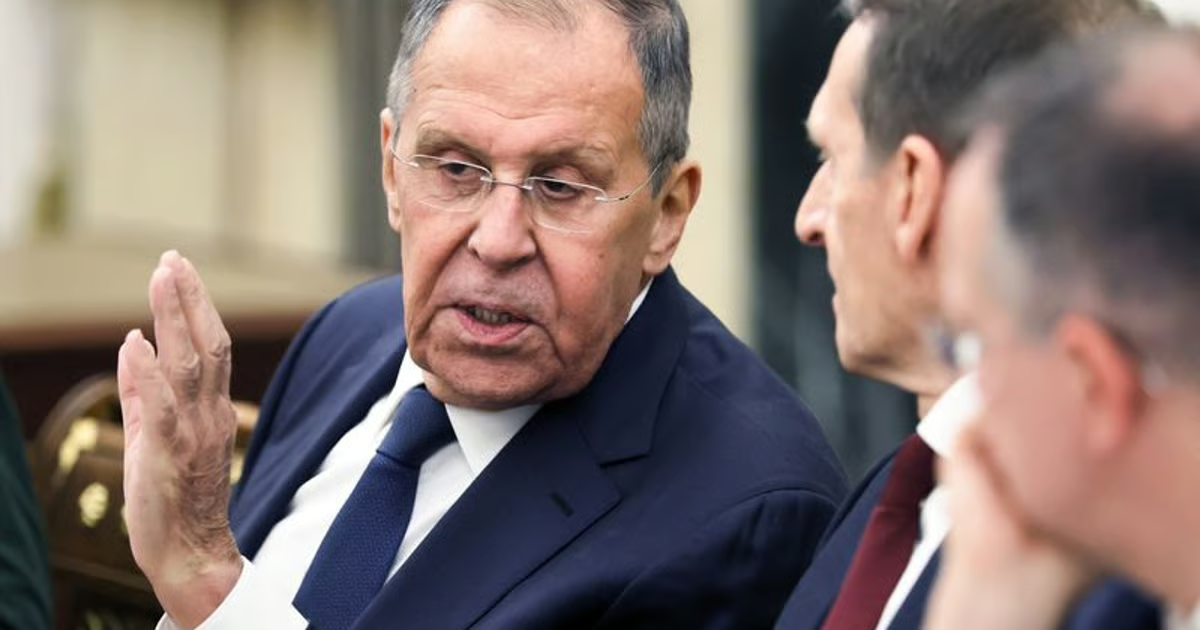
Porsche SE chairman Hans Dieter Pötsch said Volkswagen’s quarterly results made it clear that agreed measures to strengthen competitiveness, reduce costs and improve profitability needed to be implemented quickly. His comments carry weight because Porsche SE is Volkswagen’s largest shareholder and Pötsch also chairs Volkswagen’s supervisory board. The message is a demand for execution rather than a new restructuring announcement.
Volkswagen has been pursuing a broad transformation programme involving a smaller model range, simpler structures, lower vehicle and overhead costs, more efficient factories and faster technology development. The group has also announced plans for substantial job reductions in Germany by 2030. These measures are intended to address the high cost base of European manufacturing and the pressure created by competition in China and the shift towards electric vehicles.
The transition is difficult because automakers must fund new platforms, batteries, software and digital services while maintaining profitable combustion-engine and hybrid products during the changeover. Chinese manufacturers have moved quickly in electric vehicles and connected-car technology, while European producers face higher labour and energy costs. Tariffs and trade restrictions add uncertainty to production and export plans. A slower transition risks losing customers; a faster one can strain margins if electric models are sold at lower profitability.
Porsche SE expects its adjusted group result after tax for the full year 2026 to be between a loss of €500 million and a profit of €1.5 billion. It forecast group net debt of between €4.7 billion and €5.2 billion. The wide earnings range reflects the sensitivity of the holding company to its core investments and the difficulty of predicting the timing and size of future valuation effects. The company’s next results will show whether Volkswagen’s operating performance stabilises enough to reduce pressure on the investment value.
For investors, the key distinction is between the accounting loss recorded in the first nine months and the underlying performance of the holding company’s assets. The impairment is non-cash, but it is still a warning that expected future returns from Volkswagen have weakened. The adjusted result fell materially, net debt remained stable, Porsche AG’s contribution improved and the portfolio segment delivered a higher result. Each of those figures describes a different part of the business, and none should be used alone to judge the group.
Porsche SE’s results therefore capture a broader problem facing Germany’s automotive industry. The group has not run out of financing capacity, and its portfolio investments and legal position have provided some support. But its largest asset is tied to Volkswagen, where earnings have been squeezed by China, competition, tariffs and the cost of restructuring. The holding company’s recovery will depend less on financial engineering than on whether Volkswagen can restore sustainable margins and whether Porsche AG can protect its premium position without sacrificing profitability.

Comments (0)
Be the first to comment. Comments are published after moderation.