



WASHINGTON, November 9, 2026: Rep. Thomas Massie moved on Monday to force the House to take up eight articles of impeachment against Defense Secretary Pete Hegseth, turning a dispute over the Trump administration’s war in Iran into a procedural test of congressional power. The Office of the Clerk recorded Massie’s notice that he intended to offer a privileged resolution, and the Kentucky Republican read the charges on the House floor.
The move revives an effort that stalled in September when the House left Washington before lawmakers could vote. This time, Massie is using the House’s privileged-resolution procedure to put the issue on a short timetable. The Hegseth impeachment push is not a finding of misconduct: the eight articles are allegations made by one member of Congress, and the defence secretary has rejected the effort.
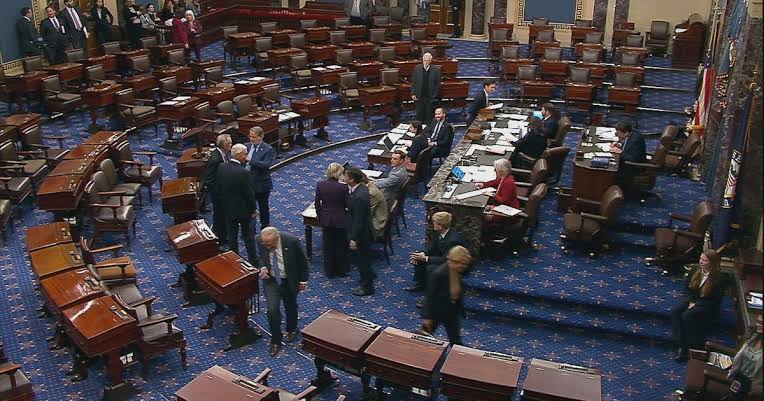
Under House Rule IX, the Speaker must designate a time for consideration within two legislative days after a member announces an intention to offer a privileged resolution and its form. That does not guarantee an immediate final vote on impeachment. House leaders could seek to table the resolution or refer it to a committee, but the procedure makes it harder to leave the issue untouched.
The House Clerk’s floor activity summary shows that Massie notified the chamber of his intent at 2:04:50 p.m. on November 9, citing clause 2(a)(1) of Rule IX. The House rules give the Speaker a limited period to schedule consideration of a privileged resolution offered by an individual member. The rule is designed to give such measures priority at a time set by the Speaker, rather than allow them to be indefinitely delayed through the ordinary legislative calendar.
The Washington Post reported that the procedure could bring the matter before the House by Wednesday evening. Republican leaders could still try to avoid a straight vote on the articles by moving to refer the resolution to the House Judiciary Committee or to table it. Either step would itself require the chamber to take a position on how the impeachment effort should proceed.
Massie’s earlier resolution was introduced in September, but the House adjourned before a vote could take place. The latest move comes after Democrats won control of both chambers in the November 3 midterm elections. The new Congress will not take office until January, so any vote this week would be held in the current House, where Republicans still hold the majority.
That timing gives the vote a political significance beyond the immediate question of Hegseth’s tenure. Democrats are expected to support the measure, but it would need Republican defections to pass the current House. Even if the House impeached Hegseth, the Senate would have to hold a trial, and conviction and removal would require a two-thirds majority. The Senate remains under Republican control until the new Congress is seated.
Massie’s filing contains eight articles. The first three focus on the Iran war and the War Powers Resolution of 1973. Massie alleges that Hegseth helped conduct hostilities without a declaration of war or congressional authorisation, continued the campaign after Congress directed the withdrawal of US forces, and kept operations going beyond the law’s 60-day period and any applicable 30-day withdrawal window. Those are the congressman’s legal claims; the administration has maintained that the campaign is lawful and necessary.
The fourth article accuses Hegseth of disregarding laws intended to minimise civilian casualties. The fifth alleges extrajudicial killings during operations against suspected drug-trafficking vessels in the Caribbean and eastern Pacific. Massie’s summary says at least 243 people were killed and raises allegations of secondary strikes against survivors, failure to rescue shipwrecked people and denial of quarter. The resolution does not make those allegations judicial findings, and the Pentagon has not accepted Massie’s characterisation.
The sixth article concerns Senator Mark Kelly, a former Navy captain. Massie alleges that Hegseth used the authority of the Defence Department to retaliate against Kelly for speech questioning unlawful military orders. The dispute follows the Pentagon’s action against Kelly after he urged service members to refuse illegal orders; a federal judge later blocked the department’s attempt to reduce his retired rank and pension, according to reporting by The Guardian.
The final two articles concern US operations outside Iran. Massie alleges that Hegseth directed the operation that seized Venezuelan leader Nicolás Maduro and Cilia Flores without lawful authority, and that he initiated the Yemen campaign known as Operation Rough Rider without congressional authorisation or an imminent threat to the United States. The eight charges therefore span war powers, civilian protection, maritime operations, retaliation against a lawmaker and the legal basis for military action in more than one country.
The breadth of the resolution matters because the allegations are not all dependent on the same evidence. The Iran articles turn on the administration’s legal basis for continuing hostilities and its interpretation of the War Powers Resolution. The maritime allegations concern the rules governing the use of lethal force and the treatment of people who survive an attack. The Kelly and Venezuela articles raise separate questions about the limits of executive authority and the protection of constitutionally protected speech.
Hegseth brushed off the renewed impeachment effort in comments to reporters, saying, “We’re not worried about that,” and indicating that he would address the matter at a Pentagon news conference on Tuesday morning, The Washington Post reported. Pentagon spokesperson Joel Valdez called the articles “vindictive and baseless” and said the department would be taking the offensive against the effort.
President Donald Trump has defended Hegseth and criticised Massie’s move. Secretary of State Marco Rubio, speaking to reporters in Paris, praised the defence secretary’s performance and described him as smart and professional. The administration’s position is that the Iran campaign was necessary to counter the threat posed by Tehran’s nuclear programme; critics argue that the war has continued without the authorisation required by Congress and has brought rising costs and risks.
Massie, an outgoing Republican who lost his primary earlier this year after Trump backed his opponent, has presented the effort as an attempt to make Congress confront its constitutional responsibilities. He has said the resolution is not merely symbolic. The fact that the sponsor belongs to the president’s party has made the dispute more awkward for Republican leaders, particularly after the midterm losses sharpened divisions over the war.
House Democratic leader Hakeem Jeffries has already said he strongly supports impeachment. Democrats are also preparing broader oversight once they take control of the House and Senate in January, including inquiries into the war, military operations and the administration’s use of executive power. The impeachment resolution could therefore become an early marker of how the incoming majority intends to use its committee powers.
Impeachment is a constitutional process, not a criminal conviction. The House can approve articles by a simple majority, after which the Senate decides whether to hold a trial and whether the charges warrant removal. A failed vote would not establish that every allegation is false; nor would passage prove that Hegseth committed a crime. The claims would remain subject to political and constitutional judgment, with any criminal question requiring a separate legal process.
The immediate question is how Speaker Mike Johnson responds to Massie’s notice under Rule IX. The House can schedule consideration, and members can seek to refer or table the resolution. If the articles reach the floor, lawmakers will have to decide whether they support a formal impeachment process while US forces remain engaged in a conflict that has become a central issue in the midterm result.
The measure may fail in the current House, but it can still force members to state their positions on the legal basis for the Iran war, the treatment of civilians and the scope of executive power. It may also shape the oversight agenda that begins when the new Congress convenes in January. The next important evidence will be the exact text of the resolution, the House’s procedural decision and the administration’s detailed response to the individual charges.
Also read: Jeffries Backs Hegseth Impeachment as Massie Prepares New House Pus
Also read: Trump Says Renewed US Strikes on Iran Are Highly Unlikely if Talks Advance
Comments (0)
Be the first to comment. Comments are published after moderation.