


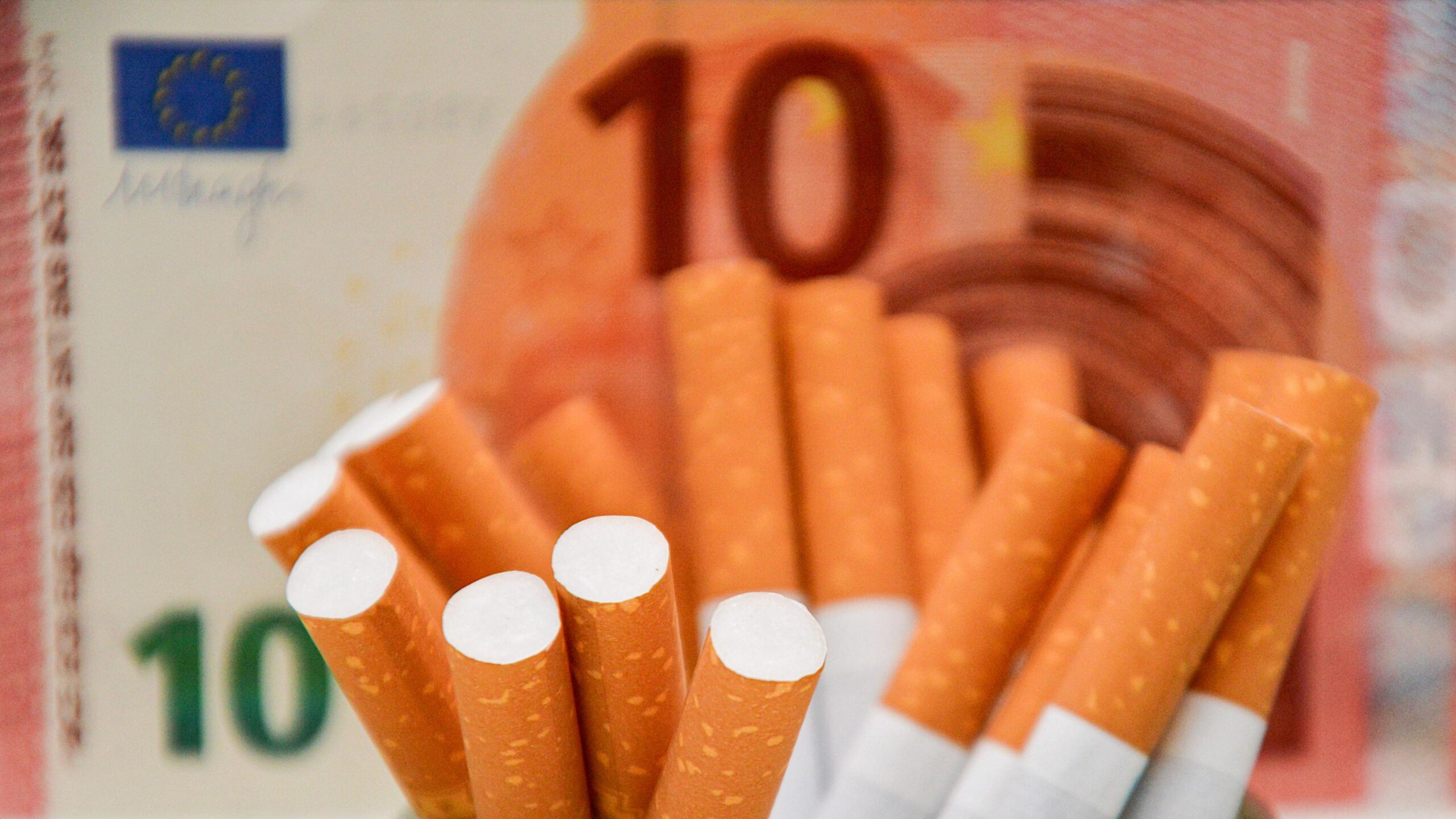
Brussels, November 10, 2026: European Union finance ministers failed to reach agreement on a proposed overhaul of the bloc’s tobacco-tax rules on Monday after Malta withheld its support, leaving a package backed by 26 of the EU’s 27 member states short of the unanimity required for adoption.
Irish Finance Minister Simon Harris, whose country holds the rotating presidency of the Council of the European Union, said the discussions had brought the proposal close to consensus but that Malta was not yet ready to give its consent. He said ministers would return to the issue in December after further discussion. The failure to secure agreement means the proposal remains under negotiation; it does not change the tax rules currently in force across the bloc.
The package is intended to modernise the EU’s Tobacco Taxation Directive, which sets minimum excise-duty requirements for products sold across member states. The European Commission’s proposal would raise minimum tax levels and extend the framework to newer nicotine products, including electronic-cigarette liquids, heated tobacco and nicotine pouches. The stated purpose is to bring the tax regime closer to changes in the market and to support public-health objectives.
The immediate obstacle is the EU’s decision-making rule for this file. Tax measures require unanimous agreement among member states in the Council, so a large majority cannot adopt the directive over the objection of one government. The 26-to-one split described by Harris therefore demonstrates broad political support but is not enough to move the legislation forward.
The Commission’s proposal seeks to update minimum excise duties on traditional tobacco products while bringing a wider range of nicotine products into the common framework. That includes e-cigarette liquids, heated tobacco products and nicotine pouches, categories that have expanded as consumers and manufacturers have moved beyond conventional cigarettes and rolling tobacco.
Under the existing system, member states retain the ability to set their own national excise rates, provided they meet EU minimum requirements. The proposal is not a plan to impose one uniform retail price across the Union. Instead, it would revise the minimum thresholds and the categories of products covered by the directive. Governments would continue to make national choices about rates above the EU floor, subject to the common rules.
The reform has implications beyond the price paid at a shop counter. Excise duties affect national tax receipts, the relative prices of tobacco and alternative nicotine products, cross-border purchasing and incentives for illicit trade. A change in minimum rates can narrow differences between countries, but it can also raise political concerns in states where the market, incomes or existing tax structure differ from the EU average.
The inclusion of newer products is one of the most contested elements. Supporters argue that a tax framework designed mainly around cigarettes cannot adequately address products that have become commercially significant. They say nicotine pouches, vaping liquids and heated tobacco should not sit outside a modernised excise system simply because they do not fit older product definitions. Opponents and more cautious governments have raised concerns about the design of the tax levels, the treatment of different products and the potential effect on consumers and businesses.
Before the Monday meeting, Ireland had been pressing ministers to find a common position. Harris had warned that unanimity could prove difficult, even as he described progress in discussions. A proposed compromise under an earlier presidency had been withdrawn in June after it failed to secure sufficient support. The revised negotiations have therefore been part of a longer effort to bridge differences over the scope and scale of the tax changes.
Malta’s opposition is decisive because the Council cannot adopt the tax directive by qualified majority. The government’s specific objections were not fully detailed in the public account of Monday’s outcome, so it would be premature to attribute the impasse to a single product category or to a particular rate. The confirmed point is that Malta had not agreed to the compromise text and that the Irish presidency intends to continue discussions before the matter returns in December.
For the Irish presidency, the task now is to determine whether further adjustments can bring Malta into the agreement without reopening disagreements among countries that have already accepted the compromise. That can be difficult in tax negotiations: a concession intended to satisfy one government may prompt another to reconsider its support, particularly when minimum rates, transitional arrangements and product definitions are all linked.
The European People’s Party also said finance ministers had discussed the tobacco-tax package ahead of the Council debate, underlining that the file had been a central item in the day’s economic and financial discussions. The Council’s own agenda confirmed that ministers were being asked to seek political agreement on the reform. The absence of a deal at the end of the meeting is therefore a substantive delay, not the cancellation of a routine discussion.
Harris framed the issue primarily as a public-health matter, saying nicotine products, vaping and tobacco represented an urgent challenge for the Union. That is the Irish presidency’s policy argument, not a medical finding made by the finance ministers during the meeting. The health debate is connected to questions about youth access, nicotine dependence and how tax policy influences consumption, but the directive itself is a fiscal measure and must be negotiated by governments under the EU treaties.
The Commission’s proposal also has a single-market rationale. Different tax systems and product definitions can create uneven conditions for manufacturers and distributors, while large price gaps may encourage consumers to buy across borders. A common minimum framework is designed to reduce some of those disparities. Whether the new thresholds would achieve that without producing unintended effects depends on the final rates, national implementation and enforcement capacity.
The Irish presidency has said the file will return for discussion in December. In the meantime, technical and political negotiations can continue over the compromise text. Ministers will need to establish whether Malta’s concerns can be addressed through changes to rates, product treatment or transition periods, while keeping the broader package acceptable to the other member states.
Even after a political agreement in the Council, the process would still require the formal legal steps applicable to the directive. National administrations and businesses would need clarity on the final definitions, the timetable for implementation and how the new categories would be treated for excise purposes. None of those implementation consequences should be treated as settled while the Council has yet to agree the proposal.
For consumers, the practical effect in the near term is that existing national tobacco and nicotine taxes remain in place. The Monday talks did not immediately raise cigarette prices, create a new EU-wide vaping tax or establish a uniform charge on nicotine pouches. Any change would depend on a final directive and subsequent national measures.
For governments, the stalled negotiations leave a difficult balance unresolved: how to update a tax system that has not kept pace with a changing nicotine market while preserving room for national policy choices and securing agreement among all 27 members. The 26-country support figure gives the Irish presidency a strong basis for continuing talks, but it also illustrates the limits of majority support in a policy area where unanimity is mandatory.
The next test will come in December. Until then, the tobacco-tax overhaul remains a proposal under negotiation, with Malta’s consent the immediate requirement for progress.

Comments (0)
Be the first to comment. Comments are published after moderation.